12 June 2026
Sandrine Wallace & William Wijns
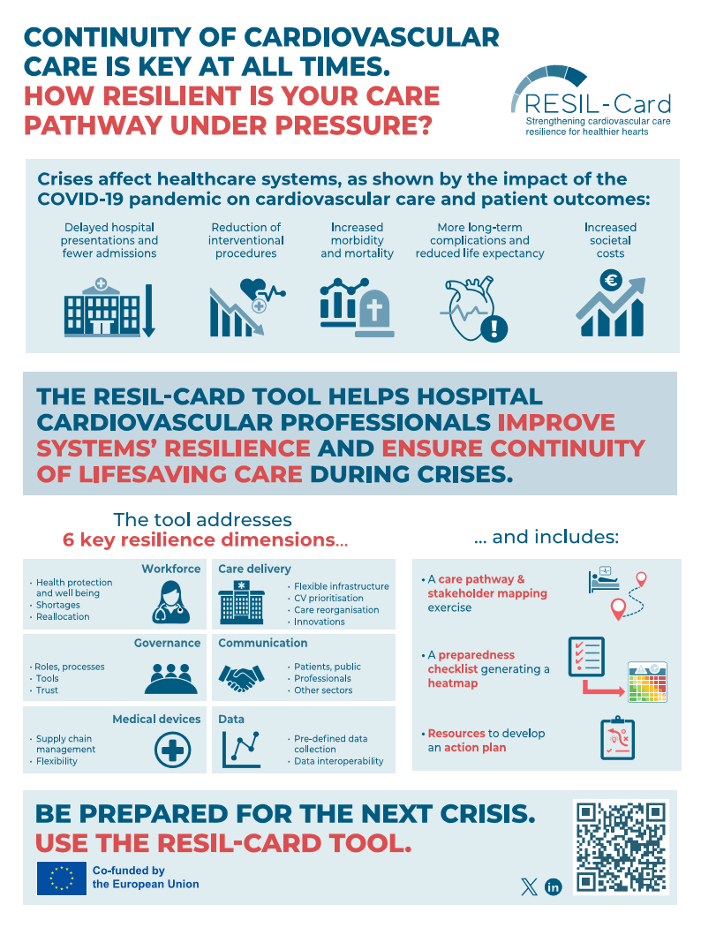
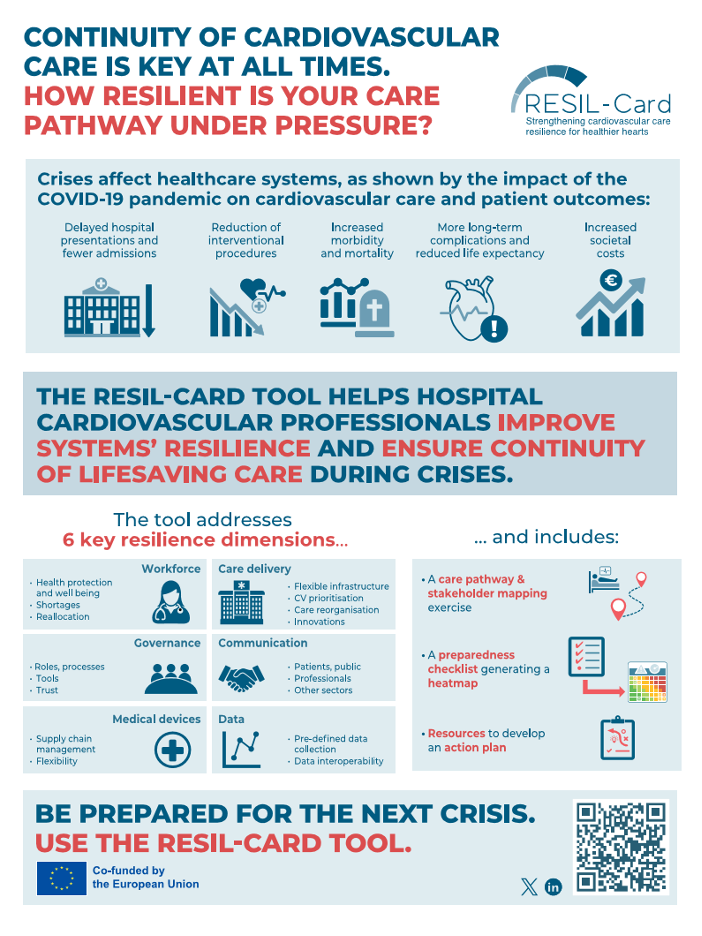
A new online tool called RESIL-Card has been recently launched to help European healthcare professionals strengthen the resilience of cardiovascular care pathways and safeguard the continuity of lifesaving care during times of crisis.
The free resource was developed through the eponymous project, which is co-funded under the EU4Health Work Programme and led by the We CARE advocacy group. It provides a structured framework for assessing preparedness and identifying practical actions to ensure that essential cardiovascular services remain accessible when health systems are facing disruption.
Cardiovascular diseases remain the leading cause of death in Europe, making uninterrupted access to diagnosis, treatment and follow-up care a major public health priority. Following the COVID-19 pandemic and recent challenges, vulnerabilities in healthcare systems have been exposed, emphasising the importance of stronger preparedness planning. RESIL-Card was developed to help healthcare organisations move beyond crisis response and build resilience into routine service delivery.
Strengthening preparedness through collaboration and evidence
RESIL-Card is designed “by and for” hospital multidisciplinary teams involved in cardiovascular care. Through a structured, four-step self-assessment process, users can evaluate the preparedness of their care pathways, identify strengths and gaps, and define tailored actions to support and leverage improvement.
The tool was developed through an extensive co-creation process involving clinicians, public health experts, patient representatives, and policymakers from across Europe. By combining scientific evidence, existing preparedness frameworks and real-world experience, RESIL-Card translates resilience concepts into practical actions that can be implemented in diverse healthcare settings and geographies.
“The value of the RESIL-Card tool is that it gives our team a structured way to identify gaps we had intuitively recognised but never formally addressed,” says an early adopter of the tool.
Supporting JACARDI’s vision for stronger health systems
RESIL-Card’s objectives closely support JACARDI’s efforts to strengthen prevention, care pathways and health system sustainability across Europe. By helping healthcare organisations assess vulnerabilities, improve preparedness, and maintain the continuity of cardiovascular services during periods of disruption, the tool contributes to creating more sustainable and equitable health systems for people living with cardiovascular disease.
The initiative is also aligned with key European policy priorities, notably the EU Safe Hearts Plan and the health preparedness pillar of the EU Preparedness Union Strategy. RESIL-Card’s practical assessment framework helps translate these strategic objectives into concrete actions that healthcare providers can implement to strengthen preparedness, protect access to care and improve long-term system resilience.
By helping healthcare teams anticipate risks, improve coordination and strengthen service continuity, the tool supports a proactive approach to quality improvement and preparedness. It also encourages a patient-centred approach by prompting healthcare providers to identify and address vulnerabilities that could impact access to diagnosis, treatment and follow-up care. In doing so, RESIL-Card can help reduce inequalities in access to cardiovascular services and improve outcomes for people living with cardiovascular disease, particularly during periods of disruption.
“Cardiovascular care must remain uninterrupted regardless of the challenges health systems face. The RESIL-Card tool provides healthcare teams with a practical way to assess preparedness, identify improvement opportunities, and ultimately ensure that patients continue to receive lifesaving care when it matters most,” says Professor William Wijns, Research Professor in Interventional Cardiology at the University of Galway (Ireland) and coordinator of the RESIL-Card initiative.
By providing a common framework for assessing and strengthening preparedness, RESIL-Card contributes to ongoing European efforts to build more resilient health systems, promote the exchange of good practices across Member States, and support the implementation of strategies aimed at improving cardiovascular health, reducing inequalities and ensuring continuity of care during future crises.
RESIL-Card is already gaining traction across Europe, supported by national interventional cardiology working groups and hospitals that are helping drive its dissemination and implementation.
The tool is freely available through multiple dissemination channels to healthcare professionals, healthcare organisations, hospital groups, policymakers and other stakeholders who are committed to strengthening cardiovascular care resilience and protecting access to high-quality care for all, especially when it is needed most.
Read more
Access the online RESIL-Card tool here
Learn more about the RESIL-Card initiative