1 October 2026
Nora Strommer - GOKVI
Screening can identify health risks and diseases before symptoms appear, creating a valuable window for prevention and early intervention. It supports earlier diagnosis and enables health systems to respond sooner. Screening also helps people understand their personal risks.
From European policy to national implementation
JACARDI’s Short Guide to Screening provides policymakers and public health professionals with a structured framework and practical recommendations for planning and implementing screening activities. Developed through a major collaborative effort across the JACARDI consortium, the guide brings together the expertise and evidence generated through the Joint Action’s work on screening. With the European Commission’s proposal for a Council Recommendation on cardiovascular health checks published during EU Screening Week, this collective work has now found its way into European policy. The guide is referenced in the proposal, while its practical guidance can help support Member States in translating the new recommendations into local action.
Identifying risk is useful only when clear follow-up actions are in place. Effective screening programmes must reach the right people, use reliable screening methods, and lead to access to appropriate prevention, diagnosis, treatment or support.
JACARDI’s Short Guide for Screening Individuals at Increased Risk of Developing Cardiovascular Diseases and Type 2 Diabetes helps putting these essential elements together, and offers practical guidance for designing and implementing screening programmes adapted to local needs.
Why screening matters
Many of the risks for cardiovascular disease (CVD) and type 2 diabetes (T2D) can develop without noticeable symptoms. Screening programmes use health checks, measurements, or questionnaires to identify people who may be at increased risk or who may already have an undiagnosed condition.
This creates an opportunity to act before health conditions become more severe. When screening is well targeted and linked to appropriate support, it can raise awareness, guide preventive action, enable earlier diagnosis and help health systems direct resources where they can make the greatest difference.
Different goals, different screening approaches
Screening can support prevention in several ways. It can identify people at increased risk before disease develops, detect an existing disease at an earlier stage, or identify co-morbidities among people already living with CVD or T2D. While the guide outlines how screening can contribute at different stages of prevention, its principal focus is identifying increased risk as part of primary prevention.
The same tools used for screening can also support population-level health. The key difference lies in how the information is used. Population-level monitoring helps authorities understand trends and plan public health actions. Screening for individual health outcomes should provide each participant a clear result and, where needed, a route to further assessment, prevention, or care.
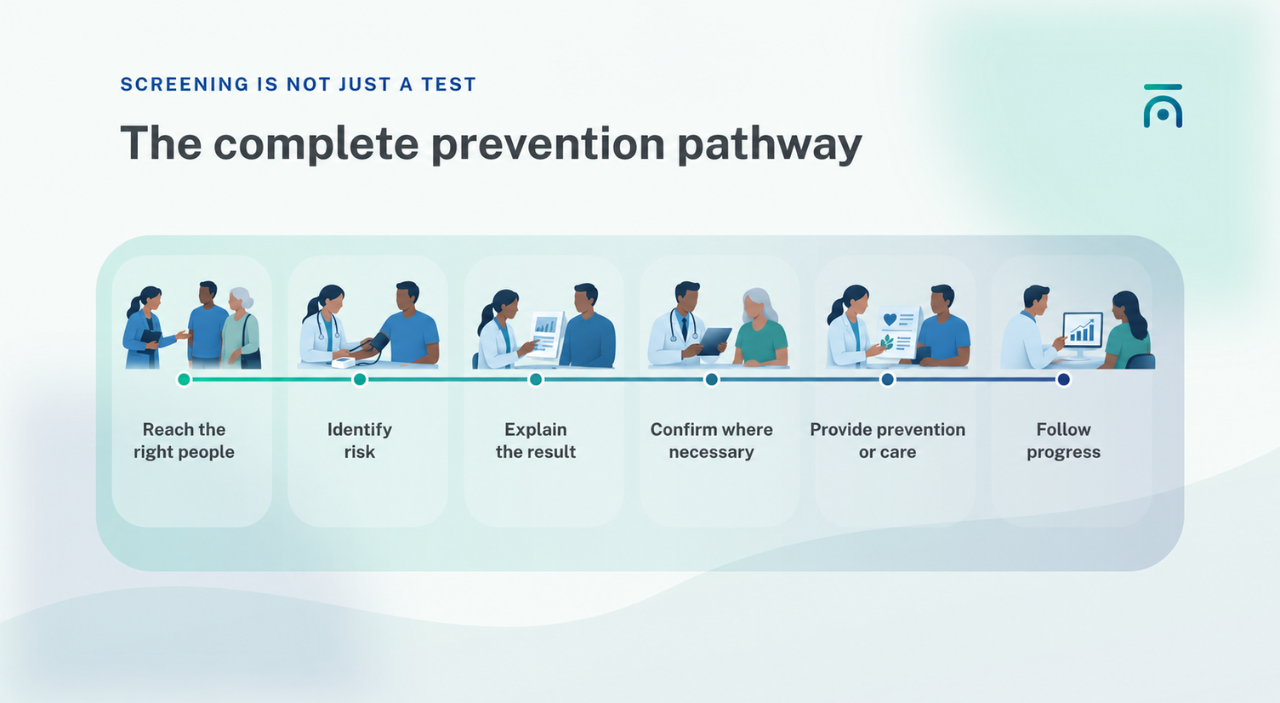
Screening is more than a test
A health check should be part of a complete prevention pathway. People need to understand why they are being screened, what their results mean, and what they should do next. At the same time, health services must be prepared to provide further assessment, preventive support, and when needed, diagnosis or treatment.
Without these links, screening risks becoming a measurement without an outcome. To be both effective and ethical, each step should connect seamlessly to the next, guiding people towards appropriate prevention, care, or support.
How JACARDI’s Screening Guide helps
Developed under the guidance of Hanna Tolonen, leader of JACARDI’s Work Package on screening high-risk populations and individuals, the Short Guide to Screening brings together expertise from JACARDI’s work on screening. It provides a structured approach for planning screening activities for CVD and T2D.
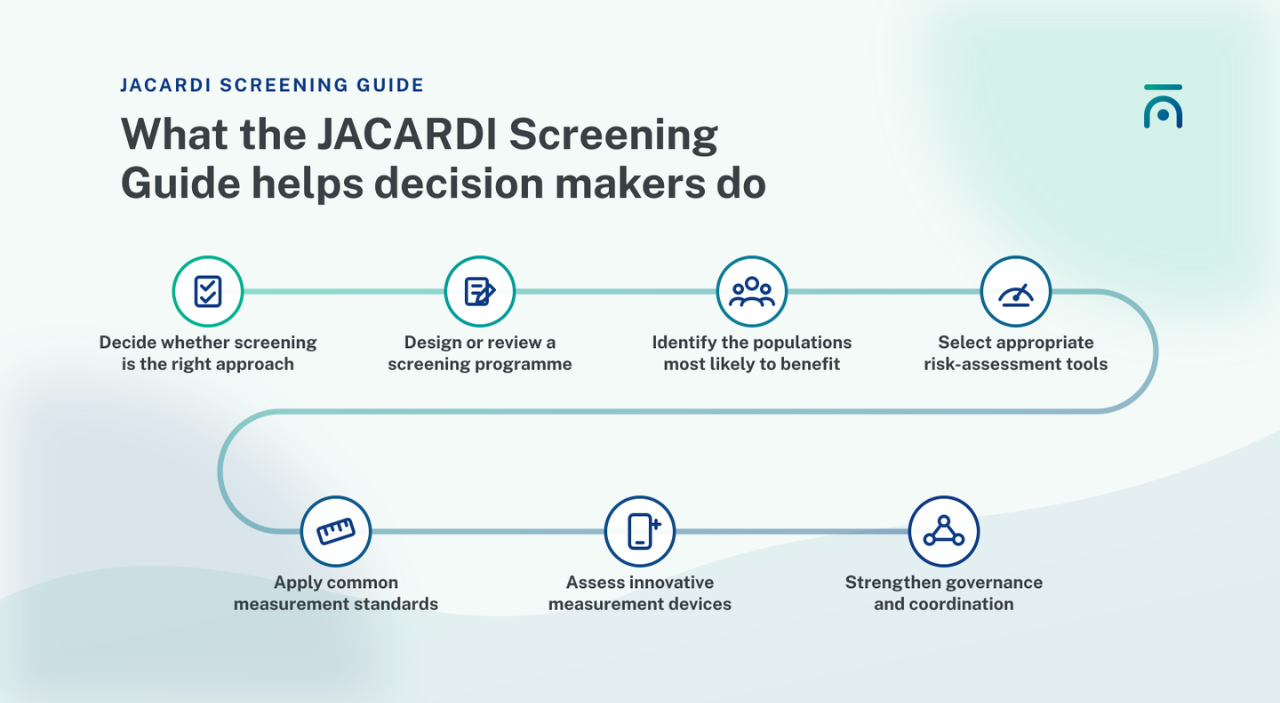
The guide outlines the key decisions that need to be made before a programme begins. It covers target population, risk assessment tools, measurement protocols, innovative screening technologies, and programme coordination. It also includes supporting resources and an evaluation template to help decision-makers assess a proposed or existing screening programme.
Making the right decision before screening begins
Screening programmes require time, funding, trained professionals and follow-up capacity. Before investing these resources, decision-makers need to consider whether screening is the most appropriate response to a health problem and whether the expected benefits outweigh the potential costs and harms.
The Short Guide to Screening supports this decision in two stages. First, it examines whether the disease, available evidence, and possible interventions provide a strong rationale for screening. It then considers whether screening is appropriate in a specific country or region, taking into account population needs, health inequalities, available resources, and the organisation of care.
Designing screening around the people it should serve
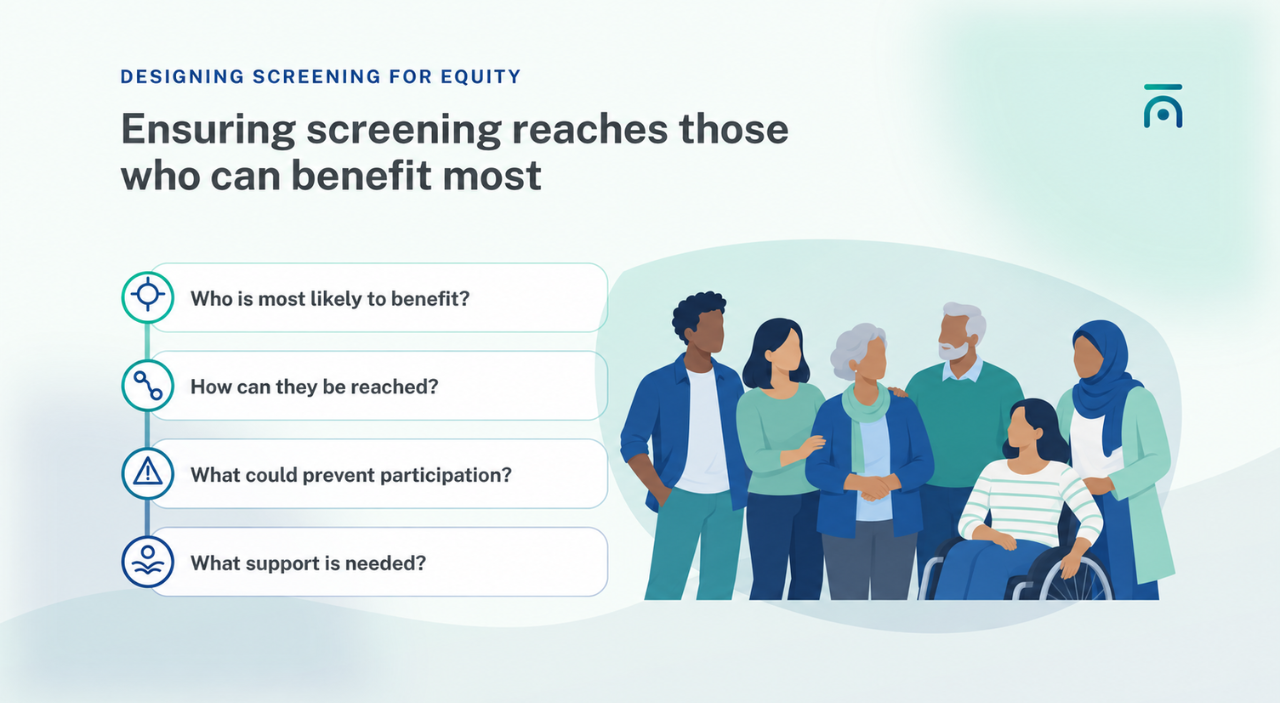
The impact of a screening programme depends largely on who it reaches. Effective programmes identify the groups most likely to benefit, consider how they can be reached, and address the barriers that may prevent participation.
The guide helps users define the target population and assess whether people living in vulnerable situations may be at risk of being overlooked. This makes equity an integral part of programme design from the beginning, rather than a concern identified only after inequalities emerge in the results.
Selecting the right risk-assessment tool
Many tools are available for estimating the risk of CVD and T2D, but different settings call for different approaches. A tool that performs well in one population may be less accurate in another. Some tools require laboratory results, while others rely on information that can be collected quickly and at a lower cost.
The Short Guide to Screening helps users choose the most appropriate tools by considering the population, intended outcome, regional relevance and available data. JACARDI’s interactive Risk Assessment Toolkit complements this guidance by allowing users to compare existing risk scores and identify those most closely aligned with their needs.
Explore the JACARDI Risk Assessment Toolkit
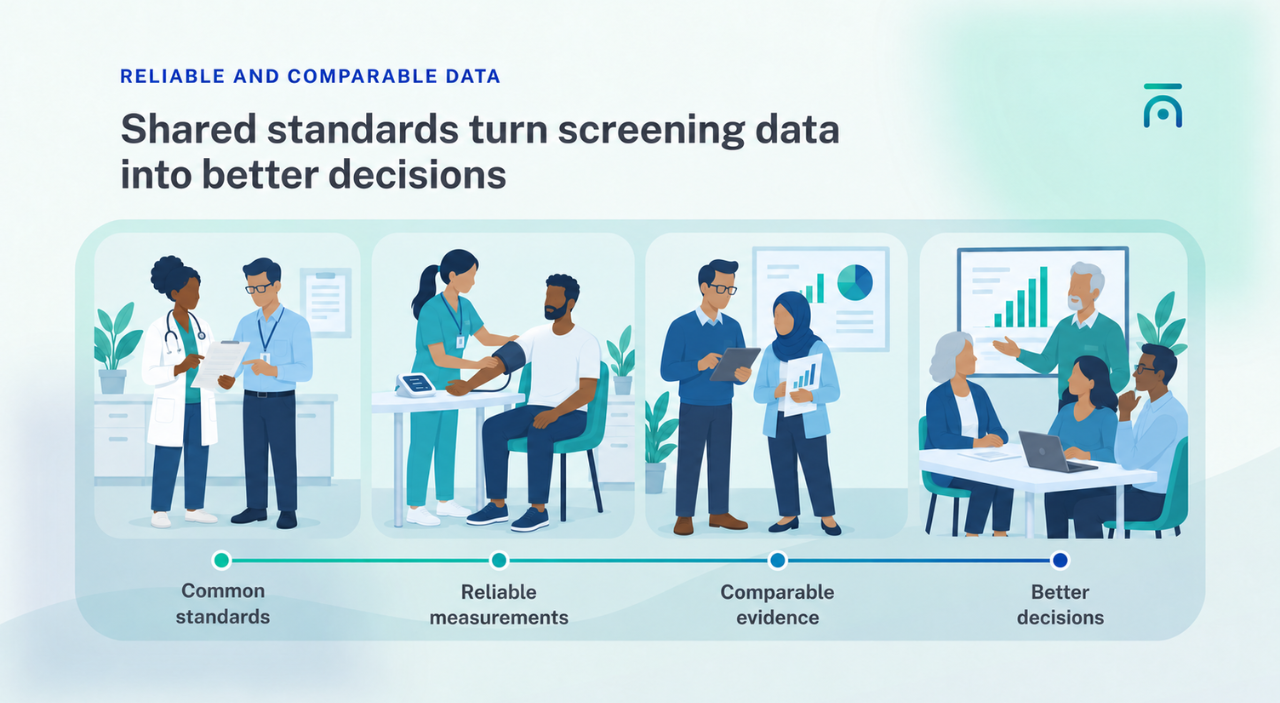
Creating reliable and comparable data
Screening results are only as reliable as the measurements they are based on. Differences in how blood pressure, blood glucose, cholesterol, or body measurements are taken can affect the accuracy of results and make comparisons between individuals, populations, and programmes more difficult.
The guide summarises recommended measurement protocols and directs readers to recognised technical standards for collecting high-quality data. This helps health systems interpret results, compare programmes, evaluate what works, and make informed decisions about future improvements.
Using innovative devices without compromising quality
As digital health technologies become more widely available, self-measurement tools and other innovative devices may seem an attractive way to make health checks more accessible and convenient. However, before they can be used in screening programmes, there must be sufficient evidence that they are accurate, validated, and suitable for the intended purpose.
Based on the evidence currently available, the Short Guide to Screening does not recommend the use of innovative self-measurement devices for screening. Instead, it highlights the need for further research and emphasises that these devices should not replace clinically validated methods or professional assessment.
Read more about JACARDI’s research on self-measurement tools.
Connecting the pieces through stronger governance
Delivering an effective screening programme requires coordination across many stakeholders, including public health authorities, healthcare professionals, laboratories, data systems, community organisations and the people invited to participate. Without clear governance, these different components can become fragmented, reducing the programme’s ability to translate screening results into timely action.
To address this challenge, JACARDI recommends a central governance structure for CVD and T2D screening. Bringing together evidence, standards, tools, and implementation experience supports more consistent decisions, better use of resources and stronger links between screening, prevention and care.
A timely contribution to European health checks
JACARDI’s Short Guide to Screening was developed alongside the European Commission’s work on its proposal for cardiovascular health checks, as part of the consortium’s wider work on screening. It was a substantial collaborative effort, bringing together 29 contributors from across JACARDI’s European network, representing national public health institutes, universities, regional health authorities and organisations represented on JACARDI’s Advisory Board:
- Finnish Institute for Health and Welfare (THL) leading JACARDI’s Work Package on Screening
- Italian National Institute of Health (ISS), coordinating the Joint Action
- Diabetes Liga, Belgium
- Slovenian National Institute of Public Health (NIJZ)
- Romanian National Institute of Public Health
- WHO Europe
- European Heart Network
- European Association for the Study of Diabetes (EASD)
- Fondazione Policlinico Universitario Agostino Gemelli
- Vrije Universiteit Brussel
- University of Antwerp
- Regione MARCHE
- Agenzia Sanitaria Regionale
- Vaaliala Federation of Municipalieties
The guide is now referenced in the Commission’s proposal, bringing the work of JACARDI’s Screening Work Package directly into EU health policy.
The guide’s main message is simple: the success of screening should not be measured only by the number of people who receive a health check. What matters is whether the right people are reached, reliable information is collected, and every result leads to a clear pathway for prevention, diagnosis, treatment, or ongoing support.
Further reading:
Discover the full JACARDI Screening Guide.
Read the European Commission’s Proposal for a council recommendation on cardiovascular health checks: an EU approach to early detection and screening (pdf)
Illustrations were created using generative AI under human direction and editorial review.