28 November 2026
Irene Sánchez Artero - INCLIVA
The Digital Diabetes Patient Reminder (DIPAR) trial is entering its final stages. Led by KU Leuven in Belgium and carried out within JACARDI’s Work Package on Patients’ Self-management, this proof-of-concept randomised controlled trial tests whether automated reminders and a patient dashboard can help people with type 2 diabetes (T2DM) keep up with their follow-up care.
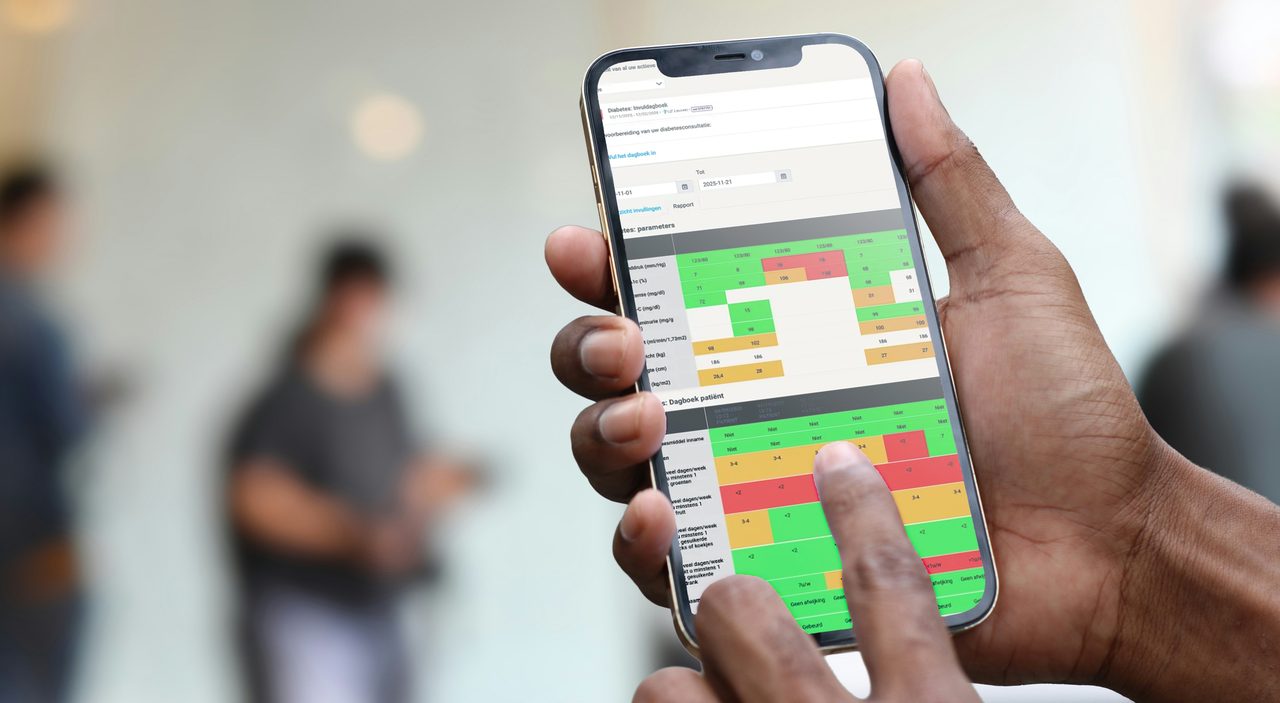
The dashboard gives patients a clear overview of their diabetes-related health information. It is built into the Nexuzhealth platform, which links healthcare professionals’ electronic medical records to the MyNexuzhealth patient portal. The trial took place in the endocrinology departments of two hospitals in Flanders.
Why follow-up matters
Around 7.6% of people in Belgium had a diagnosis of diabetes in 2023. Even with an accessible healthcare system, many patients miss recommended check-ups. In 2021, only 16.9% of those not treated with insulin received the follow-up care they needed.
DIPAR looks at whether reminders and a dashboard, added to usual care, can change that. The main question is whether more adults with T2DM will have at least one albuminuria measurement recorded within 12 months.
A team effort
Software developers, healthcare professionals, researchers and trial managers worked side by side, from building the software and connecting it to an existing medical record system to recruiting patients and collecting data.
Recruitment is now complete. In total, 201 patients were enrolled and 195 met the eligibility criteria. The team is getting ready to analyse how the tool affected clinical outcomes and care processes, and what this could mean for self-management. Once the pilot phase is complete, the tool will be rolled out to all 26 hospital-based diabetes centres that use the same software system, extending its reach to more than 10 000 people with type 2 diabetes.
Hearing from patients
The researchers will also interview participating patients. They want to know how people see their diabetes care, whether and how they used the tool, and what they would like future digital support to offer.
“While quantitative results help us understand whether the intervention makes a difference, speaking directly with patients allows us to understand how and why it does so,” explains Barbara Annancy, PhD researcher at KU Leuven.
Listening to patients in this way is part of JACARDI’s broader aim to reduce the burden of diabetes and cardiovascular disease across Europe through fairer, more sustainable and more person-centred healthcare.
Additional information
More information on the DIPAR project can be found via: https://gbiomed.kuleuven.be/english/research/50000687/50000695/NL/jacardi-eng/home
Articles related to the DIPAR pilot can also be found at: