24 September 2026
Cristina Cebrian
Cardiovascular diseases and type 2 diabetes often develop silently, leaving millions of people unaware of their risk until serious complications occur. The Safe Hearts Plan places early detection and targeted health checks at the centre of prevention, while JACARDI is helping translate this ambition into practical action through common guidance, real-world evidence and pilot initiatives across Europe. Ahead of the EU Screening Week, beginning on 28 September, we explore how screening can turn silent risks into actionable health information, what makes health checks effective pathways to prevention and care, and how JACARDI’s guidance, evidence and pilot projects are informing the European health check protocol under the Safe Hearts Plan.
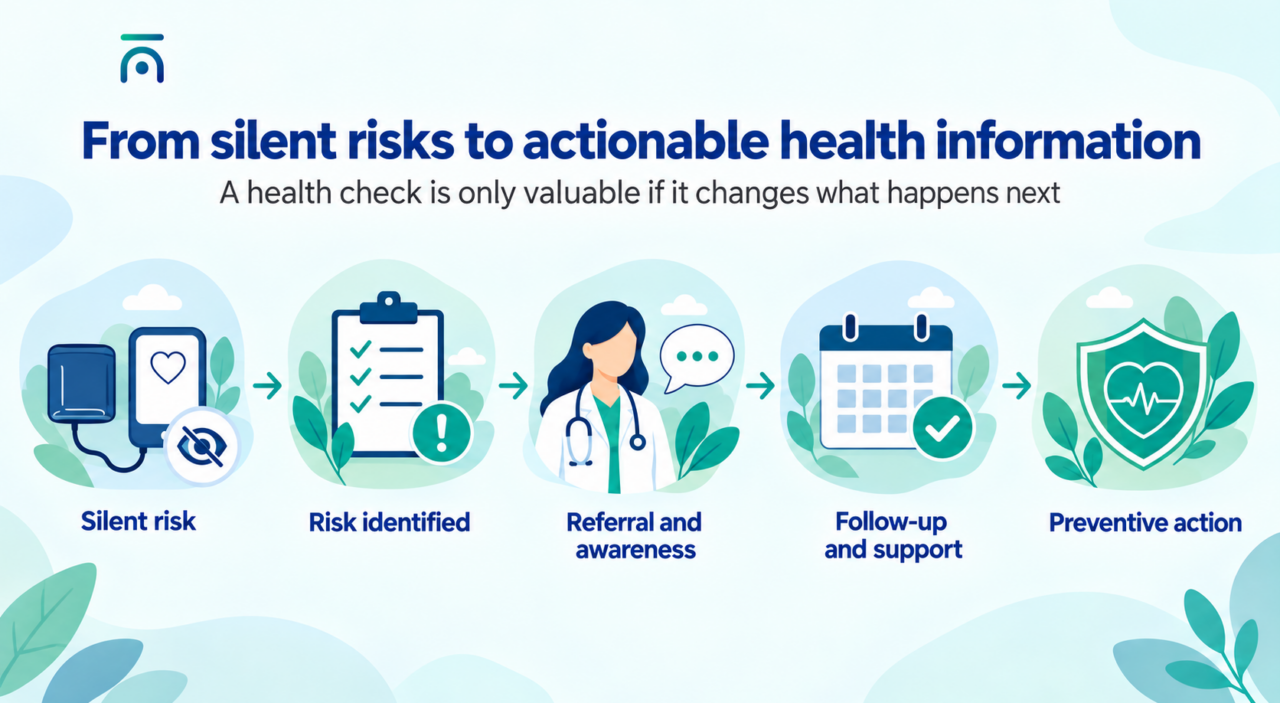
A health check is only valuable if it changes what happens next. Every day, millions of Europeans go about their lives unaware that they are living with high blood pressure, elevated cholesterol or type 2 diabetes. Around one in five people in the European Union live with hypertension, while more than 45 million adults have diabetes. Yet these and other cardiovascular risk factors often remain silent until they trigger a heart attack, stroke or other serious health event. [1] The challenge facing Europe’s health systems is no longer simply identifying these risks, but ensuring that early detection leads to timely action.
That ambition lies at the heart of the Safe Hearts Plan [2], launched by the European Commission, which aims to shift the focus of healthcare from treating cardiovascular disease to preventing it. One of its flagship initiatives is the development of a European protocol on cardiovascular health checks, designed to support Member States in detecting cardiovascular disease, diabetes and obesity earlier while reducing inequalities in access to prevention.
From policy ambition to effective health checks
But implementing effective health checks is about much more than measuring blood pressure or cholesterol.
According to JACARDI’s response to the Call for Evidence on the proposed Council Recommendation for cardiovascular health checks, countries should begin by understanding their own health challenges. Analysing disease burden, mortality, lifestyle patterns and available health data allows screening programmes to target people who are most likely to benefit, making prevention not only more effective but also a better use of healthcare resources.
Europe is already moving in that direction. JACARDI’s mapping study of cardiovascular screening programmes across 18 countries found that thirteen have already established or are developing national strategies to identify people at increased cardiovascular risk. Yet the study also reveals a significant gap between policy and practice. How countries identify, assess and follow up those at increased risk varies considerably across Europe. In other words, while many countries have a strategy on paper, implementation remains uneven.
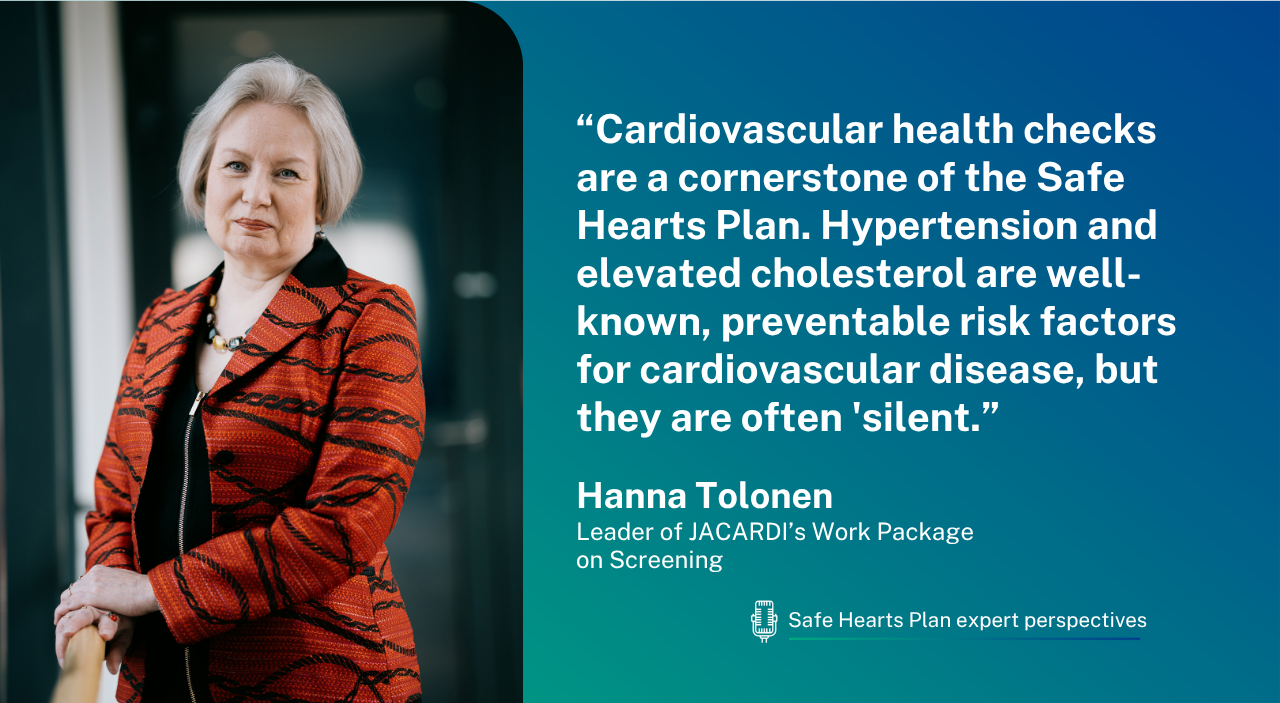
As Hanna Tolonen, Director of Research and Development at the Finnish Institute for Health and Welfare (THL) and leader of JACARDI’s Work Package on screening high-risk populations and individuals, explains:
“Cardiovascular health checks are a cornerstone of the Safe Hearts Plan. Hypertension and elevated cholesterol are well-known, preventable risk factors for cardiovascular disease, but they are often ‘silent,’ showing no symptoms for a long time. Health checks serve as a tool to identify asymptomatic individuals who may be at an increased risk of developing cardiovascular disease.”
Making health checks matter
Identifying risk, however, is only the first step. The JACARDI Short Guide to Screening for Individuals at Increased Risk of Developing Cardiovascular Diseases and Type 2 Diabetes [3], developed by experts from across the partnership to support policymakers and public health professionals, emphasises that screening programmes should be practical, evidence-based and integrated into existing healthcare services wherever possible.
Rather than advocating a one-size-fits-all approach, the guide translates the principles of the Safe Hearts Plan into practical recommendations and encourages countries to tailor screening to their own populations while using validated cardiovascular risk assessment tools to support clinical decision-making.
Health checks should include a concise but effective set of measurements, such as blood pressure, lipid profile, blood glucose, body mass index and smoking status. And, crucially, they should not end once those measurements have been taken. Screening programmes need clear referral pathways so that individuals identified at increased risk receive appropriate follow-up, lifestyle support and, when necessary, medical treatment.
This is precisely where JACARDI is helping bridge the gap between European policy and everyday practice. The guide also encourages countries to integrate health checks into existing health services and, where appropriate, community and workplace settings, making screening more accessible and sustainable.
Testing screening approaches in different settings
Across 19 screening pilots under the Work Package on screening, partners are testing different approaches in hospitals, primary care and community settings, reaching diverse population groups through both systematic and opportunistic screening. These pilots are not only evaluating which models are most effective, but also exploring how health checks can increase awareness of cardiovascular risk factors and encourage people to know their numbers before disease develops. This practical experience is helping generate evidence that can support the implementation of the EU protocol on health checks.
“By testing a variety of strategies, such as opportunistic screening in community settings and systematic screening in clinical environments, JACARDI pilots transform these ‘silent’ risks into actionable health information. These pilots also serve as awareness-raising campaigns, educating communities on CVD risk factors and the importance of knowing one’s numbers. Furthermore, it is essential to build integrated care pathways into these procedures to ensure that individuals receive the necessary follow-up, whether that involves lifestyle counseling or medical treatment,” Hanna Tolonen notes.
The diversity of these pilots reflects how European recommendations of the Safe Hearts Plan can be adapted to local realities. In Ukraine, JACARDI is supporting efforts to strengthen cardiovascular prevention by promoting community-based screening approaches, improving health literacy and fostering collaboration between national and international public health institutions [4].
In Calabria, southern Italy, free community health screening initiatives are bringing cardiovascular and diabetes prevention closer to citizens, demonstrating how local engagement can increase participation while identifying people at increased risk before symptoms appear.
Effective health checks reflect real-world needs
For patient organisations, the success of health checks will ultimately be measured not by the number of people screened, but by what happens afterwards.
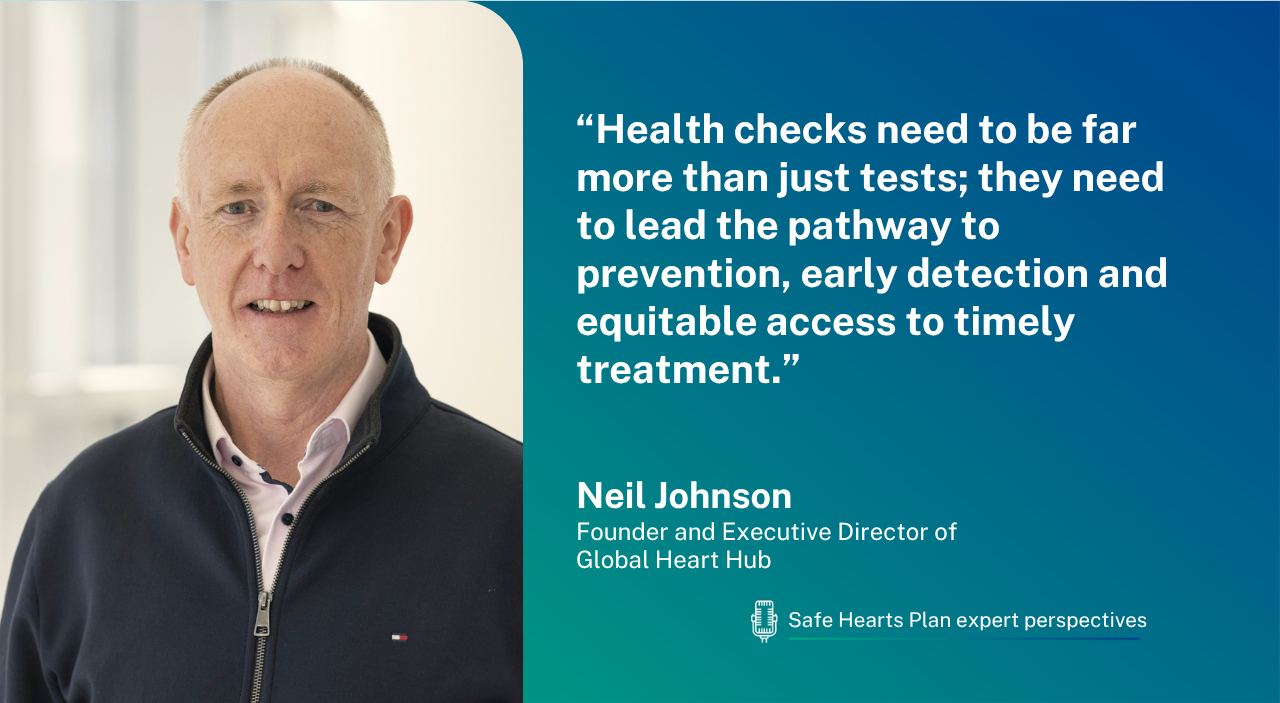
As Neil Johnson, Founder and Executive Director of Global Heart Hub, explains: “The effectiveness of health checks will depend on more than clinical targets. Patient insights and experiences need to be centrally embedded in their design and delivery so as to reflect real-world needs, barriers and realities. Health checks need to be far more than just tests; they need to lead the pathway to prevention, early detection and equitable access to timely treatment.”
His message echoes one of JACARDI’s central recommendations: screening is only effective when it forms part of an integrated pathway of care. A blood pressure reading or cholesterol measurement, valuable as they are, cannot improve health on their own. They must lead to informed decisions, preventive interventions and long-term support.
As Europe prepares to implement the Safe Hearts Plan, that may be the most important lesson of all. The evidence already exists, practical solutions are being tested across JACARDI’s pilot sites, and Member States are increasingly committed to strengthening prevention. The next challenge is ensuring that every health check becomes more than a test, it becomes the first step towards a healthier future.
Sources:
[1] OECD (2025), The State of Cardiovascular Health in the European Union, OECD Publishing, Paris
[2] Safe Hearts Plan; Directorate-General for Health and Food Safety, European Commission. 16 December 2025.
[3] Leysen, W., Cardinale, A., Alexandra, C., Lampaert, A., Formenti, B., Armocida, B., Marcozzi, B., Angheluta, C., Dima, C., Giacomozzi, C., Rantala, E., Monnet, F., Calcagnini, G., Elonheimo, H., Zaletel, J., Vergauwen, J., Paalanen, L., Palmieri, L., Petrelli, M., Tolonen, H. (2026). Short Guide to Screening Individuals at Increased Risk of Developing CVDs and T2D (Version 1.0.0). Zenodo.
[4] Evaluation of Preparedness and Capacity of Primary Healthcare Facilities in Khmelnytskyi Region to Provide Extended Scope of Services Related To Type 2 Diabetes Prevention, Screening and Control, o High-Risk Groups; Pilot survey report. Nataliia Hryb, Tetiana Ruda, Yuliia Arabska, Maryna Halchenko. Кyiv 2025.
The illustration in this article was created using generative AI under human direction and editorial review.