8 December 2025
Jacopo Murittu
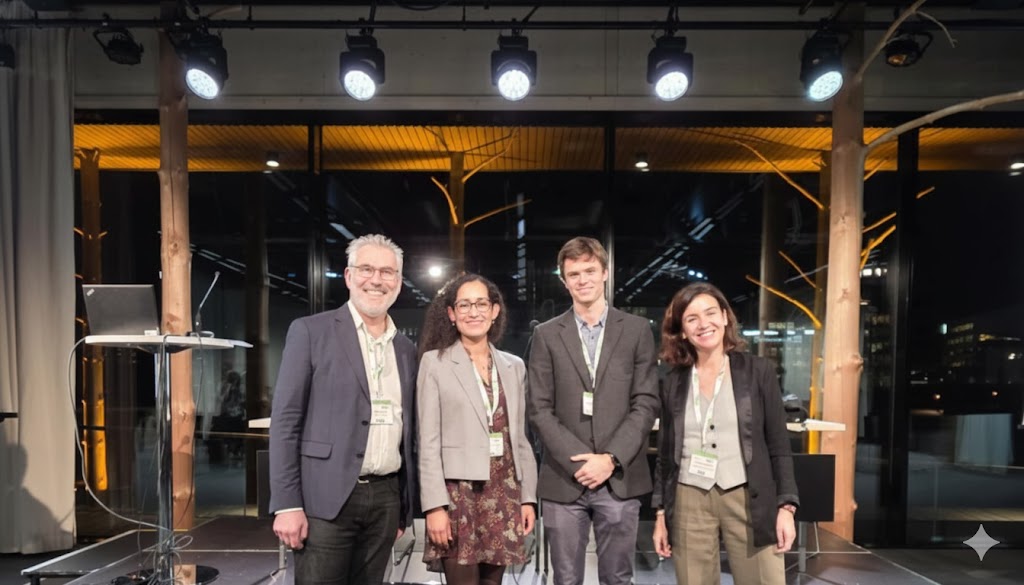
A powerful spirit of collaboration marked this year’s European Public Health Conference held in Helsinki from 12 to 14 November: five major European projects – JACARDI, JA PreventNCD, PIA, careGIVR and PREVENTIA – jointly hosted a high-level workshop during the conference. This collaborative session demonstrated how cross-project synergy is the key to accelerating effective, inclusive health literacy strategies across the continent to curb the rising burden of non-communicable diseases (NCDs) through more accessible, inclusive and evidence-based prevention strategies.
The workshop, titled “8.H. Round table: Health Literacy in Action: Innovative and Inclusive Approaches from European Joint Initiatives”, brought together leading EU-funded initiatives involving over 100 partner institutions across 24 countries. Discussions centered on the critical challenge of reaching vulnerable groups – such as migrants, young people and populations in disadvantaged settings, who remain disproportionately affected by low health literacy and NCDs.
The session emphasized two core outcomes for participants:
• Shared approaches: Understanding how five major European projects integrate health literacy into diverse public health systems, leveraging strong equity and diversity lenses.
• Roadmap principles: Highlighting the common goals and strategies these initiatives have defined to strengthen health literacy action across different European contexts.
The JACARDI health literacy team – coordinated by Santé publique France and Biosistemak Research Institute, Basque Country, Spain – used the platform to showcase its progress in building measurable health literacy impact against cardiovascular disease (CVD) and diabetes (DM) risks and other NCDs across Europe.
The JACARDI WP6 Health Literacy team presented the extensive work completed during the first two years of the project aimed at improving health literacy and raising awareness of CVD and DM risks at both individual and societal levels. This work includes mapping existing health literacy development activities across EU countries and implementing 25 codesigned pilot projects across 13 countries.
These projects are implemented following participatory processes where key stakeholders and target groups are involved from the very beginning. Their approaches in action include applying a common framework for systematically evaluating the equity and diversity lens across pilots.
The roadmap principles guiding this work rely on a shared 12-step implementation framework, ensuring consistency across all 143 JACARDI pilots and reinforcing the integration of sustainability plans to enable future scale-up. Additionally, JACARDI assesses health literacy initiatives at multiple levels of interventions, project teams, and work packages to support continuous learning and improvement.
Through the European Public Health Conference workshop, the JACARDI team showcased its commitment to ensure health literacy initiatives reach everyone, regardless of background, language, or level of literacy. By bringing together JA PreventNCD, PIA, careGIVR, and PREVENTIA in a single collaborative session, JACARDI created a unique space to align methodologies, identify synergies, and strengthen a connected European approach to preventing non-communicable diseases (NCDs).
During the session, participants explored how projects are embedding cultural diversity into their methodologies and activities to better reach vulnerable groups and improve health equity across Europe. They also examined how inclusive health literacy strategies can support health systems in combating misinformation and disinformation, particularly in culturally and linguistically diverse communities disproportionately affected by it, and what lessons can be drawn from applying different approaches to health literacy across populations, settings, and system levels. They also discussed how this diversity can inform and strengthen national and EU-level policy.The insights generated in Helsinki will help shape the next phase of Europe’s health promotion agenda, ensuring that individuals are not only informed but empowered to understand, act, appraise, and apply health information.