5 December 2025
Jacardi
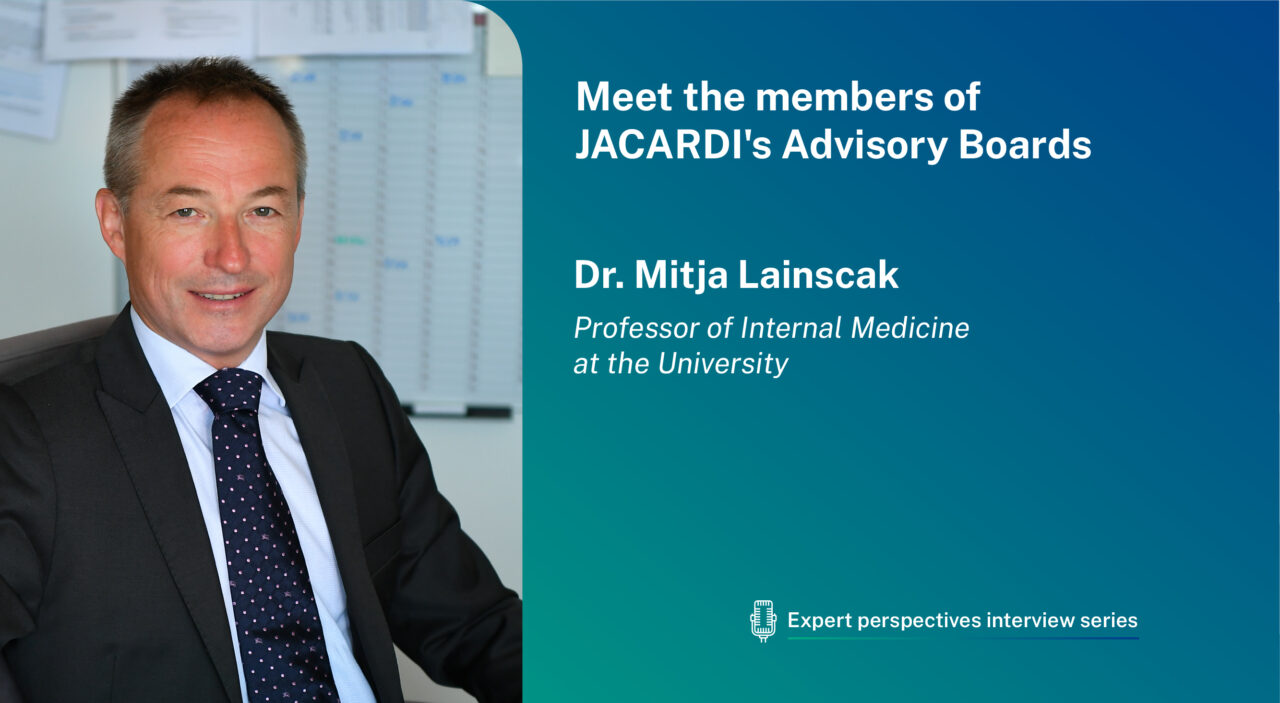
“It’s important that the JACARDI initiative and its outcomes gain visibility within the scientific community”, stresses Mitja Lainscak, Professor of Internal Medicine at the University of Ljubljana and member of JACARDI’s Scientific Advisory Board. As a clinical practitioner and researcher, he anticipates that collaboration will be one of the most important positive outcomes of the project, along with effects going from the regional or national level to the international level.
What significance does JACARDI hold for you and your organization?
I think that the organisations involved really appreciate being part of such a large initiative, trying to bring together efforts in the field of cardiovascular medicine and diabetes and to stimulate some potential cross-talk between the partners. The consortium is hosting more than 140 pilot projects with some of them related within or across the field.
One of the main benefits of an initiative like this, is that people talk to each other and realise that they can collaborate, so that their efforts can be transferred from the regional or national level to the international level.
How do you see JACARDI’s role in tackling the increasing prevalence of cardiovascular disease and diabetes in Europe?
Our society is aging and that’s an unavoidable reality. Advances in medicine have played a significant role in this trend. In addition, improvements in detection tools and the capabilities of our healthcare system have enhanced our ability to identify patients more effectively.
I hope we will identify more people at risk, as well as those with single or multiple conditions. Early detection is crucial because it allows us to start treatment earlier in the course of the disease, rather than waiting until it has progressed and caused irreversible damage. My hope is that we can intervene earlier for more patients.
How do you think JACARDI will influence future collaboration on cardiovascular disease and diabetes prevention in Europe?
JACARDI is a Joint Action, supported by the European Union and recognised by the scientific community. In a previous newsletter, I read a message from Professor Thomas F. Lüscher, the President of European Society of Cardiology highlighting the importance of JACARDI in shaping the future of cardiovascular disease and diabetes management through collaborative, data-driven care for the benefit of patients. I believe a similar message will come from the diabetes community. So, as said previously, having like-minded experts in the same room encourages discussion and cross-fertilisation of ideas. I anticipate that participants will begin to collaborate outside of the JACARDI framework, which I see as a positive outcome.
The European Society of Cardiology and the diabetes associations are already aligned, and I believe JACARDI has a crucial role to play in promoting future collaboration.
It’s important that the JACARDI initiative and its outcomes, such as pilot results, gain visibility in the scientific community. Researchers need to present their findings at conferences and submit their work for publication. This is essential to demonstrate that the funding received has been used effectively. Ultimately, it’s important to ensure that the investments made produce tangible results.
Based on your experience as a cardiologist, what do you consider the most critical factors in improving data-driven healthcare outcomes?
This is an extremely important question. Speaking from a national perspective, as someone from Slovenia, I’d like to extend this to an international context.
I believe that the lack of IT support for collecting data is a crucial issue. Slovenia is a small country with 2 million inhabitants and 14 hospitals, but we lack a unified IT system across these institutions. Although all hospitals are publicly owned and we have a single insurance provider, we struggle to collect comprehensive epidemiological data. We have a national hospitalization database, but it doesn’t give you the granularity of patient data.
The first necessary step would be the development of IT solutions, possibly using artificial intelligence, to extract the necessary data from medical records, particularly in terms of epidemiology. In my opinion, we still lack accurate figures for many diseases, both in Slovenia and across Europe.
Without this data, we cannot fully understand the scope of the problem, making it difficult to effectively allocate resources for patient management. I believe that the JACARDI pilots will showcase best practices in addressing this epidemiological data gap.
In terms of how JACARDI’s research and initiatives could support lasting, practical changes in clinical practice across Europe, particularly in Slovenia, I anticipate that most findings will primarily reflect the pilot country’s specific context . However, some lessons can be adapted across borders. Each country involved will focus on its specific challenges, but I believe that through meetings like this, where participants are encouraged to share their work, others can identify relevant lessons.
The perspective of the Advisory Board members is crucial in this process, as we aim to integrate ideas from different work packages that may not always communicate effectively with each other. This collaboration is essential.
Dr. Mitja Lainscak is a Professor of Internal Medicine at the University of Ljubljana and conducts clinical practice and research at the Department of Internal Medicine, General Hospital Murska Sobota, Slovenia. He is the Director of the Slovenian Research Agency and his clinical and research interest is cardiovascular medicine with particular emphasis on heart failure, pharmacotherapy, and metabolism with body composition. He has published more than 170 papers and holds an Executive Committee member position at the Heart Failure Association of the ESC.
Learn more about Mitja Lainscak and his work and connect on LinkedIn.