12 June 2026
Cristina Cebrián Méndez - CNIC
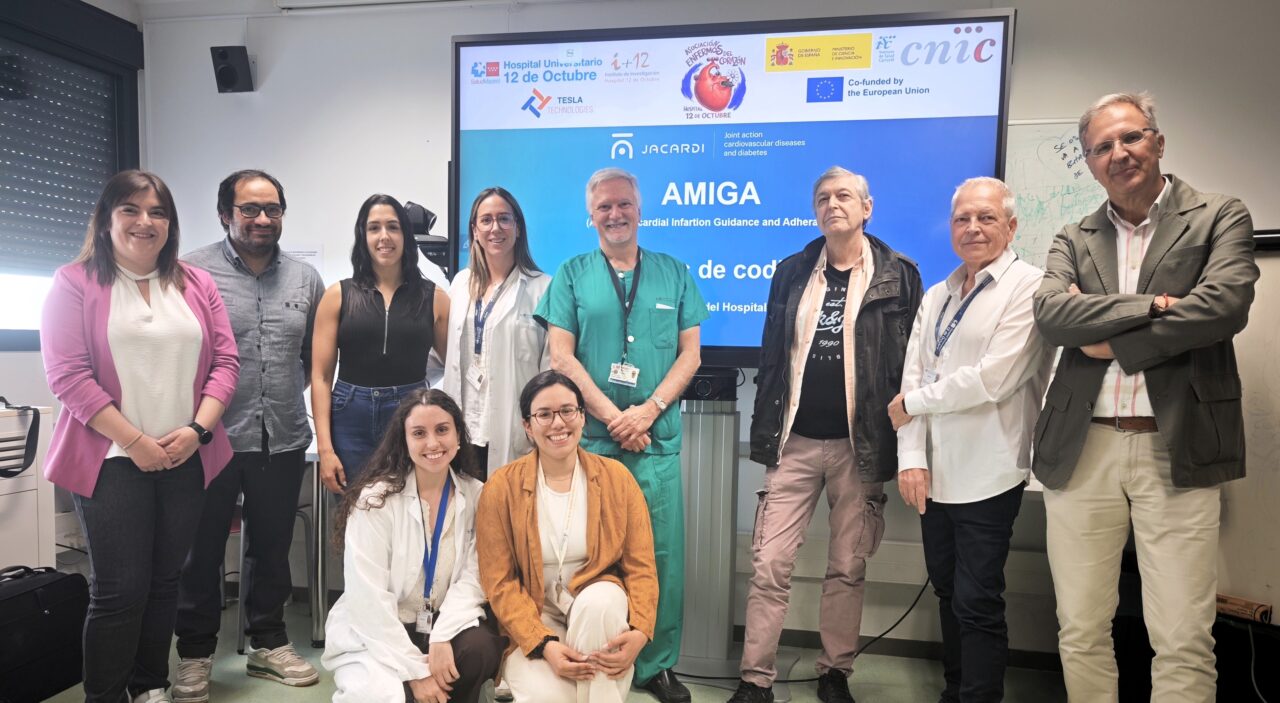
Through JACARDI´s AMIGA (Acute Myocardial Infarction Guidance and Adherence) pilot project, patients, clinicians, and researchers at Hospital 12 de Octubre in Madrid (Spain) and the Spanish National Centre for Cardiovascular Research (CNIC) are co-creating a mobile app to support life after a heart attack, turning uncertainty into guidance, and recovery into a shared journey.
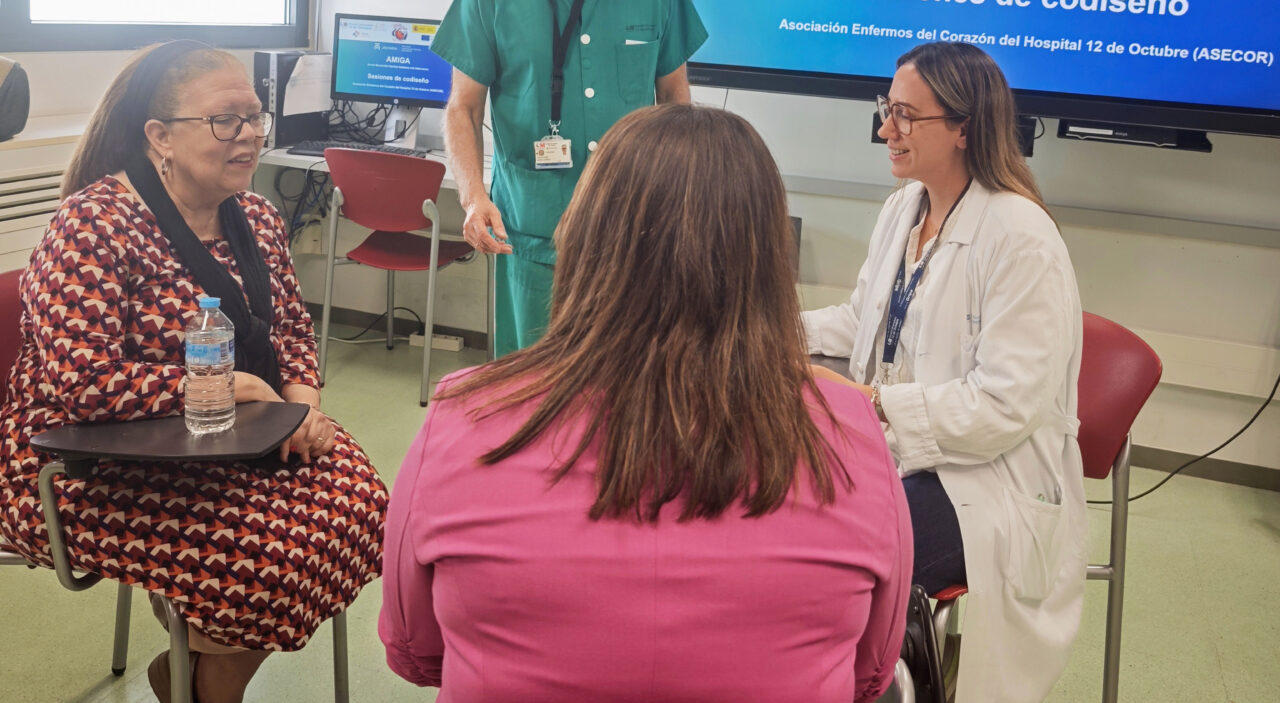
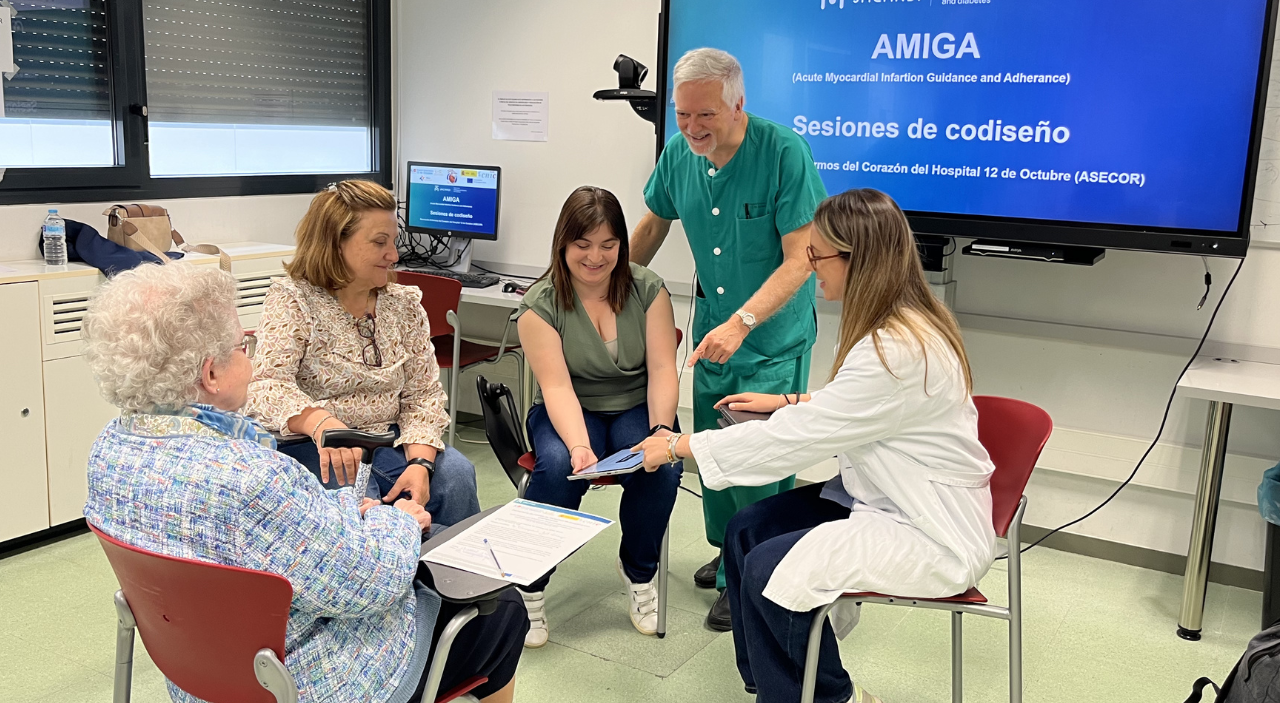
When María Eugenia left the hospital after her heart attack, she didn’t just carry a discharge report, she carried uncertainty. “This session felt timely and necessary for patients who leave the hospital feeling a bit lost or overwhelmed”, she says, speaking about one of the recent co-design sessions organised within the AMIGA pilot project at Hospital 12 de Octubre in Madrid (Spain).
AMIGA is part of JACARDI’s Work Package on patients’ self-management. Led by Hospital 12 de Octubre and the Spanish National Centre for Cardiovascular Research (CNIC), it focuses on improving self-management after a heart attack through a co-designed mobile application.
María Eugenia’s words capture a moment that many patients will recognize: the transition from hospital to home, when clinical care gives way to self-care and questions often outnumber answers. It is precisely in this vulnerable period where the project aims to make a difference.
The initiative is led by Dr Héctor Bueno, cardiologist and scientific director of the Cardiovascular Research Area at the i+12 Research Institute, Hospital Universitario 12 de Octubre, in Madrid; leader of the JACARDI working group on data availability and quality; and leader of a research group at CNIC.
A digital companion for life after a heart attack
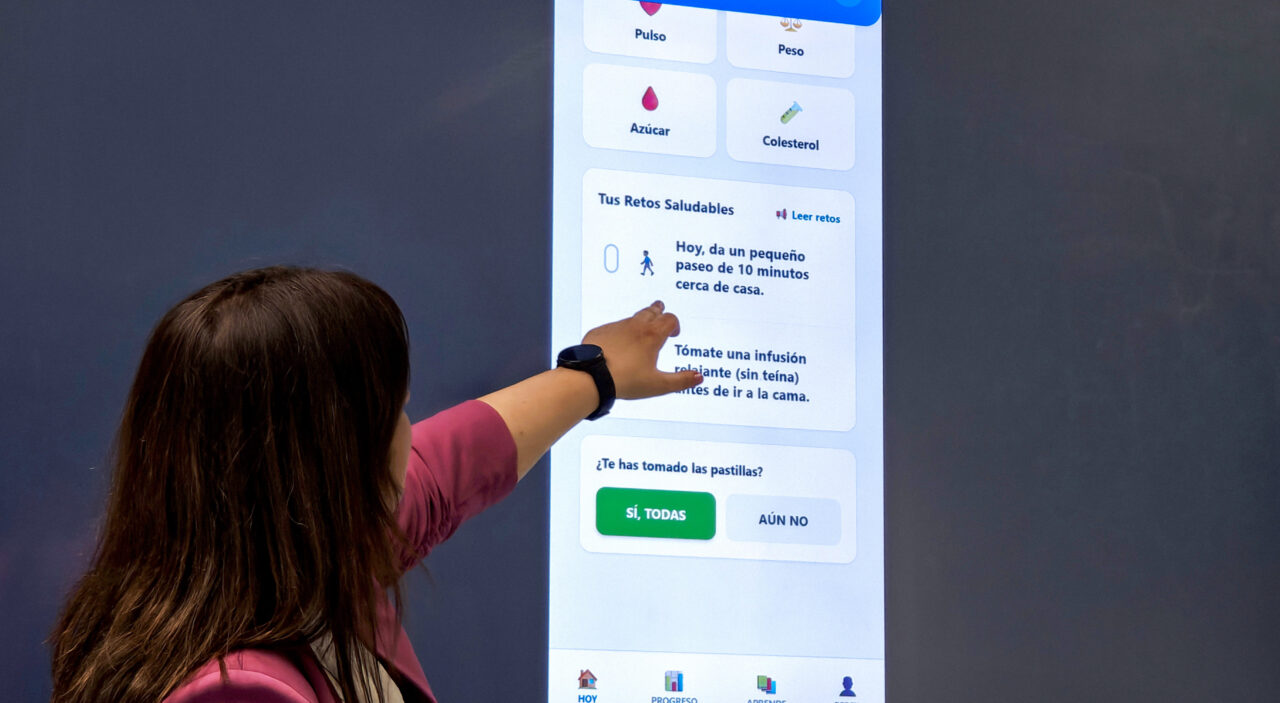
The AMIGA pilot is developing a mobile application designed to support people recovering from a heart attack. Grounded in principles of positive psychology, the app aims to enhance therapeutic adherence and empower patients in their day-to-day self-care.
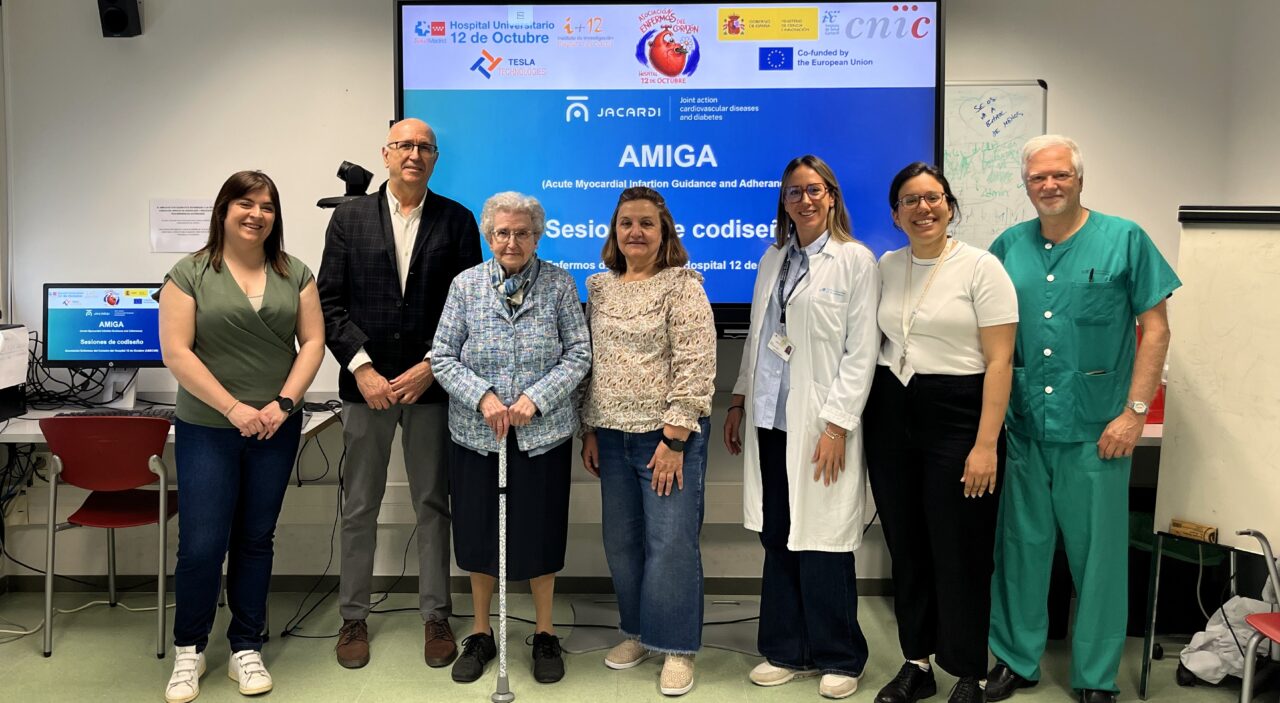
Fifteen participants, most aged between 70 and 75, took part in individual sessions simulating the real patient journey: from recruitment into the program to hands-on interaction with the app. Among them, one participant stood out as a powerful reflection of the project’s ambition: a 95-year-old woman who became one of its key advisors.
Behind this pilot lies a broader vision. Managing cardiovascular disease and diabetes depends not only on what happens inside hospitals, but largely on what patients are enabled to do in their everyday lives.
JACARDI’s Work Package on patients’ self-management focuses precisely on strengthening that capacity. Its pilot projects explore how patients can be better supported to adopt healthier lifestyles, monitor their symptoms, follow treatments correctly, and communicate more effectively with healthcare professionals, especially nurses, who play a vital role in this project. Equally important, they address something less visible but not less critical: how people cope with the emotional and practical challenges of living with a chronic condition.
When patients are equipped and confident to manage their health, outcomes improve, not only in terms of quality of life, but also through reduced avoidable complications and lower pressure on health systems.
Listening before building
These sessions were not only about testing technology; they were about understanding people, how they think, what they need and where they struggle. As Dr Bueno explains, this approach is not just desirable, it is essential:
“Many digital health solutions are developed without direct patient involvement, often resulting in low usage and adherence rates. In addition, given that the typical profile of these patients tends to be older, designing a digital tool that is accessible to individuals with potentially low digital literacy presents an additional challenge,” explains Dr Bueno.
The AMIGA project places patients at the centre of the design process, shaping everything from language and tone to usability and content.
Building together
The sessions were enriched by the involvement of ASECOR, the Association of Cardiac Patients at Hospital 12 de Octubre, bringing lived experience and a strong sense of community into the process.
As Antonio Sánchez, President of ASECOR, highlights, “it’s important not only to give visibility to these diseases, but also to raise awareness through the experiences of the patients participating in the project.” That perspective is grounded in long-standing collaboration with the hospital, which Carlos Quijorna, Treasurer of ASECOR, describes as “contributing our grain of sand.”
Ultimately, the value of the initiative lies in something deeply human: reducing the sense of isolation many patients feel after discharge. As Luis Álvarez, Secretary of ASECOR, puts it, “this application helps patients who, until now, often felt alone. With this, they feel more supported and can consult about their own condition.”
Co-design as a path to impact
These sessions are part of an ongoing process involving patients, caregivers, healthcare professionals, researchers, and technology experts. Each conversation, each piece of feedback, helps transform the app into something more than a digital tool, it becomes a reflection of real needs, real concerns, and real lives.
For the JACARDI pilot, this approach maximizes the likelihood of real-world impact. For participants, it offers something equally valuable: the chance to shape a solution that could improve the lives of future patients.
And for people like María Eugenia, it turns a moment of uncertainty into one of purpose.