11 December 2025
Cristina Cebrián Méndez - CNIC
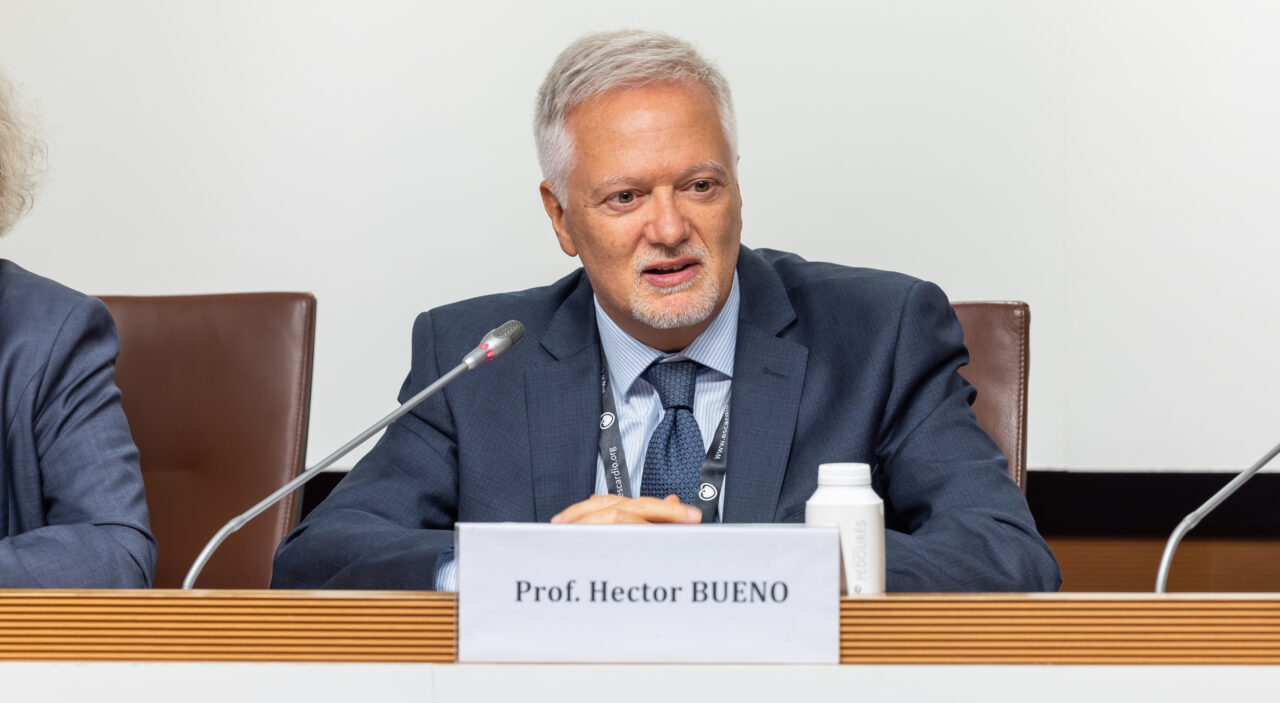
During the ESC Congress 2025, Professor Héctor Bueno unveiled a new statement from the European Society of Cardiology on mental health and cardiovascular disease, calling for closer collaboration between cardiologists and mental health professionals. The message was clear, mental and cardiovascular health are tightly interconnected, shaping one another from onset through progression to outcomes.
The ESC Congress 2025, held in Madrid at the end of August and organized by the European Society of Cardiology, brought together global leaders in cardiovascular medicine to present the latest advances shaping the future of heart health. Among the standout contributions was the presentation of the 2025 ESC Clinical Consensus Statement on Mental Health and Cardiovascular Disease[1], delivered by Professor Héctor Bueno, co-leader of JACARDI’s working group on data; senior researcher at the Spanish National Center for Cardiovascular Research (CNIC) and cardiologist at Hospital Universitario 12 de Octubre in Madrid (Spain).
Professor Bueno, together with Professor Christi Deaton, from the University of Cambridge (UK), introduced the new ESC Clinical Consensus Statement, which calls for a fundamental change in how mental health and cardiovascular disease are understood, assessed, and addressed in clinical practice. Their message was clear: mental health and cardiovascular health are not isolated domains but deeply interconnected, with each influencing the onset, progression, and outcomes of the other.
The Consensus Statement urges healthcare systems to systematically screen for mental health symptoms during cardiovascular care, and conversely, to routinely evaluate cardiovascular risk in individuals being treated for mental health conditions. This bidirectional approach is grounded in strong evidence: poor mental health contributes to the development of cardiovascular disease, while patients with cardiovascular disease face a significantly higher risk of anxiety, depression, and other mental health challenges. When both conditions coexist, outcomes tend to worsen, underscoring the need for integrated care.
A major innovation introduced in the Statement is the creation of Psycho-Cardio Teams, multidisciplinary units in which mental health professionals, such as psychologists and psychiatrists, work alongside with cardiologists and other cardiovascular specialists. These teams aim to ensure early identification of mental health conditions, better coordination of care, and more comprehensive support for both patients and caregivers.
As Professor Bueno emphasized during his presentation: “Clinical cardiovascular practice often overlooks the impact of mental health. We need to see cardiovascular health professionals developing collaborations with mental health professionals in Psycho-Cardio Teams to help identify early mental health conditions in our patients and improve care and support for patients and their caregivers.”
Empowering patients
The proposal represents more than a structural change, it calls for a cultural shift within cardiovascular medicine. By integrating mental health into routine cardiovascular assessments, empowering patients to discuss psychological concerns openly, and acknowledging the complex interplay between emotional and physical well-being, this initiative moves toward a more person-centred model of care.
Such progress represents a significant cultural shift towards a more integrated and responsive healthcare system, with the ultimate goal of empowering patients and enhancing their quality of life. This vision aligns strongly with JACARDI’s mission to promote person-centred, prevention-oriented, and patient-empowerment models of care.
JACARDI and its growing impact on cardiovascular health in Europe
Building on this shared vision, JACARDI is actively contributing to this transformation through initiatives such as working groups focused on patients’ self-management [2] and integrated care pathways [3]. The goals of the Consensus Statement resonate strongly with JACARDI’s commitment to empowering individuals in taking an active role in managing their cardiovascular and mental health.
Professor Bueno’s leadership in this landmark ESC initiative reinforces the consortium’s dedication to advancing cardiovascular health through innovative, holistic, and patient-centred approaches. His contribution at the ESC Congress 2025 marks an important milestone in Europe’s ongoing effort to bridge the gap between mental and cardiovascular health, an effort that promises meaningful benefits for patients across the region, empowering them to openly discuss their mental health with cardiovascular professionals and increasing the likelihood that their concerns will be taken seriously.
During the ESC Congress, the European Alliance for Cardiovascular Health (EACH) also highlighted JACARDI’s role during its annual meeting held in Madrid [4]. EACH partners reviewed progress in their 2025 workplan, celebrated key advocacy achievements, and reaffirmed the importance of coordinated action to improve cardiovascular health across Europe. At the meeting, JACARDI was recognised as a strong example of effective communication and successful synergy-building among partners, illustrating how collaborative approaches can strengthen cardiovascular health initiatives at the European level.
The visible engagement of JACARDI at the ESC Congress 2025 further highlights its increasing impact on the evolution of cardiovascular care in Europe. By championing mental–cardiovascular integration, strengthening patient empowerment, and fostering collaborative care pathways, JACARDI is helping to pave the way for a more holistic, equitable and person-centred cardiovascular health ecosystem across the region.
References:
[1] Héctor Bueno, Christi Deaton, Marta Farrero, Faye Forsyth, Frieder Braunschweig, Sergio Buccheri, Simona Dragan, Sofie Gevaert, Claes Held, Donata Kurpas, Karl-Heinz Ladwig, Christos D Lionis, Angela H E M Maas, Caius Ovidiu Merșa, Richard Mindham, Susanne S Pedersen, Martina Rojnic Kuzman, Sebastian Szmit, Rod S Taylor, Izabella Uchmanowicz, Noa Vilchinsky, ESC Scientific Document Group , 2025 ESC Clinical Consensus Statement on mental health and cardiovascular disease: developed under the auspices of the ESC Clinical Practice Guidelines Committee: Developed by the task force on mental health and cardiovascular disease of the European Society of Cardiology (ESC).
Endorsed by the European Federation of Psychologists’ Associations AISBL (EFPA), the European Psychiatric Association (EPA), and the International Society of Behavioral Medicine (ISBM), European Heart Journal, Volume 46, Issue 41, 1 November 2025, Pages 4156–4225, https://doi.org/10.1093/eurheartj/ehaf191
[2] Work Package 10: Patients’ Self-management, ‘Be the master of your health’
[3] Work Package 09: Integrated care pathways, ‘Elevating pathways, enhancing Care’