23 September 2026
H J
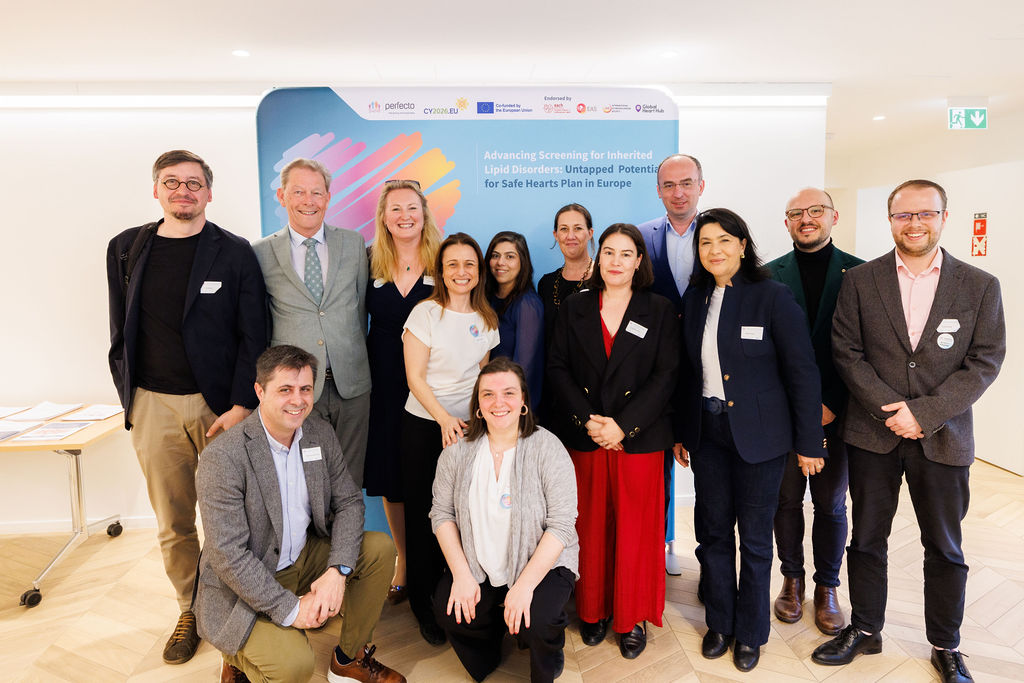
The PERFECTO project, co-funded by the EU4Health Programme, held its closing event titled “Advancing Screening for Inherited Lipid Disorders: Untapped Potential for Safe Hearts Plan in Europe”, in Brussels on 27–28 April 2026, under the Cyprus Presidency of the Council of the European Union.
Organised in the final phase of the project, the event brought together patient representatives, clinicians, researchers, policymakers, public health actors and European initiatives to discuss how early paediatric and family-based screening for Familial Hypercholesterolaemia (FH) can support cardiovascular prevention across Europe, particularly in the context of the EU Safe Hearts Plan.
From project outcomes to implementation
The event reflected PERFECTO’s core objective: moving early paediatric FH screening from evidence and awareness towards practical implementation in European health systems. Discussions also moved beyond FH alone, exploring how inherited lipid disorders and atherosclerotic cardiovascular disease (ASCVD) risk factors can be better recognised within prevention strategies, how families can benefit from early diagnosis and cascade screening, and how health systems can integrate screening pathways in a sustainable and equitable way.
PERFECTO presented key results developed during the project, including the Personalised Communication Model (PCM), the Societal Return on Investment (sROI) model for paediatric FH screening, and work on health equity and health mediation.
The PCM, informed by evidence from Romania and Cyprus, supports more targeted communication with families, citizens and stakeholders by considering differences in awareness, trust, health literacy, perceived risk and readiness to act. The sROI model explored how early detection can create value beyond direct clinical outcomes, including benefits for families, health systems and long-term cardiovascular prevention.
Health equity was another central theme. PERFECTO’s health mediation work examined how social determinants of health, access barriers and health literacy gaps can influence participation in screening, diagnosis and follow-up, highlighting the need to embed equity from the earliest stages of screening design.
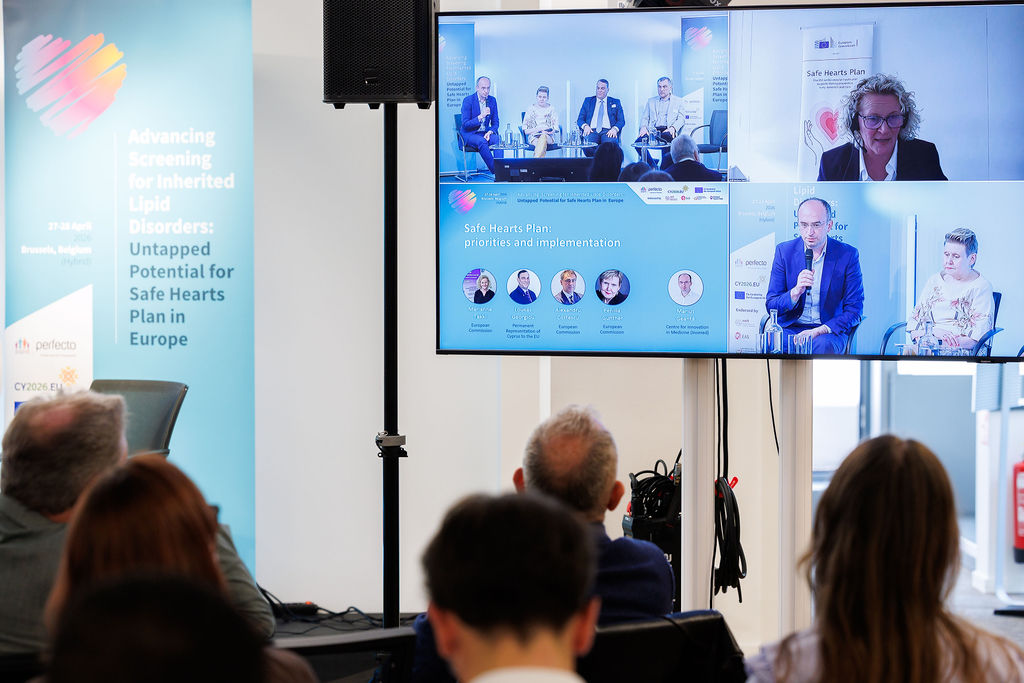
The event’s programme placed strong emphasis on implementation, reflecting European policy developments and national-level opportunities for action. Its high-level policy context was reflected through contributions from the Cypriot Minister of Health and Health Attaché, as well as engagement with Members of the European Parliament and European policy stakeholders. The event was endorsed by key cardiovascular and patient organisations, including the European Alliance for Cardiovascular Health (EACH), the European Atherosclerosis Society (EAS), the International Atherosclerosis Society (IAS) and the Global Heart Hub (GHH).
Patient Ambassadors also played an active role during the event, bringing lived experience into the discussions and showing how the knowledge and communication skills developed through PERFECTO can support continued advocacy beyond the project’s lifecycle.
Strengthening synergies with JACARDI and the Safe Hearts Plan
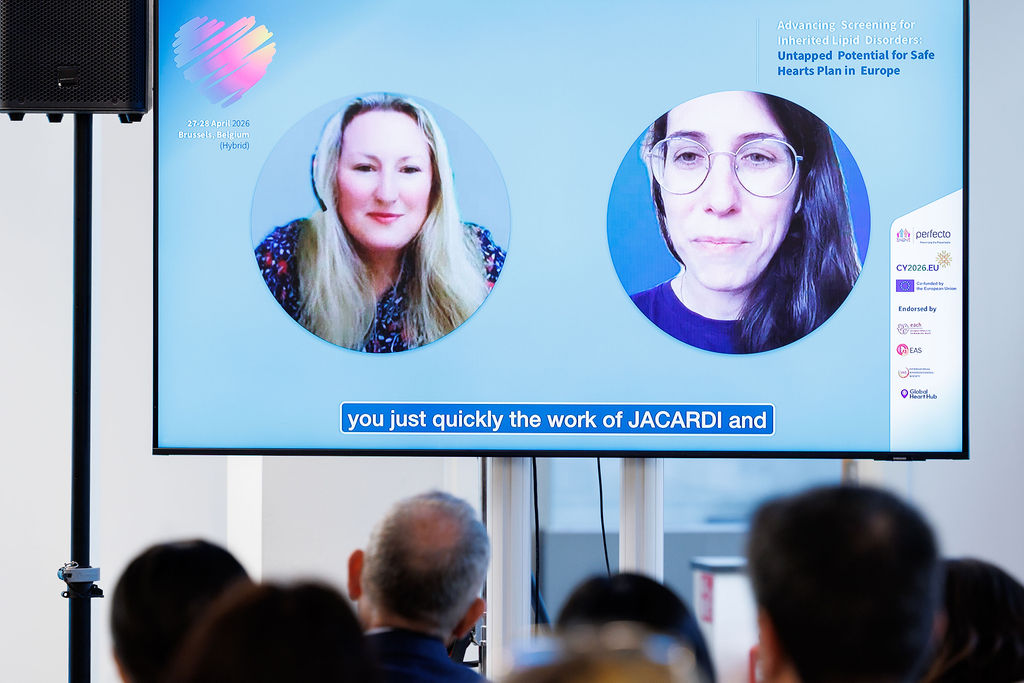
The closing event highlighted PERFECTO’s relevance within the wider European cardiovascular disease prevention landscape. The participation of Dr Benedetta Armocida, European Coordinator of JACARDI, in the session “From Framework to Implementation: JACARDI and the Operationalisation of the Safe Hearts Plan” strengthened the connection between PERFECTO’s work and JACARDI’s role in supporting implementation, sustainability and knowledge exchange across Member States.
This synergy is particularly important in the context of the Safe Hearts Plan. The project’s evidence and lessons informed European policy discussions on cardiovascular health checks and related protocols, helping bring attention to inherited lipid disorders, paediatric screening, family-based prevention, health equity and implementation pathways.
By bringing together the experience of an EU4Health Action Grant with the perspective of a Joint Action, the event showed how targeted projects such as PERFECTO can contribute evidence, tools and patient-led approaches, while JACARDI can support broader visibility, coordination and policy integration on the EU-level.
Although PERFECTO has now concluded, the closing event demonstrated that its work remains relevant for Europe’s next steps on cardiovascular prevention. Its legacy includes practical tools, trained Patient Ambassadors, stakeholder relationships and policy momentum supporting future discussions on early detection, equitable access and sustainable screening for inherited lipid disorders.