11 November 2026
Jacardi
At the European Public Health Conference, JACARDI and JA PreventNCD brought European institutions, Member States, international organisations, scientific experts and civil society together to explore how the EU Safe Hearts Plan can move from political ambition to sustainable implementation.
With the EU Safe Hearts Plan setting a new common direction for cardiovascular health in Europe, a crucial question comes to the forefront: how can its ambitions be translated into concrete policies, effective interventions and lasting improvements across Member States?
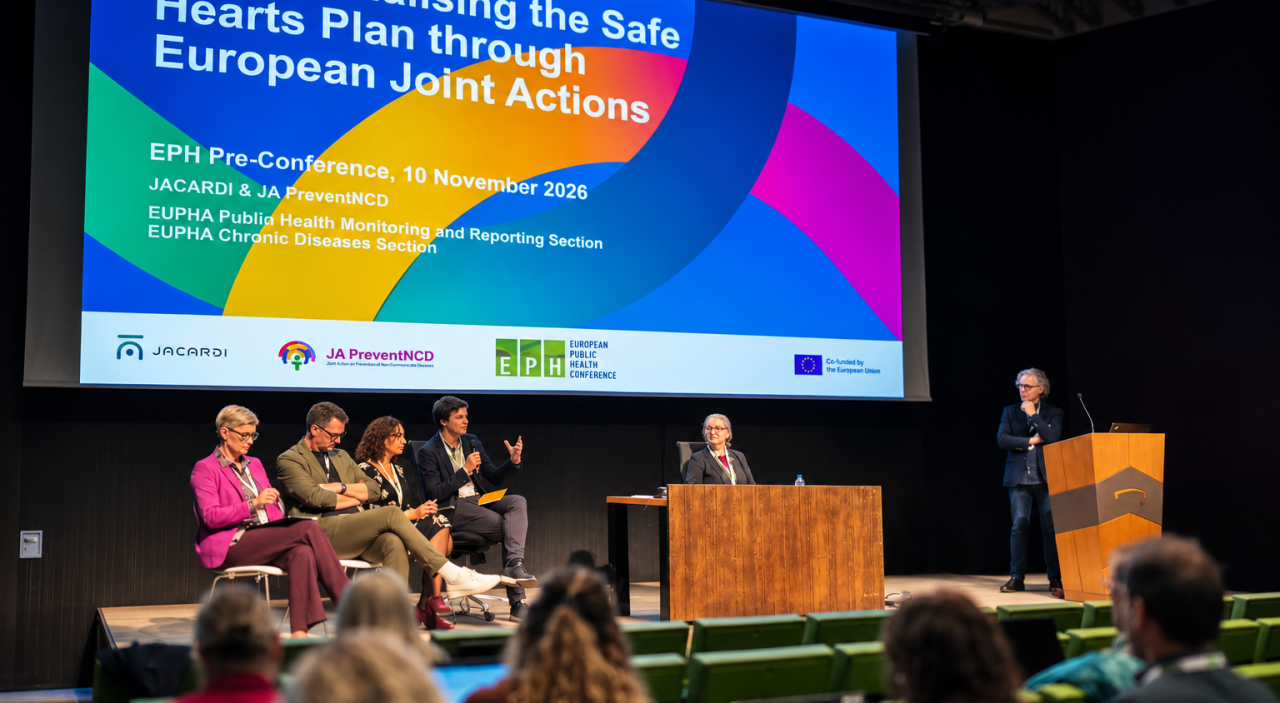
This was the central focus of “Operationalising the Safe Hearts Plan through European Joint Actions”, a pre-conference held in Bilbao as part of the 19th European Public Health Conference on 10 November. Co-organised by JACARDI, JA PreventNCD, and the European Public Health Association (EUPHA) Chronic Diseases and Public Health Monitoring and Reporting Sections, the event created a space for dialogue between European institutions, national policymakers, international organisations, researchers, healthcare professionals and civil society.
The conference came at a particularly important moment. Adopted in December 2025, the EU Safe Hearts Plan provides Europe’s first comprehensive framework dedicated to cardiovascular health, structured around three interconnected pillars: prevention, early detection and screening, and treatment and care. Yet moving from a common European vision to national implementation requires more than policy commitments. It calls for evidence on what works, an understanding of how interventions can be adapted to different contexts, and the institutional capacities and partnerships needed to sustain change.
This is precisely where European Joint Actions have an important role to play. Through cross-country collaboration, JACARDI and JA PreventNCD are generating practical knowledge, testing approaches in real-world settings and developing tools and capacities that can inform the implementation of European priorities. Their work provides an opportunity to connect the ambitions of the Safe Hearts Plan with the experience already being developed across Member States.
From a European commitment to national implementation
The conference opened by placing the Safe Hearts Plan within Europe’s broader health policy agenda.
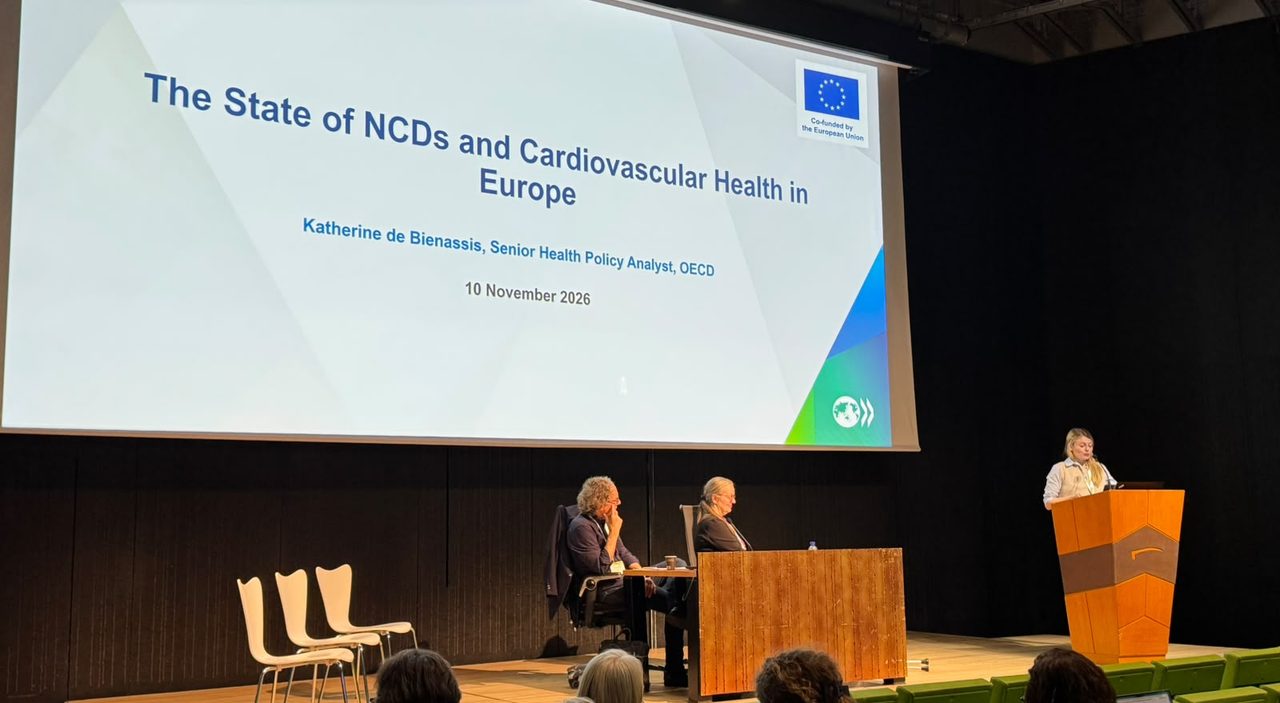
Perspectives from the European Commission’s DG SANTE, HaDEA, the OECD and WHO/Europe established the political, institutional and epidemiological context, highlighting both the scale of the cardiovascular health challenge and the opportunities created by a coordinated European response. The discussion then turned to the role of European Joint Actions, with Benedetta Armocida, JACARDI Coordinator, and Knut-Inge Klepp, JA PreventNCD Coordinator, presenting how their respective initiatives contribute to the Plan’s objectives through complementary approaches spanning prevention, screening and care.
A central consideration was that generating evidence is not enough. Research findings and successful interventions do not automatically translate into policy decisions or changes in healthcare delivery. Implementation requires understanding national contexts, identifying enabling conditions, building institutional capacity and creating stronger connections between scientific knowledge and policymaking.
As Benedetta Armocida, JACARDI Coordinator, emphasised: Generating evidence is only the beginning. The real value of JACARDI lies in turning that evidence into lasting change. Through our 144 pilots, we are learning not only what works, but what it takes to make it work across different populations, settings and health systems. And through initiatives such as our science-to-policy trainings, we are working to bridge the gap between research, implementation and policymaking. The Safe Hearts Plan offers a unique opportunity to bring these efforts together, ensuring that the knowledge, tools and capacities developed through European collaboration become part of how our health systems operate, well beyond the lifetime of individual projects.
The subsequent exchange with representatives from Spain and Ireland brought these considerations into the realities of national health systems. How can the Safe Hearts Plan build on existing national strategies? Which barriers might hinder implementation? And what lessons can be transferred between countries with different institutional structures and priorities? These questions highlighted the importance of national ownership and the need for European collaboration to support, rather than duplicate, existing policies and healthcare structures.
Connecting prevention, early detection and care: a broader vision of cardiovascular health
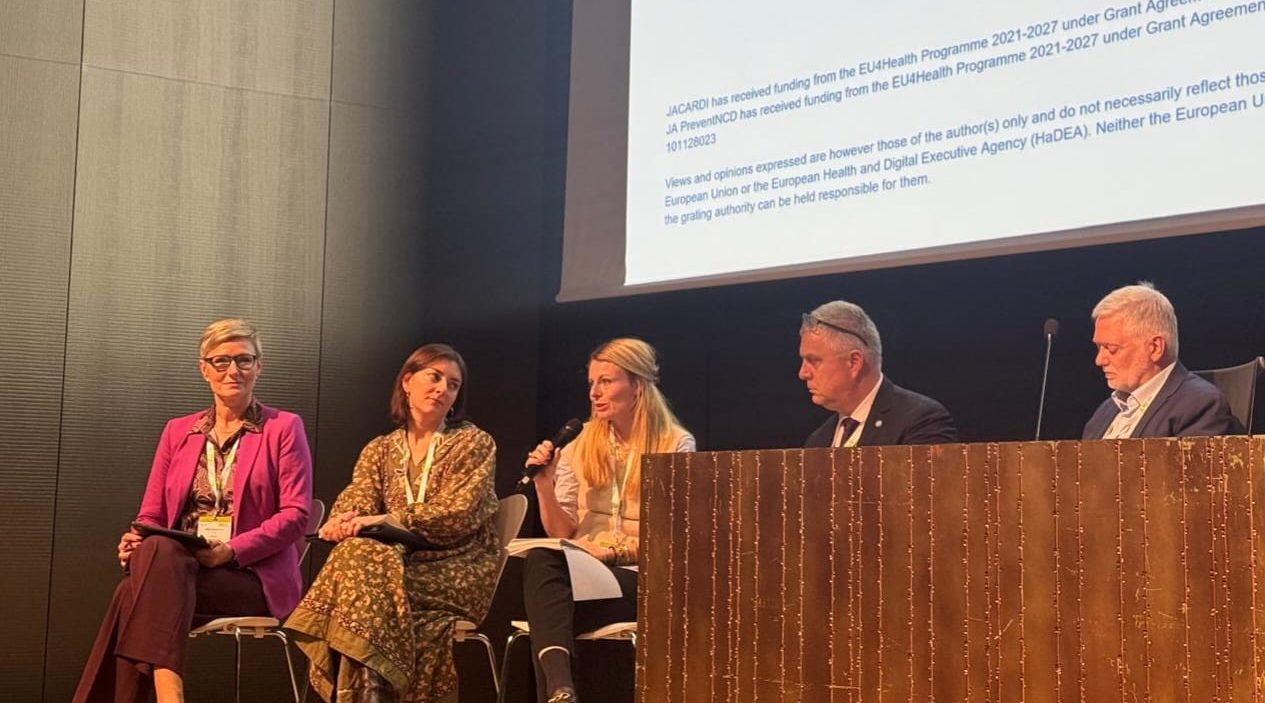
The discussion then explored the three pillars of the Safe Hearts Plan, bringing together evidence and implementation experiences from the Joint Actions with the perspectives of scientific organisations, public health experts and civil society.
Prevention emerged as a central area where a broader shift in perspective is needed. Cardiovascular health is shaped long before people enter the healthcare system, even before birth, through the social, economic and environmental conditions in which they live. The exchanges on health literacy, structural inequalities, climate and environmental risks, and civil society engagement reinforced an important distinction: helping people navigate unhealthy environments is not the same as making those environments healthier.
Strengthening prevention therefore means moving further upstream, addressing the conditions that influence health and working beyond the boundaries of the healthcare sector. Education, employment, environmental policies, urban planning and other areas of public policy all have a role to play. This also calls for a different understanding of prevention: not as an additional cost, but as a long-term investment in healthier populations, stronger societies and more sustainable health systems.
The discussion on early detection and screening explored how these ambitions can be translated into practical approaches, drawing on JACARDI’s work on screening programmes, structured health checks and workplace settings, alongside JA PreventNCD’s work on monitoring and the scientific perspective of the European Society of Cardiology.
Ensuring that screening leads to timely follow-up and appropriate care pathways
One key consideration was the need to look beyond the identification of people at risk. Screening and health checks can only deliver their full potential when they are connected to timely follow-up, accessible healthcare services and appropriate care pathways.
This naturally led to the third pillar, treatment and care, where the discussion focused on integrated care pathways, self-management support, risk identification and health system performance.
With ageing populations and increasing multimorbidity, European health systems face growing challenges in delivering continuous, coordinated and person-centred care. Strengthening primary care is essential, but primary care alone is not sufficient. Sustainable solutions require better integration across healthcare services, communities, workplaces and the wider settings in which health is shaped.
Together, the three pillars reinforced the importance of approaching cardiovascular health as a continuum, rather than a series of separate interventions. Prevention, early detection and care must be connected, with people’s needs and experiences at the centre. The subsequent cross-cutting discussion brought attention to the foundations needed to make this possible, particularly equity, data, research and innovation.
A central message was the need to move from describing inequalities to reducing them. Understanding disparities is essential, but it must lead to concrete decisions about how interventions are designed, implemented and made accessible to populations facing the greatest barriers.
Similarly, Europe already generates substantial amounts of health data, but the challenge is not simply to produce more information. It is to ensure that the right data are collected, can be accessed and meaningfully connected, and are used effectively to inform decisions. These considerations are particularly relevant to the European Health Data Space and to the work of both Joint Actions on data governance, interoperability, monitoring and research priorities.
From evidence to lasting change: what comes next?
The discussion moved beyond individual interventions to consider the broader conditions needed for sustainable implementation: governance, financing, accountability, institutional capacities and continued collaboration between European and national stakeholders. Across the day’s exchanges, five key messages emerged:
1. Move prevention upstream and recognise it as an investment. Improving cardiovascular health requires acting on the social, economic and environmental conditions that shape people’s lives. This means engaging sectors beyond healthcare and creating healthier environments, while recognising prevention as a long-term investment in society rather than simply a cost.
2. Connect prevention, screening and care across settings and throughout life. Identifying people at risk must be the starting point of accessible, coordinated and person-centred pathways. Ageing populations and increasing multimorbidity call for stronger primary care, but also for greater integration between healthcare services, communities, workplaces and other settings.
3. Move from describing inequalities to reducing them. Equity must inform decisions from the outset, shaping how interventions are designed, implemented and evaluated. The objective is not only to document disparities, but to ensure that progress reaches those who face the greatest barriers to cardiovascular health.
4. Use data and evidence to drive decisions and implementation. Europe needs not simply more data, but the right data, accessible and interoperable, and the capacity to use it wisely. Evidence does not implement itself: stronger connections between researchers, policymakers, practitioners and communities are needed to turn knowledge into action, bridging different professional and institutional perspectives.
5. Make sustainability part of implementation from the beginning. Lasting change requires national ownership, institutional capacity, sustainable financing and accountability. The goal must be to integrate effective approaches into routine policies and practices, so that their benefits continue beyond individual projects and funding cycles.
These messages point to a common conclusion. The Safe Hearts Plan provides Europe with a shared direction. What is now needed is a concrete pathway for implementation.
European Joint Actions such as JACARDI and JA PreventNCD can make an important contribution to building that pathway. Their value lies not only in generating evidence, but in connecting countries, bringing together different perspectives, translating implementation experience into practical knowledge and strengthening the capacities needed to turn results into policy and system-level change.
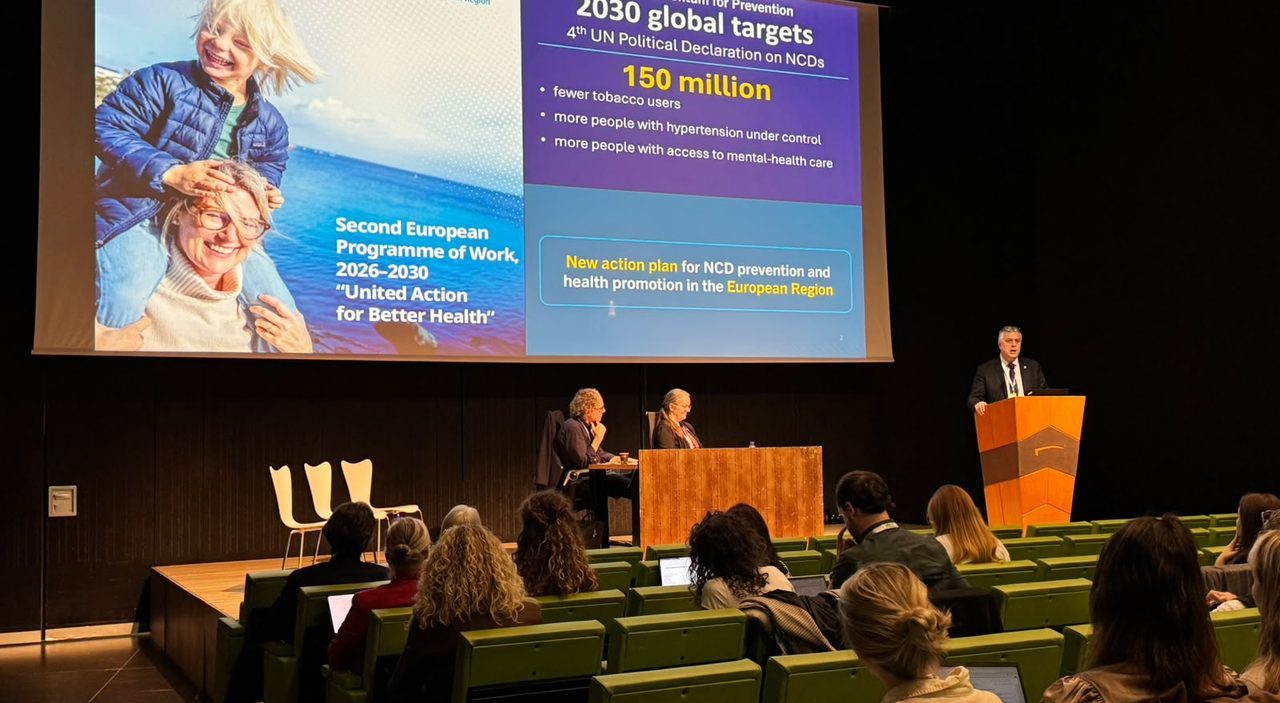
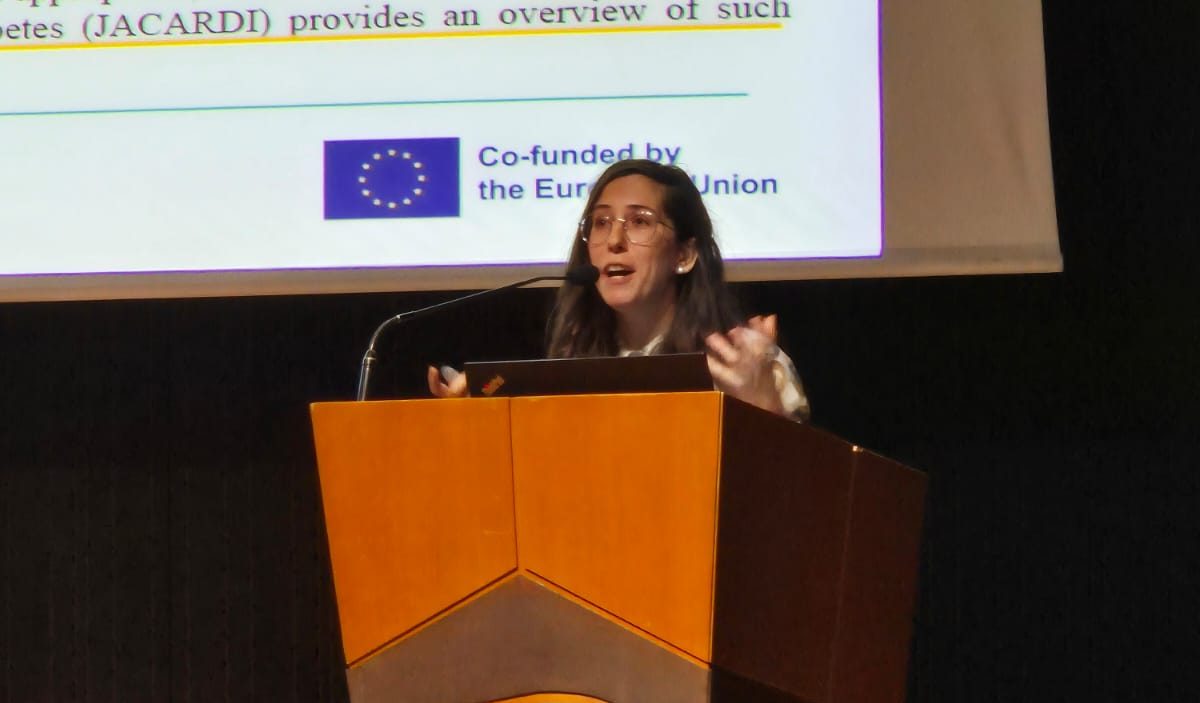
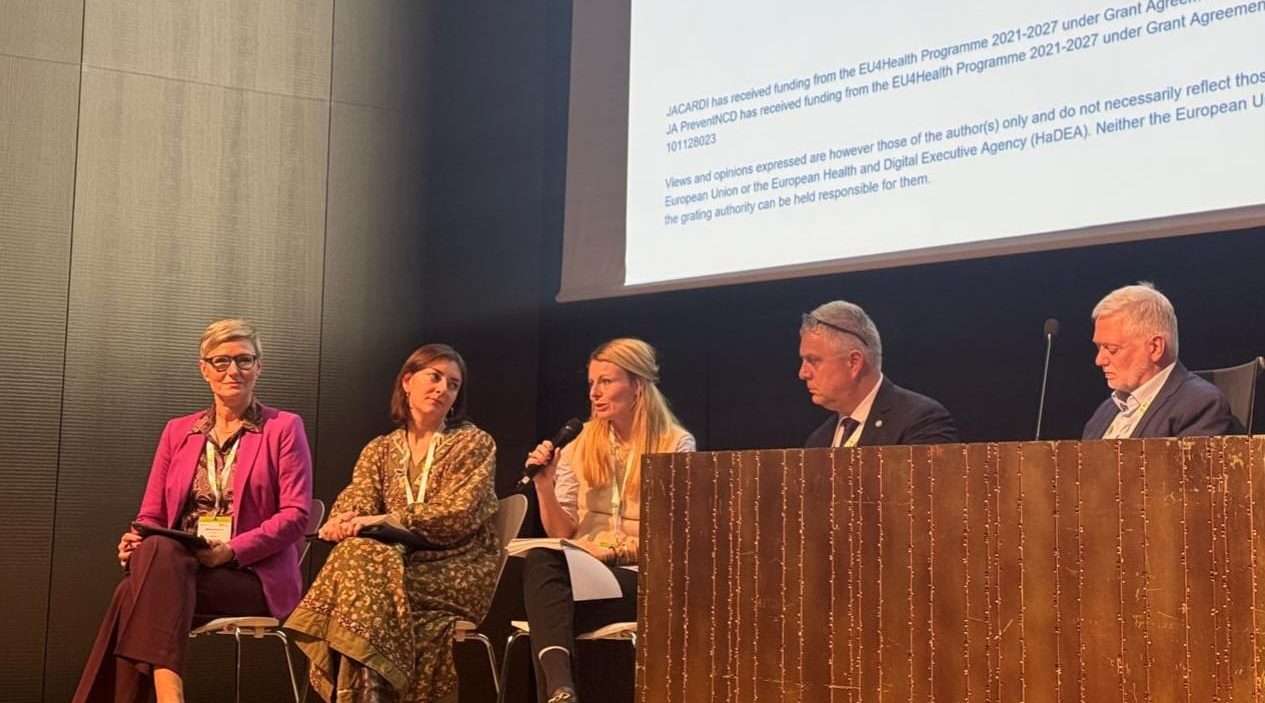
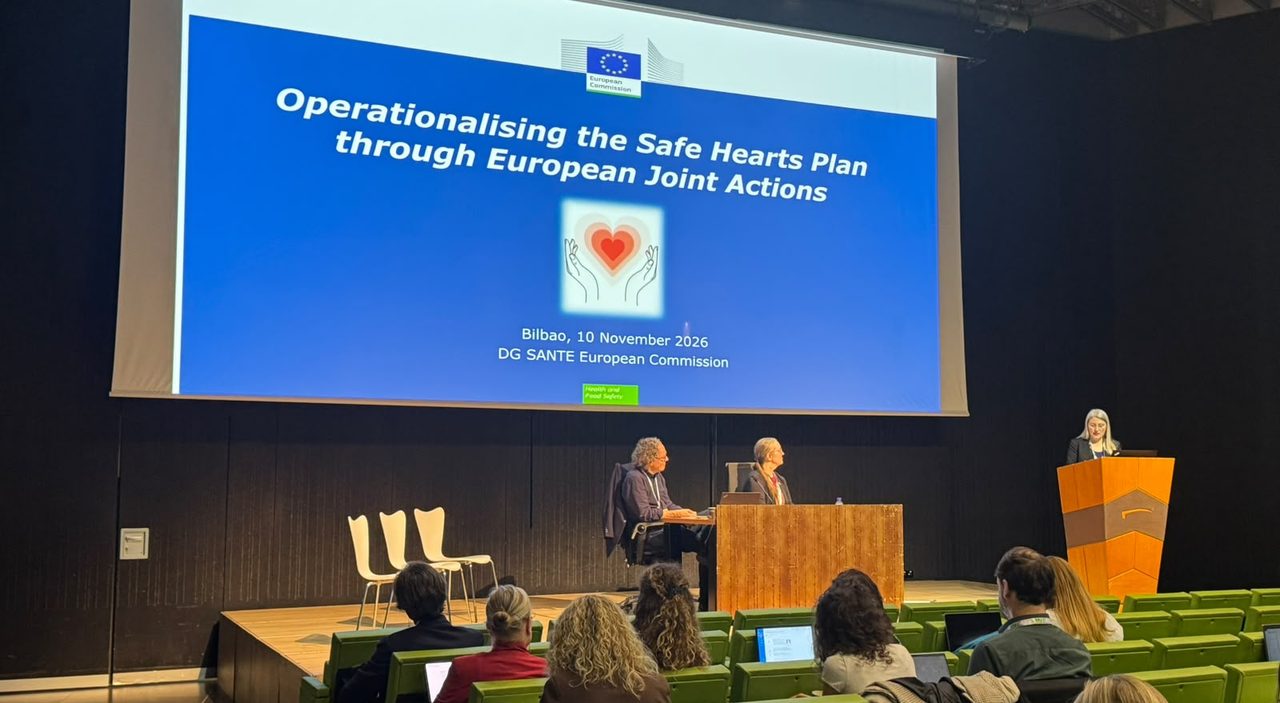
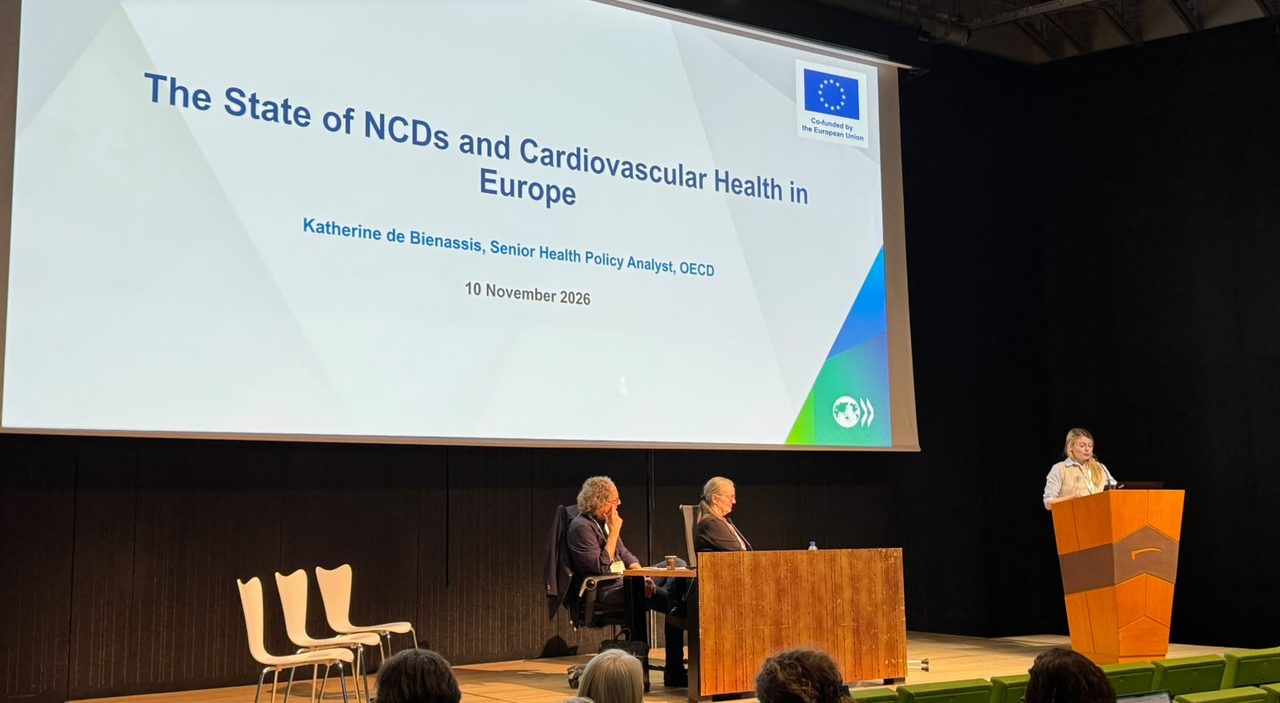
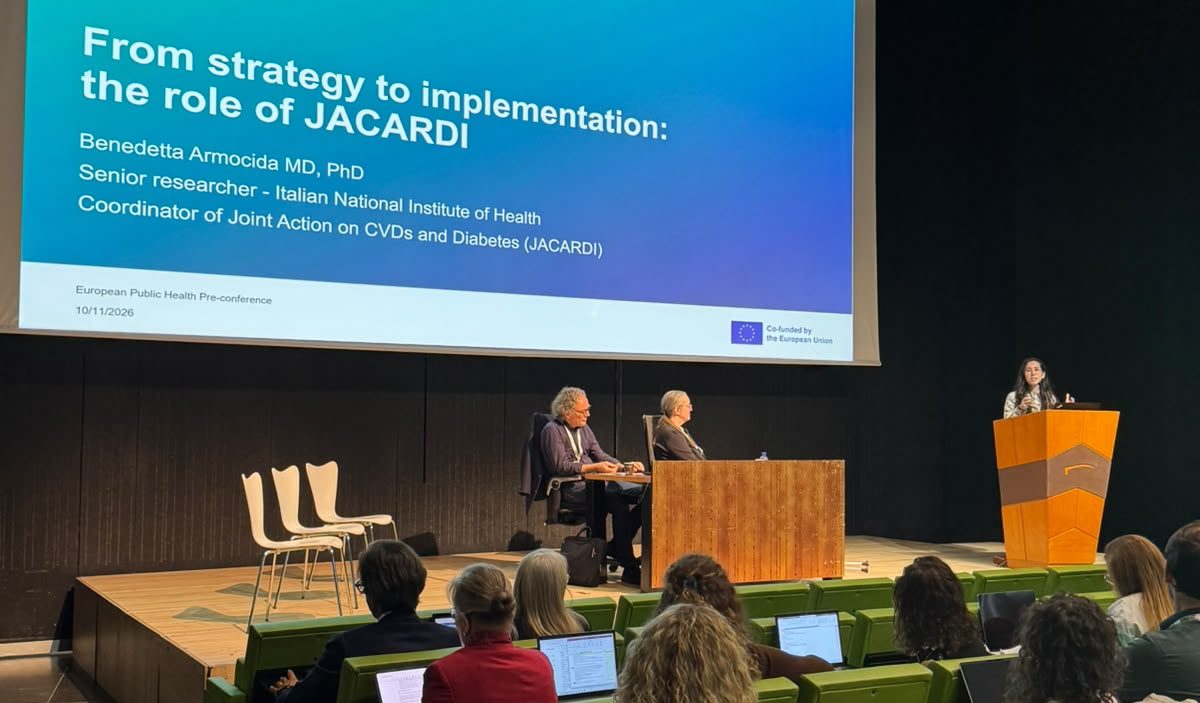
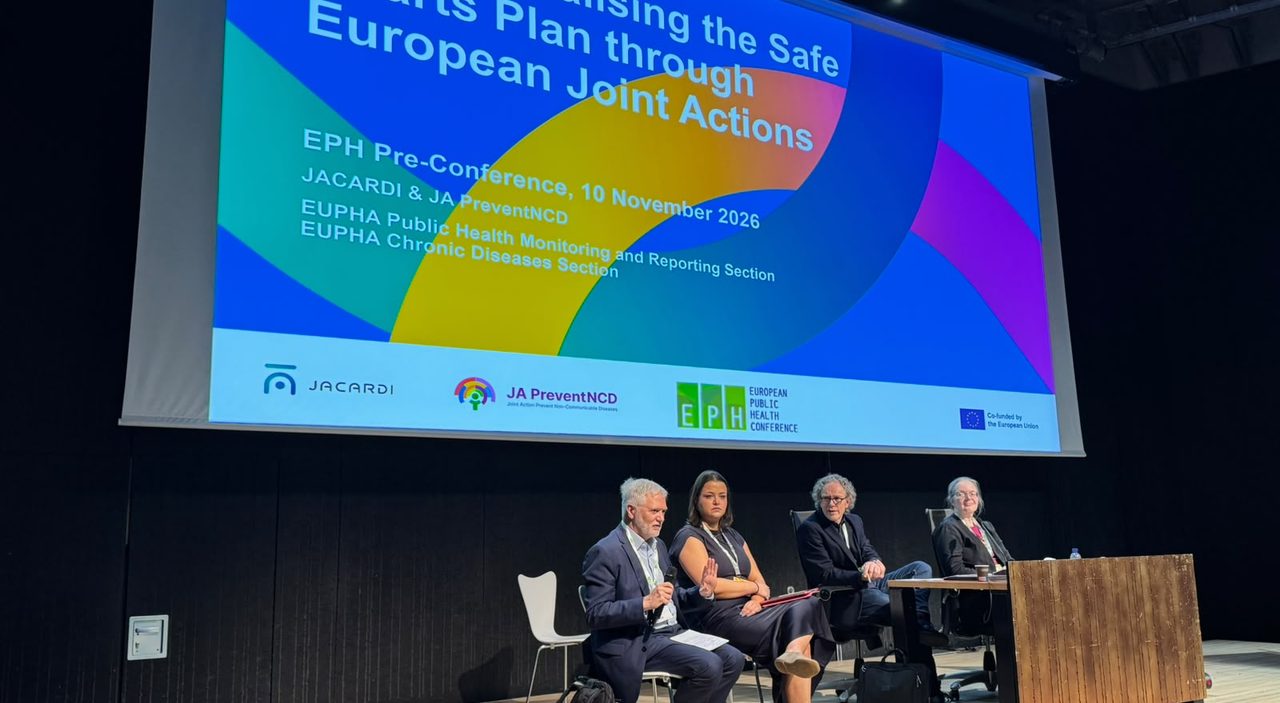
The diversity of voices brought together in Bilbao demonstrated that this transformation cannot be achieved by the health sector alone, nor by researchers, policymakers or practitioners working in isolation. It requires sustained dialogue across disciplines, institutions, sectors and countries, and a shared commitment to act on the evidence already available.
The challenge ahead is to move from knowing what needs to change to making that change happen, ensuring that the opportunities created by the Safe Hearts Plan translate into better cardiovascular health for everyone, leaving no one behind.
The pre-conference “Operationalising the Safe Hearts Plan through European Joint Actions” took place on 10 November 2026 at the Euskalduna Conference Centre in Bilbao, as part of the 19th European Public Health Conference. The event was co-organised by JACARDI, JA PreventNCD, the EUPHA Chronic Diseases Section and the EUPHA Public Health Monitoring and Reporting Section.