Shaping the EU Safe Hearts Plan: JACARDI joins high-level dialogue on regional and local perspectives
During a high-level discussion bringing together EU and regional stakeholders, JACARDI Coordinator Benedetta Armocida highlighted how coordinated European action can bridge research, policy, and implementation in advancing the EU Safe Hearts Plan. The meeting aimed to explore how regional and local authorities can contribute to shaping and implementing the plan, bringing forward territorial perspectives and feeding into the upcoming Committee of the Regions opinion.
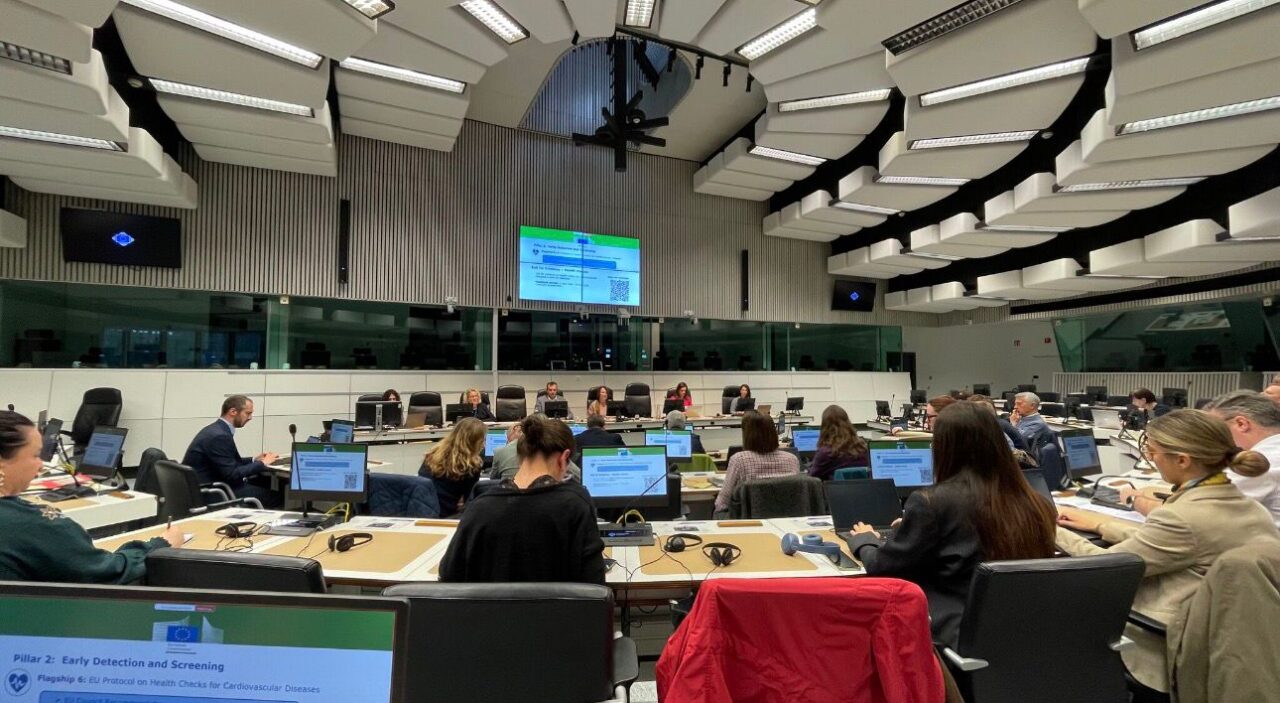
On 6 May 2026, the Interregional Group on Health and Well-being of the European Committee of the Regions, with the support of EUREGHA, hosted the high-level discussion “Shaping the EU Safe Hearts Plan: regional perspectives for cardiovascular health” in Brussels.
The meeting brought together representatives from EU institutions, regional and local authorities, healthcare professionals, researchers, and public health stakeholders to discuss how to advance the implementation of the Safe Hearts Plan (SHP) through stronger multilevel governance and regional action. JACARDI contributed to the discussion as a key European initiative in this field to support the objectives of the SHP.
Cardiovascular diseases remain the leading cause of death and disability in Europe, placing a major burden on individuals, health systems, and economies. Against this backdrop, the discussion highlighted the importance of translating European policy ambitions into concrete and equitable actions adapted to regional and local realities.
Speakers included:
- Carmine Pacente, European Committee of the Regions
- Romana Jerković, European Parliament
- Marianne Takki, European Commission
- Benedetta Armocida, Istituto Superiore di Sanità and Coordinator of JACARDI
- Cristina Gavina, Portuguese Society of Cardiology and European Society of Cardiology
- Antonio Aurigemma, Regione Lazio
The discussion underscored several priorities for the future implementation of the SHP, including strengthening prevention and health promotion, improving early detection and screening, ensuring continuity and integration of care pathways, and addressing persistent inequalities in cardiovascular outcomes, including the cardiovascular gender gap, across and within European regions.
Evidence-informed policies and prevention beyond healthcare settings
Participants also highlighted the growing importance of data systems and digital innovation in supporting evidence-informed and more equitable cardiovascular health policies. At the same time, speakers stressed that effective prevention strategies must extend beyond healthcare settings and reach people directly within schools, workplaces, and local communities, especially underserved populations and people living in vulnerable situations.
Coordinated European action through JACARDI
In this context, Benedetta Armocida presented JACARDI as a concrete example of how coordinated European action can support the objectives of the Safe Hearts Plan by bridging research, policy, and implementation. The Joint Action contributes to strengthening national and regional capacities, fostering collaboration across health systems, and reducing fragmentation in the prevention and management of cardiovascular diseases and diabetes. The discussion concluded with a shared recognition that achieving the ambitions of the EU Safe Hearts Plan will require sustained collaboration between EU, national, regional, and local actors, alongside continued investment in prevention, integrated care, and equity.
The meeting further demonstrated the added value of creating spaces for dialogue between policymakers, researchers, healthcare professionals, and implementers. Bringing together actors operating at different governance levels allows for the exchange of practical experiences, the identification of shared challenges, and the co-development of solutions that are both evidence-based and feasible in real-world settings. Such multistakeholder engagement is essential to ensure that European strategies are translated into sustainable and impactful actions at the regional and local level.
From evidence to impact: a united call for equity-driven and sustainable action on NCDs
- JACARDI, JA PreventNCD, WHO Europe, OECD and the European Commission’s DG SANTE have published a joint Comment in The Lancet Regional Health, based on the findings of the newly published report ‘Avoidable mortality, risk factors and policies for tackling NCDs: leveraging data for impact’, by WHO Europe.
- The Comment underscores the critical role of cross-national collaboration in translating WHO findings into actionable policies, with a focus on equity, data-driven solutions, and integrated care pathways.
- These organizations call for an accelerated, harmonised and equity-driven European agenda on non-communicable diseases.
Non-communicable diseases (NCDs) remain the leading cause of death and disability in Europe, and recent trends reveal both progress and setbacks. While tobacco use, hypertension prevalence, and alcohol consumption have declined since 2010, obesity and diabetes rates continue to rise alarmingly, and physical inactivity shows no signs of improvement. This mixed picture is compounded by a slowdown in the implementation of vital public health policies since the COVID-19 pandemic.
These findings are discussed in a Comment published in The Lancet Regional Health and developed through a collaborative effort bringing together JACARDI, JA PreventNCD, WHO Europe, OECD (Organisation for Economic Co-operation and Development), and the European Commission’s DG SANTE. The publication summarises the findings of the report Avoidable mortality, risk factors and policies for tackling noncommunicable diseases – leveraging data for impact: monitoring commitments in the WHO European Region ahead of the Fourth United Nations High-Level Meeting, by WHO Europe, reinforcing the urgency of renewed action. It emphasises the need for comprehensive solutions that prioritise strengthening health systems, accelerating the implementation of proven interventions, effective policies, and integrating equity-driven approaches.
The Comment presents key insights taken from the WHO Europe Report on the current state of NCD prevention and management in Europe. It highlights key challenges, such as the decline in the number of countries that have fully implemented NCD surveys, which fell from 28% in 2021 to 19% in 2023, and the reduction in the number of countries with operational multisectoral NCD strategies, which decreased from 60% to 55% during this period.
Despite these challenges, the authors note that 85% of European countries have adopted management guidelines for the four major NCDs: cardiovascular diseases, cancer, diabetes, and chronic respiratory diseases; demonstrating significant foundational progress.

“These figures paint a complex picture. Despite decades of progress in reducing premature mortality from the four major NCDs prioritised by global agenda, currently the region is off track to meet its 2025 targets. Moreover, the rise in obesity and diabetes and the slowdown in policy implementation highlight the urgent need to reinvigorate our efforts”, comments first author Dr Benedetta Armocida, from the Department of Cardiovascular, Endocrine-metabolic Diseases and Aging at Istituto Superiore di Sanità-ISS, Rome (Italy) and Coordinator of JACARDI.
The Scientific Coordinator of JA PreventNCD, Prof Knut-Inge Klepp, concurs and is particularly concerned regarding the slowdown in the implementation of population level policy interventions:
“We know how critical such policies are if we are to succeed in having a significant and lasting impact across population groups in Europe. Inequalities in NCD-related health remain a key challenge across and within European countries”.
Driving change
The European Union’s flagship initiatives under the EU4Health Programme are pivotal in addressing these challenges. JACARDI and JA PreventNCD are at the forefront of strengthening cross-national collaboration and implementing integrated strategies for NCD prevention and management.
JA PreventNCD targets primary prevention by tackling root causes such as unhealthy diets, tobacco and alcohol use, and lack of physical activity. JACARDI, meanwhile, focuses on secondary and tertiary prevention, aiming to enhance outcomes for cardiovascular diseases and diabetes through evidence-based interventions and integrated care pathways. Together, these initiatives exemplify the EU’s commitment to tackling NCDs across the care continuum, supported by a combined budget of €160 million and participation from 27 European countries.
The WHO NCD Global Monitoring Framework, which includes nine global voluntary targets, notably the headline goal of a 25% reduction in premature mortality from NCDs by 2025, is about to expire. That is why the authors provide a clear roadmap for advancing the fight against NCDs, ensuring systematic policy implementation and strengthening data infrastructures to translate commitments into measurable health outcomes.
“There are no more excuses. We have the knowledge and the tools. What remains is the will to implement them swiftly and hold ourselves accountable for delivering real results. This is not just a matter of public health; this is a matter of justice, security, and competitiveness, and a shared future”, says Dr Hans Henri P. Kluge, World Health Organization Regional Director for Europe.

Armocida and Klepp underscore the power of collaboration in achieving meaningful change: “We truly believe this joint effort reflects the strength and unity across Europe, bringing together a diverse group of organisations, initiatives, and stakeholders committed to reducing the burden of NCDs. The collaborative authorship of this Comment itself serves as an example of the collective commitment and shared vision needed to address one of the region’s most pressing public health challenges.”
The Comment calls for an accelerated, harmonised, and equity-driven European agenda on NCDs, particularly in the lead-up to the 2025 UN High-Level Meeting on NCDs.
The JA PreventNCD and JACARDI Joint Actions encourage policymakers, researchers, and public health advocates to explore this vital publication and join in building a healthier, more equitable future for Europe.
JACARDI (Grant Agreement 101126953) and JA PreventNCD (Grant Agreement 101128023) projects have received funding from the EU4Health Programme 2021-2027.
Francesco Cosentino: Policy change can only happen when it is driven both at EU and national level
As the European Commission prepares to launch the European Cardiovascular Health Plan, recognizing the strong link between cardiovascular disease and diabetes is more important than ever. However, for real impact, the plan must provide funding that reflects the scale of the CVD burden, says Francesco Cosentino, Vice-President of the European Society of Cardiology (ESC) from 2020 to 2022, and a member of JACARDI’s Stakeholder Advisory Board. JACARDI’s work in optimizing the availability of health data can play a vital role in shaping future policies and ensuring data availability will also be key to improving adherence to guidelines.
What significance does JACARDI hold for you and your organization in terms of its mission and values?
The mission of the European Society of Cardiology (ESC) is to reduce the burden of cardiovascular disease (CVD). Our society is very supportive of the great work being undertaken through JACARDI, which aims to support European countries in reducing the burden of CVD and diabetes and improve quality of care for the individuals affected.
How do you see JACARDI’s role in tackling the increasing prevalence of cardiovascular disease and diabetes in Europe?
I believe that JACARDI, through its numerous science-based pilot projects in 18 EU countries and with its network of 76 partners, has great potential to foster community spirit, knowledge sharing and to create value for tackling the increasing prevalence of CVD and diabetes across Europe. I think that JACARDI’s main strength is the integrated approach addressing both diseases simultaneously with a focus on the entire patient journey.
How do you think JACARDI will influence future collaboration on cardiovascular disease and diabetes prevention in Europe?
JACARDI specifically reflects the realities of patients who live with two comorbidities. We know CVD remains the predominant cause of death and disability in Europe. In the European Union, 62 million people live with CVD and 5 million new cases are diagnosed every year. In addition, 1 in 10 adults live with diabetes. What we also know is that people with diabetes have a two to three times higher cardiovascular risk than people without diabetes. They also see their life expectancy reduced by 10-14 years.
It is important to diagnose CVD and diabetes as early as possible to prevent complications and reduce healthcare costs. Recognizing these interlinkages between these two comorbidities is also crucial in the context of the incoming European Cardiovascular Health Plan from the European Commission. I believe that diabetes will be included within this plan.
So, joint health checks based on common risk factors for both diseases, such as high body mass index (BMI), high blood pressure, tobacco and alcohol consumption, high blood glucose and high LDL cholesterol are sensible and cost-effective options for the identification of high cardiovascular risk in individuals.
Based on your experience chairing the ESC Guidelines on Diabetes and Cardiovascular Disease, how can JACARDI’s research contribute to shaping future clinical guidelines in Europe?
Our ESC Guidelines on Diabetes and Cardiovascular Disease are an excellent tool to implement evidence-based, person-centered treatment strategies. This is what we call personalized medicine, which we know is effective in reducing cardiovascular risk in patients with diabetes. I believe that findings from JACARDI may potentially help the implementation of our guidelines in the daily clinical practice.
A critical step is ensuring that the clear target outlined in the ESC guidelines, to achieve better outcomes for people living with diabetes and CVD, is met for all patients. However, we are not there yet.
In this regard, data availability, data sharing and utilization are really crucial to improve patients’ and healthcare professionals’ adherence to the guidelines. One of the Work Packages of JACARDI aims to optimize the way individuals, communities, and organizations access, understand and use health information. These can be very helpful in shaping future guidelines.
With your background in cardiovascular pharmacology, what role do you think pharmacological innovations will play in complementing JACARDI’s efforts to reduce the burden of cardiovascular disease and diabetes?
I believe that a wide range of stakeholders have an important part to play in improving cardiovascular health in our population. This also includes the innovations coming from pharma and device companies. We hope that the innovation pipeline will continue to improve in the coming years as many clinical needs remain unmet.
Collaboration is definitely key and this is why the ESC is also a proud partner of the European Alliance for Cardiovascular Health (EACH), which comprises 21 leading organizations, including medical societies, industries and patients organizations.
Given your leadership experience in the European Society of Cardiology, how can JACARDI help drive policy changes at the European level to improve cardiovascular and diabetes care across diverse healthcare systems?
The ESC together with the European Alliance for Cardiovascular Health, has been advocating for a European Cardiovascular Health Plan for many years. Now finally, the policy context is extremely positive. The President of the EU Commission put CVD on the agenda and the Commissioner for Health has committed to developing a European Cardiovascular Health Plan, similar in ambition to Europe’s Beating Cancer Plan.
This was announced on the 3rd of December 2024, on the same day the Ministers of Health from the 27 Member States of the European Union approved the Council Conclusions on the Improvement of Cardiovascular Health in the EU.
It is clear that the plan is coming. What we need to ensure is that there is significant funding attached to the plan, proportionate to the burden of CVD. I believe the magnitude of work and effort from JACARDI also shows the interest at Member State level of this being a priority topic.
Policy change can only happen when it is driven at both the EU and national levels. And JACARDI showcases this important complementary nature with 80% of the close to €60 million in funding coming from the EU and the remaining 20% from the 21 participating European countries. I think collaboration is key and the driving force behind making real progress.
Prof. Francesco Cosentino is a Professor of Cardiology at the Karolinska Institute and University Hospital in Stockholm, Vice-President of the European Society of Cardiology (ESC) from 2020 to 2022 and co-Chair of the ESC Advocacy Committee from 2022 to 2024. He chaired the 2019 ESC Guidelines on Diabetes and Cardiovascular Disease and serves as Deputy Editor of the European Heart Journal and Consulting Editor of Cardiovascular Research Journal.
As a leading researcher, he has received grants and awards from national and international research councils and private foundations and has authored over 200 original articles in top-ranking, peer-reviewed journals. As a member of JACARDI’s Stakeholder Advisory Board, he contributes to work packages focused on data insights (WP7), screening (WP8), patient pathways (WP9), and patient self-management (WP10).
Learn more about Francesco Cosentino and his work here, and about ESC here.