23 September 2026
Cristina Cebrian
At the ESC Congress 2026 in Munich, held from 28 to 31 August, Hanna Tolonen and Héctor Bueno brought the JACARDI perspective to the debate on the future of cardiovascular prevention in Europe, highlighting how smarter screening, early detection and better use of data can help turn the Safe Hearts Plan into practical action. These themes take on added relevance ahead of the first EU Screening Week, a European Commission initiative placing prevention and earlier detection of cardiovascular risk in the spotlight.
An estimated 80% of cardiovascular disease is preventable, according to the World Heart Federation [1]. Addressing modifiable risk factors, improving awareness and identifying people at increased risk earlier are therefore central to reducing the burden of cardiovascular disease.
Prevention moves upstream: first EU Screening Week
This focus on prevention and early detection is particularly timely as Europe prepares to mark the first EU Screening Week, taking place from 28 September to 4 October 2026. The initiative, launched by the European Commission, aims to raise awareness of the importance of screening and early detection as part of a stronger approach to prevention and population health. Its timing also provides a timely link to World Heart Day on 29 September and to the objectives of the Safe Hearts Plan.
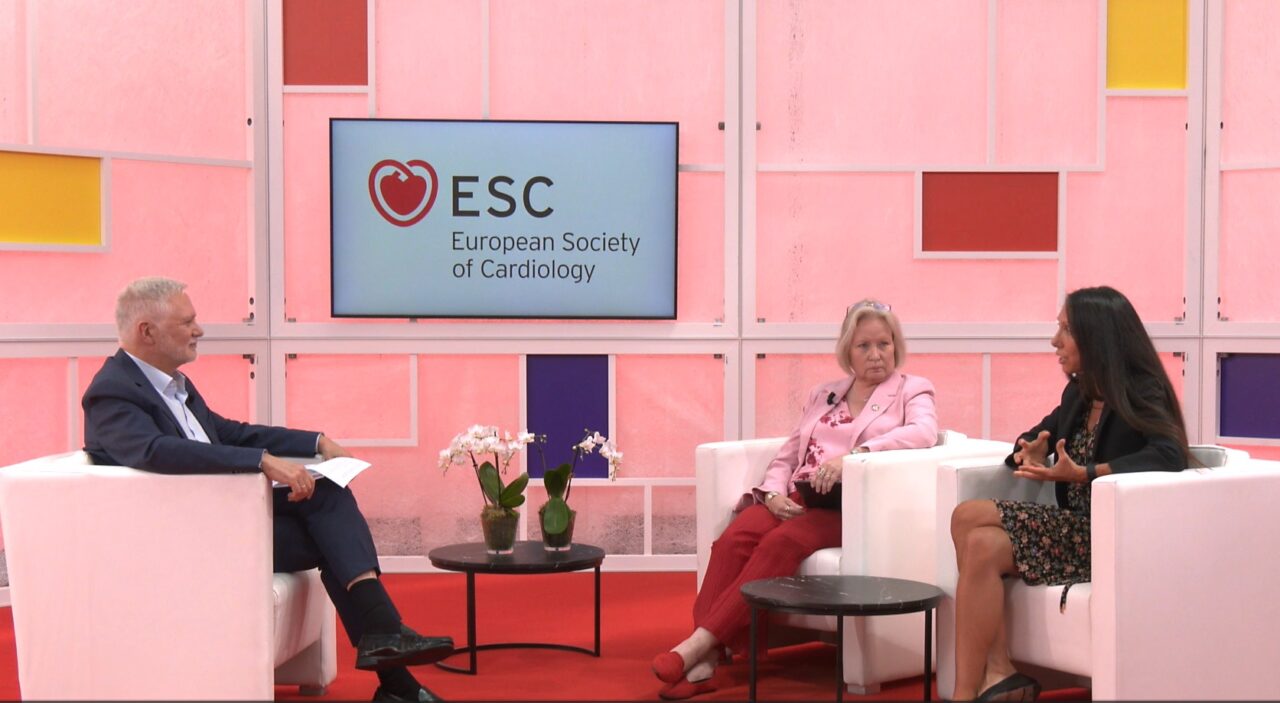
These issues were at the heart of the ESC TV Connect discussion Safe Hearts, smarter screening: Transforming cardiovascular prevention in Europe, held during the European Society of Cardiology’s annual congress and moderated by Héctor Bueno, cardiologist and Scientific Director of the Cardiovascular Research Area at the i+12 Research Institute, Hospital Universitario 12 de Octubre, in Madrid; co-leader of the JACARDI working group on data availability and quality; and leader of a research group at CNIC.
Hanna Tolonen, Deputy Director General at the Finnish Institute for Health and Welfare (THL) and co-leader of the JACARDI working group on screening, joined Mélodie Bernaux, Policy Officer for Digital Health at the European Commission, to discuss the implementation of the Safe Hearts Plan and the role of smarter screening in strengthening cardiovascular prevention.
Why early detection matters
For Hanna Tolonen, the discussion underlined the need to move further towards prevention. She highlighted JACARDI’s contribution to increasing population awareness of cardiovascular diseases, supporting early detection and screening of people at high risk, and advancing the implementation of integrated care.
Hanna Tolonen described the benefits of early detection at three levels: for individuals, society and healthcare systems. Identifying risk factors early can help prevent disease and improve the health and well-being of individuals and their families. It also benefits society by helping people remain healthy and active, particularly as many develop cardiovascular disease during their prime working years, when they make important contributions to the workforce and their communities.
At the healthcare-system level, Tolonen noted that treating hypertension is considerably more effective and cost-effective than caring for a stroke patient in intensive care and providing subsequent rehabilitation. As Europe’s population ages, she said, reaching people at high risk before they develop cardiovascular disease will become increasingly important.
From European ambition to practical action
The Safe Hearts Plan provides a framework for stronger action on cardiovascular health, including a more coordinated approach to early detection and health checks across Europe. JACARDI is already generating practical knowledge that can contribute to this ambition.
Through its screening work, JACARDI is working on approaches to identify people and population groups at increased risk of cardiovascular diseases and type 2 diabetes. Its activities are testing how risk assessment and screening approaches can be implemented in different real-world settings and adapted to different populations and health systems.
Bringing health checks closer to people
One of the clearest lessons from JACARDI’s work, Tolonen explained, is that health checks need to be brought closer to people rather than relying on them to attend healthcare facilities. Mobile units and drop-in checks in accessible settings such as community centres can help overcome practical and trust-related barriers, making it easier to reach people who might otherwise be excluded from screening.
A key resource from this work is the ‘Short Guide to Screening for Individuals at Increased Risk of Developing Cardiovascular Diseases and Type 2 Diabetes’, published by JACARDI in January 2026. [2] Developed by JACARDI experts, including Hanna Tolonen, the guide provides a practical, evidence-based overview of approaches such as population-level monitoring, individual risk assessment, population segmentation and screening. It also stresses that identifying risk is only one part of the process: when risk identification is used to support earlier diagnosis or prevention, it needs to be linked to appropriate follow-up, diagnosis and intervention.
Data as a foundation for smarter prevention
New technologies, including artificial intelligence (AI), have significant potential to support cardiovascular and wider non-communicable disease prevention. But their effectiveness depends on the quality and representativeness of the data behind them. As Hanna Tolonen pointed out, healthcare data cannot automatically be considered representative population data, and ensuring that datasets adequately reflect different population groups remains a major challenge.
This connects directly with JACARDI’s work on data availability, quality, accessibility and sharing, which focuses on strengthening the foundations for better use of health data. Better data can support a clearer understanding of cardiovascular risk and help researchers, health professionals and policymakers develop and evaluate more effective prevention strategies.
But data alone is not enough: it needs to support action. “Effective screening does not end with a health check. We need follow-up, interventions and monitoring,” Héctor Bueno, who moderated the ESC TV Connect discussion, stressed, also pointing to the importance of data and digital tools in achieving a measurable impact on health.
Mélodie Bernaux also highlighted the role of AI in implementing the Safe Hearts Plan and pointed to the Plan’s dedicated AI incubator for cardiovascular health, which will provide €20 million to test how AI models can be deployed and integrated into clinical workflows. ‘Data and AI today are fundamental when we talk about healthcare’, she said, while stressing the need to carefully address the risks associated with these technologies.
Watch the full ESC TV Connect discussion to hear more about how the Safe Hearts Plan and JACARDI can help translate prevention, early detection, equitable health checks and the responsible use of data and AI into action across Europe.
References:
[1] World Heart Federation, Heart Health
[2] Leysen, W., Cardinale, A., Alexandra, C., Lampaert, A., Formenti, B., Armocida, B., Marcozzi, B., Angheluta, C., Dima, C., Giacomozzi, C., Rantala, E., Monnet, F., Calcagnini, G., Elonheimo, H., Zaletel, J., Vergauwen, J., Paalanen, L., Palmieri, L., Petrelli, M., … Tolonen, H. (2026). Short Guide to Screening Individuals at Increased Risk of Developing CVDs and T2D (Version 1.0.0). Zenodo