INCLIVA brings workplace health education to workers and employers across Spain
INCLIVA, the Health Research Institute of the Hospital Clínico Universitario de València, presented its work within JACARDI at Conecta INCLIVA, a public seminar held on 14 May in Valencia. Bringing together patients, researchers and clinicians, the event offered a space to connect ongoing European research with the people most affected by these conditions and shared the latest scientific advances in cardiovascular health and diabetes.
Cardiovascular diseases remain the leading cause of mortality in Europe, and diabetes already affects one in ten people over the age of 55 in Spain. These figures underline that public engagement with research is not just valuable, but necessary.
The event showcased four active European projects led or supported by INCLIVA‘s cardiovascular research team. The team consists of more than 200 researchers, has produced over 1,300 scientific publications, and currently has nearly 200 active projects and clinical studies. Among these, Dr. Clara Bonanad and Dr. Josep Redón presented JACARDI.
INCLIVA participates in JACARDI as an affiliated entity under FundeSalud, which serves as the Spanish competent authority in the Joint Action. INCLIVA plays an active role across five pilots covering data, screening, prevention, personalised care and health education.
Taking health education into the workplace
Within JACARDI’s health education projects, INCLIVA is developing an online training programme for workers and employers. The initiative aims to equip participants with practical self-care tools, raise awareness about cardiovascular risk, and support the workplace inclusion of people living with these conditions.
The programme consists of ten short five-minute videos, complemented by downloadable materials for all participants. To assess the learning impact, the course includes an evaluation of the knowledge acquired, measures how that knowledge is integrated into daily routines, and solicits participants’ feedback about their experience of the platform. The roll-out of the initiative is currently in progress.
Citizens as partners in research
The event also highlighted citizen science, private philanthropic funding, and the importance of integrating patient perspectives, including a discussion on gender equity in cardiovascular research. One of the event’s special guests, Ms. Maite San Saturnino, President of the Spanish Heart Foundation‘s patient association and an important JACARDI stakeholder, joined in a conversation that opened into a wider audience discussion on the active role citizens can play in scientific progress.
Ms. Mariola Penadés Fons, Director General of Research and Innovation at the Valencian Regional Health Ministry brought the event to a close by highlighting that research only fulfils its purpose when it reaches the people it was always meant to serve. It is precisely this spirit that drives JACARDI’s work and INCLIVA’s commitment to bringing it into workplaces, communities and everyday life.


Workbox for Inclusion: JACARDI helps build workplaces that work for everyone
JACARDI has launched the Workbox for Inclusion, a free, online training programme that helps organisations create more inclusive and health-supportive workplaces. Designed for managers, employers, HR professionals, disability managers and trade union representatives, the Workbox provides practical tools to assess workplace inclusiveness, identify areas for improvement and develop tailored action plans that support employees, including people living with non-communicable diseases such as cardiovascular diseases and diabetes.
Creating working environments that promote health, inclusion and long-term well-being is a key priority for JACARDI. The Workbox for Inclusion contributes to this goal by offering practical support to organisations, with a particular focus on people living with non-communicable diseases (NCDs).
The programme bridges the gap between policy recommendations and everyday practice, especially in small and medium-sized enterprises, by translating public health principles into clear, actionable steps. The Workbox provides tools to assess workplace inclusiveness and to design tailored action plans. These aim to improve employee well-being, support work ability and foster sustainable inclusion.
By combining evidence-based knowledge with practical guidance, the Workbox strengthens organisational capacity and contributes to healthier and more productive workplaces. With initiatives like this, JACARDI continues to take meaningful steps towards a more equitable society, one that enables, supports and empowers all.
The Workbox was developed by the leadership and co-leadership teams responsible for the Work Package on Labour participation of people living with cardiovascular diseases and diabetes within JACARDI. Its design was led by experts from the Istituto Neurologico Carlo Besta (Italy), Poznan University of Medical Sciences, and the Department of Health Prevention (Katedra i Zakład Profilaktyki Zdrowotnej), Poland.
Access the Workbox for Inclusion here.
Download the leaflet here.
Shaping the EU Safe Hearts Plan: JACARDI joins high-level dialogue on regional and local perspectives
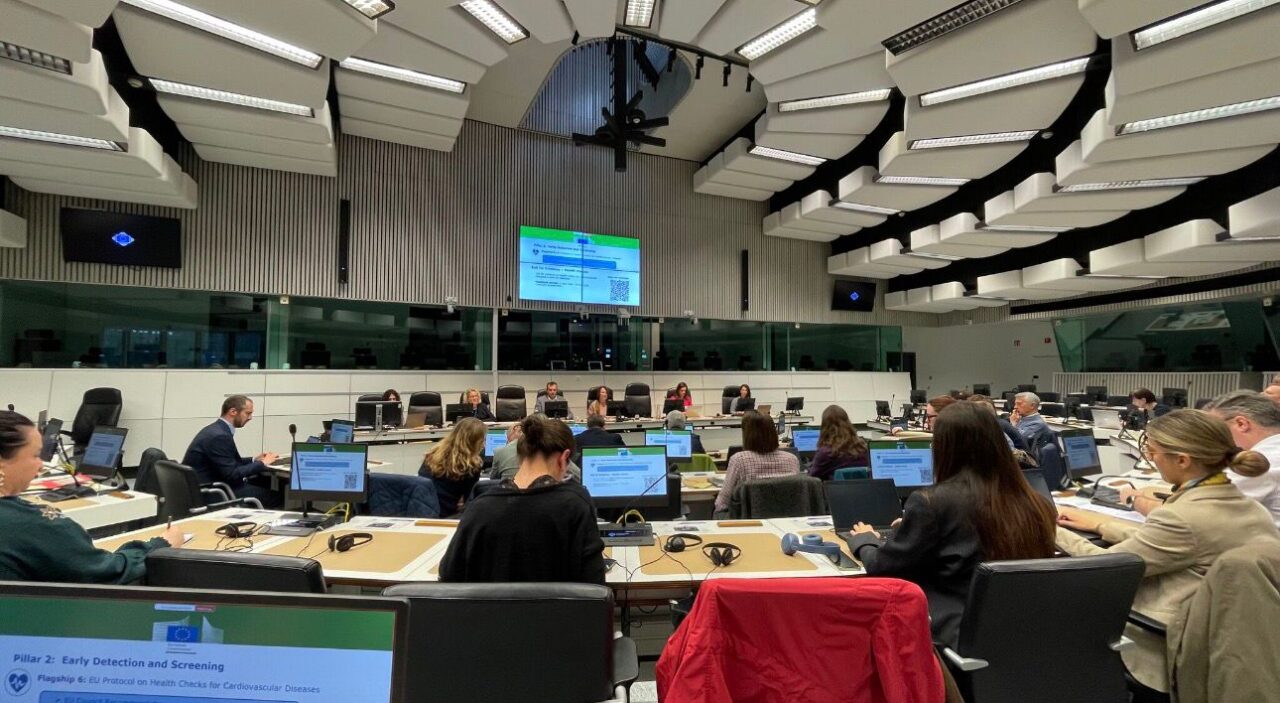
During a high-level discussion bringing together EU and regional stakeholders, JACARDI Coordinator Benedetta Armocida highlighted how coordinated European action can bridge research, policy, and implementation in advancing the EU Safe Hearts Plan. The meeting aimed to explore how regional and local authorities can contribute to shaping and implementing the plan, bringing forward territorial perspectives and feeding into the upcoming Committee of the Regions opinion.
On 6 May 2026, the Interregional Group on Health and Well-being of the European Committee of the Regions, with the support of EUREGHA, hosted the high-level discussion “Shaping the EU Safe Hearts Plan: regional perspectives for cardiovascular health” in Brussels.
The meeting brought together representatives from EU institutions, regional and local authorities, healthcare professionals, researchers, and public health stakeholders to discuss how to advance the implementation of the Safe Hearts Plan (SHP) through stronger multilevel governance and regional action. JACARDI contributed to the discussion as a key European initiative in this field to support the objectives of the SHP.
Cardiovascular diseases remain the leading cause of death and disability in Europe, placing a major burden on individuals, health systems, and economies. Against this backdrop, the discussion highlighted the importance of translating European policy ambitions into concrete and equitable actions adapted to regional and local realities.
Speakers included:
- Carmine Pacente, European Committee of the Regions
- Romana Jerković, European Parliament
- Marianne Takki, European Commission
- Benedetta Armocida, Istituto Superiore di Sanità and Coordinator of JACARDI
- Cristina Gavina, Portuguese Society of Cardiology and European Society of Cardiology
- Antonio Aurigemma, Regione Lazio
The discussion underscored several priorities for the future implementation of the SHP, including strengthening prevention and health promotion, improving early detection and screening, ensuring continuity and integration of care pathways, and addressing persistent inequalities in cardiovascular outcomes, including the cardiovascular gender gap, across and within European regions.
Evidence-informed policies and prevention beyond healthcare settings
Participants also highlighted the growing importance of data systems and digital innovation in supporting evidence-informed and more equitable cardiovascular health policies. At the same time, speakers stressed that effective prevention strategies must extend beyond healthcare settings and reach people directly within schools, workplaces, and local communities, especially underserved populations and people living in vulnerable situations.
Coordinated European action through JACARDI
In this context, Benedetta Armocida presented JACARDI as a concrete example of how coordinated European action can support the objectives of the Safe Hearts Plan by bridging research, policy, and implementation. The Joint Action contributes to strengthening national and regional capacities, fostering collaboration across health systems, and reducing fragmentation in the prevention and management of cardiovascular diseases and diabetes. The discussion concluded with a shared recognition that achieving the ambitions of the EU Safe Hearts Plan will require sustained collaboration between EU, national, regional, and local actors, alongside continued investment in prevention, integrated care, and equity.
The meeting further demonstrated the added value of creating spaces for dialogue between policymakers, researchers, healthcare professionals, and implementers. Bringing together actors operating at different governance levels allows for the exchange of practical experiences, the identification of shared challenges, and the co-development of solutions that are both evidence-based and feasible in real-world settings. Such multistakeholder engagement is essential to ensure that European strategies are translated into sustainable and impactful actions at the regional and local level.
Cantabrians take control of their health: new workshops for heart health and diabetes
The Valdecilla Health Research Institute (IDIVAL) is leading and supporting an initiative in Cantabria focused on heart health and diabetes workshops, contributing its expertise in nursing research and community-based interventions to JACARDI.
As an institutional partner of JACARDI, IDIVAL is implementing a pilot scheme within JACARDI’s Work Package 10 focused on patients’ self-management. The pilot aims to support people living with chronic conditions in developing the practical skills and confidence needed to manage their health effectively.
The Nursing Research Group at IDIVAL is supporting the development, communication and implementation of the workshop series called ‘Taking Control of Your Health’ (‘Tomando el control de su salud’). These workshops are an adaptation of an evidence-based intervention created at Stanford University by Kate Lorig. The concept of these workshops is rooted in the Chronic Disease Self-Management Programmes (CDSMP), based on Albert Bandura’s theory of self-efficacy and the Chronic Care Model. The Spanish adaptation ensures that the approach is accessible and relevant to the local context.
Initially implemented in the Cantabria region by the Escuela Cántabra de Salud, it is now responsible for the delivery, development, management of the workshops, and other related initiatives. The local health education center provides logistical support, conducts a multidimensional evaluation of the program, and explores opportunities for further improvement.
Participants learn from each other and strengthen their self-efficacy, as well as their confidence in their ability to act. Seeing peers address similar challenges and achieving small, realistic goals, fosters a strong sense of shared progress. “It helped me to be responsible and not fall into bad health habits, like leading a too sedentary lifestyle”, noted one participant.
Conscious self-care supported
A central element of the sessions is the use of ‘action plans’, which helps participants turn intentions into concrete, achievable commitments.
“In Cantabria, we are observing that when people feel supported and truly heard, change becomes possible”, concludes Gina Lladó, Coordinator of the pilot in Cantabria. “We want these workshops to be more than a standalone initiative. Our aim is for them to become a sustainable tool that can be firmly integrated into the community and reach more and more people over time. What we are seeing during the ongoing implementation encourages us to continue refining and strengthening this initiative”
By equipping people with the skills to manage cardiovascular disease and diabetes, the pilot supports JACARDI’s objectives of promoting health equity, prevention, and sustainable, person-centered care. Ongoing evaluation and collaboration with community partners will inform the program’s future expansion and integration into routine practice.


A defining CVH moment in Europe: The Commission announced the Safe Hearts Plan
“When Europe acts together, we do not simply improve systems, we improve lives,” points out Benedetta Armocida, Coordinator of JACARDI, as the European Union’s Cardiovascular Health Plan is launched. At a time when cardiovascular disease remains Europe’s leading cause of death, this moment marks a collective step toward strengthening heart health across the continent.
Cardiovascular diseases (CVDs) remain the leading cause of death and disability in Europe, as confirmed by the newly released OECD report “The State of Cardiovascular Health in the European Union“. CVD claims 1.7 million lives each year, more than cancer and diabetes combined, and affects an estimated 62 million people. CVDs also contribute significantly to disability, early retirement, and absenteeism, lower the quality of life and reduce life expectancy, according to data from the European Commission [1], [2], [3].
The total economic burden of CVD in the EU is estimated at EUR 282 billion annually, around 2% of GDP, and significantly higher than that of cancer. The OECD report highlights stark geographic, gender and socio-economic disparities in cardiovascular outcomes and access to care, reinforcing the need for coordinated EU-level action. It also acknowledges JACARDI’s input to the report, and references JACARDI’s 4C Framework and pilot actions in France and Spain.
Bearing that in mind, the European Commission’s launch of the Cardiovascular Health Plan, under the name Safe Hearts Plan, marks a decisive moment for public health in the region. JACARDI strongly welcomes this Plan, as coordinated European action is essential to reduce the number of people falling ill with cardiovascular diseases, and to prevent premature deaths for those with existing conditions or risk factors, such as obesity, diabetes and high blood pressure.
“The launch of the Cardiovascular Health Plan marks a pivotal moment for Europe’s public health. JACARDI welcomes this initiative, recognizing the crucial role of Joint Actions in fostering collaboration among countries, experts, and stakeholders. By working together, sharing knowledge, and aligning efforts, we can ensure that advances in prevention, care, and innovation in cardiovascular health truly reach all communities, leaving no one behind,” notes Prof Graziano Onder, Scientific Coordinator of JACARDI.
The Plan arrives at a critical time. For too long, CVD and diabetes have lacked the political visibility their burden demands. The CVH Plan opens the door to a new European approach that puts prevention first, strengthens early detection and screening, and promotes equity and integrated, patient-centred care across health systems. For JACARDI, this initiative is an essential step towards making the healthy choice the easy and default choice for citizens across Europe.
“The CVH Plan is a decisive step forward, and JACARDI is proud to contribute with its experience and technical expertise. Our work shows that no cardiovascular strategy can be effective without putting equity at the centre, addressing the gaps linked to income, geography, education and gender that still shape health outcomes across Europe. We look forward to supporting the implementation of a Plan that has the potential to change lives across the region”, explains Dr Benedetta Armocida, coordinator of JACARDI.
The CVH Plan is needed as fragmented efforts can no longer address challenges that are inherently interconnected. “Prevention, early detection, treatment, rehabilitation, digital innovation, community engagement, these elements only create real impact when they are aligned and mutually reinforcing”, adds Dr Armocida.
Equally important is the improvement of data collection and use, ensuring that high-quality, reliable information drives policy decisions, guides clinical practice and allows progress to be measured transparently across countries, as highlighted in a recent policy paper published in The Lancet Regional Health – Europe, developed jointly by the Joint Action on Cardiovascular Diseases and Diabetes (JACARDI), the Joint Action Prevent Non-Communicable Diseases (JA PreventNCD), and the WHO Regional Office for Europe (WHO/Europe), [4].
“Robust and accessible data are essential to understand where inequalities arise, to identify people at risk earlier and to ensure timely, high-quality care across Europe. Strengthening data systems, from availability and quality to interoperability and sharing, is key to improving early detection, screening programmes and continuity of care”, says Dr Héctor Bueno, co-leader of the working group on data availability, quality, accessibility and sharing from JACARDI.
Through its multidisciplinary network, technical expertise and strong partnerships, JACARDI stands ready to support the successful rollout of the Safe Hearts Plan. The Joint Action will continue to contribute practical knowledge on prevention, governance, data systems and quality of care, building on lessons learned from other European health initiatives and aligning closely with the shared vision set out by the European cardiovascular community.
Joint Actions are more than projects, they are engines of collaboration. JACARDI can serve as a bridge between countries, stakeholders, and other EU initiatives, helping to translate the CVH Plan into coordinated, coherent, and sustainable action across Europe.
JACARDI is generating concrete insights on equity, early detection, integrated care, digital tools, data systems, and workforce capacity. These lessons, grounded in practice and validated across diverse health systems, can inform the plan’s priorities, standards, and operational frameworks. JACARDI remains fully committed to supporting the European Commission in prioritizing the Cardiovascular Health Plan and promoting its effective implementation across Member States, ensuring that every step forward translates into meaningful impact for people’s health.
The Safe Hearts Plan at a glance:
• Prioritises prevention as one of its main pillars
• Sets clear targets, including reducing mortality related to cardiovascular disease by 25% by 2035
• Encourages Member States to develop or implement national cardiovascular health plans by 2027
• Emphasises reducing health inequalities and improving access to healthcare
• Supports an EU protocol on health checks to shift the focus from treatment to prevention
• Addresses lifestyle risks, including unhealthy diets, ultra-processed foods, and smoking
Read the full European Commission Safe Hearts Plan here.
References:
[1] OECD (2025), The State of Cardiovascular Health in the European Union, OECD Publishing, Paris,
[2] Cardiovascular health; European Commission
[3] Fighting cardiovascular disease – a blueprint for EU action, June 2020. European Heart Network and the European Society of Cardiology.
[4] Benedetta Armocida, Hanna Tolonen, Ivo Rakovac, Beatrice Formenti, Jill Farrington, Allison Ekberg, Hector Bueno, Giovanni Capelli, Silvia Francisci, Morten S. Frydensberg, Ane Fullaondo, Linda Granlund, Yhasmine Hamu Azcarate, Torben F. Hansen, Emil Høstrup, Tomi Mäki-Opas, Luigi Palmieri, Markku Peltonen, Valentina Possenti, Marco Silano, Gundo Weiler, Kremlin Wickramasinghe, Edwin Wouters, Knut-Inge Klepp, Graziano Onder, Gauden Galea, Strengthening non-communicable diseases monitoring systems in Europe through a multistakeholder collaborative approach: a key priority for advancing data-driven policymaking, The Lancet Regional Health – Europe, Volume 61, 2026, 101553, ISSN 2666-7762,
A major step forward: Basque country rolls out integrated heart failure care model
A new pilot project has recently been launched in the Basque country as part of JACARDI, featuring an integrated, value-based care pathway for people with heart failure. This pilot is aligned with JACARDI’s broader mission to reduce the burden of cardiovascular disease and diabetes across Europe by strengthening coordinated care, enhancing health literacy, and scaling best practices.
Within JACARDI, Biosistemak represents the Basque country as an affiliated entity, co-leading communication and dissemination activities, supporting methodological frameworks for European pilots, contributing to health literacy initiatives, and leading the deployment of the heart failure pathway. This includes conducting a comprehensive needs assessment on the European level.
On 27 November, at the launch event organized at Cruces University Hospital in Barakaldo, Osakidetza – the public health care service of the Basque country – presented the new value-based integrated care pathway for heart failure, after two years of joint development with Biosistemak and Osakidetza’s Care Integration and Chronicity Service (SIAC). Throughout the entire development process, Biosistemak provided methodological support on pathway design, including the adaptation of care pathways and resources, the development of evaluation frameworks, the integration of technological requirements, and the preparation of awareness raising actions and training plans for professionals. The result is a comprehensive and coordinated care model that improves outcomes and quality of life for people living with heart failure while ensuring long-term sustainability.
During the event, Biosistemak researcher Yhasmine Hamu highlighted the importance of the extensive multidisciplinary collaboration behind the initiative. Over two years, professionals from family and community medicine, hospital care, nursing, pharmacy, and management collaborated to create a model that responds to real patient needs and incorporates sex- and gender-based perspectives. Presentations also highlighted innovative solutions, new corporate tools, and lessons learned on improving communication, standardising care, and defining indicators for continuous improvement.
The jointly developed pathway covers the entire care cycle for people with heart failure, from initial suspicion of the condition to hospitalisation, discharge, and ongoing follow-up in both primary and specialised settings. It is designed to align the perspectives of patients, professionals, and the general population. For patients, the model organises interventions and responsibilities in one integrated system to reduce morbidity and mortality and strengthen self-care. For professionals, it offers a clear overview of actions to be taken, decision-support tools, and a framework that promotes coordination and reduces variability. On a societal level, the model improves population health by enhancing scientific knowledge and reinforcing the sustainability of health systems.
The success of this pilot is a perfect example of how JACARDI supports Member States in adopting evidence-based and scalable care models for chronic disease management. Through its leadership in this initiative, Biosistemak contributes to strengthening integrated care and advancing cardiovascular health both within the Basque country and across Europe.
Can artificial intelligence help shape smarter cardiovascular policies across Europe?
What if policymakers across Europe had faster, clearer and more reliable data to guide decisions in cardiovascular health? Addressing that challenge, one of JACARDI’s pilot teams from CNIC presented their work at the ESC Digital & AI Summit 2025, showcasing AI innovations designed to turn evidence into actionable policy.
At the European Society of Cardiology Digital & AI Summit 2025, researchers Fatima Sanchez-Cabo, Juan Ignacio Alvarez Arenas, Daniel Jiménez Carretero, from the Computational Systems Biomedicine group at CNIC (Spanish Cardiovascular Research Center), and active members of JACARDI’s Working Group on Data Availability, Quality, Accessibility and Sharing, presented their poster: CARMINA: Optimizing low-parameter language models for high-quality cardiovascular research assistance. The work was featured in the session From bench to bedside: the potential roles of large language models in cardiovascular medicine, moderated by Professor Lis Neubeck, from Edinburgh Napier University; and Associate Professor Johan Verjans MD PhD FESC FRACP, from the University of Adelaide.
Why does this matter?
Within JACARDI’s Pilot 57, CNIC is developing EUROCARDIAB, a pioneering federated data platform integrating cardiovascular health indicators from across Europe. One of its key features is a CVD impact simulator that models how changes in risk factors could reduce event prevalence, providing policy makers with reliable, data-driven scenarios for national planning.
A dedicated web front-end will share these insights and will also host CARMINA (Cardiovascular And Research-driven Molecular Insight with Novel Assistant), an AI-powered research assistant designed to support specialized cardiovascular research. CARMINA will orchestrate the Intelligent Policy Agent (IPA), enabling autonomous trend analysis, computational modeling of interventions, and the creation of clear, actionable policy briefings for decision-makers in cardiology and diabetology.
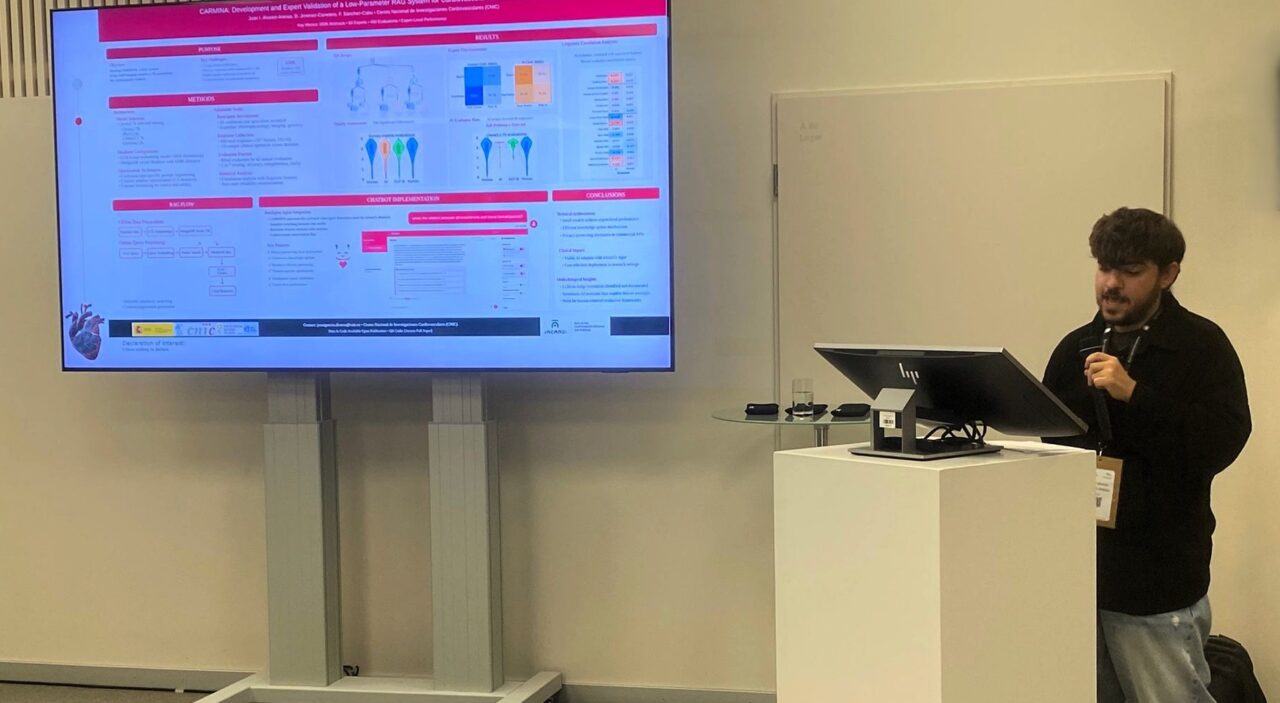
This year’s ESC Digital & AI Summit motto, “Prepare for the next frontier in cardiovascular care”, aligns strongly with JACARDI’s overarching mission: accelerating patient outcomes and transforming clinical workflows across Europe through better data, smarter tools and more equitable care pathways.
Today, accurate, comparable and timely data on cardiovascular disease and diabetes remain limited, yet this information is essential for developing targeted policies that reduce disease burden, improve healthcare for all citizens and help close persistent inequalities.
The ESC Digital & AI Summit remains a key meeting point for global leaders, innovators and technology experts shaping the digital transformation of cardiovascular care, and pilots like this one from CNIC demonstrate how JACARDI is already turning that vision into meaningful, data-driven progress across Europe.
Mitja Lainscak: My hope is that we can intervene earlier for more patients
“It’s important that the JACARDI initiative and its outcomes gain visibility within the scientific community”, stresses Mitja Lainscak, Professor of Internal Medicine at the University of Ljubljana and member of JACARDI’s Scientific Advisory Board. As a clinical practitioner and researcher, he anticipates that collaboration will be one of the most important positive outcomes of the project, along with effects going from the regional or national level to the international level.
What significance does JACARDI hold for you and your organization?
I think that the organisations involved really appreciate being part of such a large initiative, trying to bring together efforts in the field of cardiovascular medicine and diabetes and to stimulate some potential cross-talk between the partners. The consortium is hosting more than 140 pilot projects with some of them related within or across the field.
One of the main benefits of an initiative like this, is that people talk to each other and realise that they can collaborate, so that their efforts can be transferred from the regional or national level to the international level.
How do you see JACARDI’s role in tackling the increasing prevalence of cardiovascular disease and diabetes in Europe?
Our society is aging and that’s an unavoidable reality. Advances in medicine have played a significant role in this trend. In addition, improvements in detection tools and the capabilities of our healthcare system have enhanced our ability to identify patients more effectively.
I hope we will identify more people at risk, as well as those with single or multiple conditions. Early detection is crucial because it allows us to start treatment earlier in the course of the disease, rather than waiting until it has progressed and caused irreversible damage. My hope is that we can intervene earlier for more patients.
How do you think JACARDI will influence future collaboration on cardiovascular disease and diabetes prevention in Europe?
JACARDI is a Joint Action, supported by the European Union and recognised by the scientific community. In a previous newsletter, I read a message from Professor Thomas F. Lüscher, the President of European Society of Cardiology highlighting the importance of JACARDI in shaping the future of cardiovascular disease and diabetes management through collaborative, data-driven care for the benefit of patients. I believe a similar message will come from the diabetes community. So, as said previously, having like-minded experts in the same room encourages discussion and cross-fertilisation of ideas. I anticipate that participants will begin to collaborate outside of the JACARDI framework, which I see as a positive outcome.
The European Society of Cardiology and the diabetes associations are already aligned, and I believe JACARDI has a crucial role to play in promoting future collaboration.
It’s important that the JACARDI initiative and its outcomes, such as pilot results, gain visibility in the scientific community. Researchers need to present their findings at conferences and submit their work for publication. This is essential to demonstrate that the funding received has been used effectively. Ultimately, it’s important to ensure that the investments made produce tangible results.
Based on your experience as a cardiologist, what do you consider the most critical factors in improving data-driven healthcare outcomes?
This is an extremely important question. Speaking from a national perspective, as someone from Slovenia, I’d like to extend this to an international context.
I believe that the lack of IT support for collecting data is a crucial issue. Slovenia is a small country with 2 million inhabitants and 14 hospitals, but we lack a unified IT system across these institutions. Although all hospitals are publicly owned and we have a single insurance provider, we struggle to collect comprehensive epidemiological data. We have a national hospitalization database, but it doesn’t give you the granularity of patient data.
The first necessary step would be the development of IT solutions, possibly using artificial intelligence, to extract the necessary data from medical records, particularly in terms of epidemiology. In my opinion, we still lack accurate figures for many diseases, both in Slovenia and across Europe.
Without this data, we cannot fully understand the scope of the problem, making it difficult to effectively allocate resources for patient management. I believe that the JACARDI pilots will showcase best practices in addressing this epidemiological data gap.
In terms of how JACARDI’s research and initiatives could support lasting, practical changes in clinical practice across Europe, particularly in Slovenia, I anticipate that most findings will primarily reflect the pilot country’s specific context . However, some lessons can be adapted across borders. Each country involved will focus on its specific challenges, but I believe that through meetings like this, where participants are encouraged to share their work, others can identify relevant lessons.
The perspective of the Advisory Board members is crucial in this process, as we aim to integrate ideas from different work packages that may not always communicate effectively with each other. This collaboration is essential.
Dr. Mitja Lainscak is a Professor of Internal Medicine at the University of Ljubljana and conducts clinical practice and research at the Department of Internal Medicine, General Hospital Murska Sobota, Slovenia. He is the Director of the Slovenian Research Agency and his clinical and research interest is cardiovascular medicine with particular emphasis on heart failure, pharmacotherapy, and metabolism with body composition. He has published more than 170 papers and holds an Executive Committee member position at the Heart Failure Association of the ESC.
Learn more about Mitja Lainscak and his work and connect on LinkedIn.
JACARDI’s synergies with Action Grants: reducing the cardiovascular burden together
The five Action Grants – CaregIVR, PERFECTO, Preventia, PROVIDE, RESIL-Card – and JACARDI are all anchored in the urgent mission of tackling the burden of cardiovascular diseases (CVD), Europe’s leading cause of death, which is especially timely as the European Commission develops the European Cardiovascular Health Plan (CVH Plan). This partnership is built upon the understanding that up to 80% of premature CVD deaths are preventable, and aims to strengthen cohesive EU-level action.
The overarching goal uniting JACARDI and these projects is the comprehensive reduction of the immense public health burden caused by Non-Communicable Diseases (NCDs), particularly Cardiovascular Diseases (CVD) and diabetes. This is pursued through a shared commitment to developing and promoting the implementation of validated best practices throughout the entire patient journey.
Within the implementation domain, projects focused on early detection, such as PERFECTO and PROVIDE, are collaborating with JACARDI WP8 to develop standardized screening protocols. Addressing health system continuity, RESIL-Card partners with JACARDI WP9 to specifically build resilience in cardiovascular care pathways, ensuring high-quality care continuity during crises.
Key expected outcomes include strengthening patient-centered approaches, utilizing novel digital tools like predictive algorithms by PROVIDE and immersive technology by CaregIVR, and developing tools such as the resilience assessment toolkit by RESIL-Card.
Synergies around equity are strengthened by sharing JACARDI’s “4Cs” Framework, which helps projects like CaregIVR and Preventia ensure targeted outreach to vulnerable populations. Both Preventia and PROVIDE showcase the central role of innovative digital tools in prevention efforts.
By coordinating our approach across technical work packages among these projects, we maximize collective impact and ensure that project outcomes translate effectively into actionable policy, creating roadmaps that support the scaling up of experiences at the national and regional levels.Ultimately, this unified collaboration contributes to promoting prevention, early detection, education, and sustained behavioral change for a healthier future.