Five decisive actions to transform Europe’s NCD monitoring systems: “What gets measured gets prioritised”
A new policy paper published in The Lancet Regional Health – Europe calls for decisive action to transform how Europe monitors noncommunicable diseases (NCDs). Developed jointly by Joint Action on Cardiovascular Diseases and Diabetes (JACARDI), Joint Action Prevent Non-Communicable Diseases (JA PreventNCD), and the WHO Regional Office for Europe (WHO/Europe), the paper sets out five priority actions to strengthen health monitoring systems across the region, an essential step to curb the rising burden of NCDs and mental health and ensure more effective, equitable healthcare.
The publication, titled “Strengthening non-communicable diseases monitoring systems in Europe through a multistakeholder collaborative approach: a key priority for advancing data-driven policymaking”, comes at a critical momentum after the Fourth United Nations High-Level Meeting on NCDs and Mental Health. “Europe has a unique opportunity, and responsibility, to recommit to data-driven health governance and sustained investment in resilient NCD monitoring systems”, the authors explain in the publication.
Five priorities for 2025 and beyond
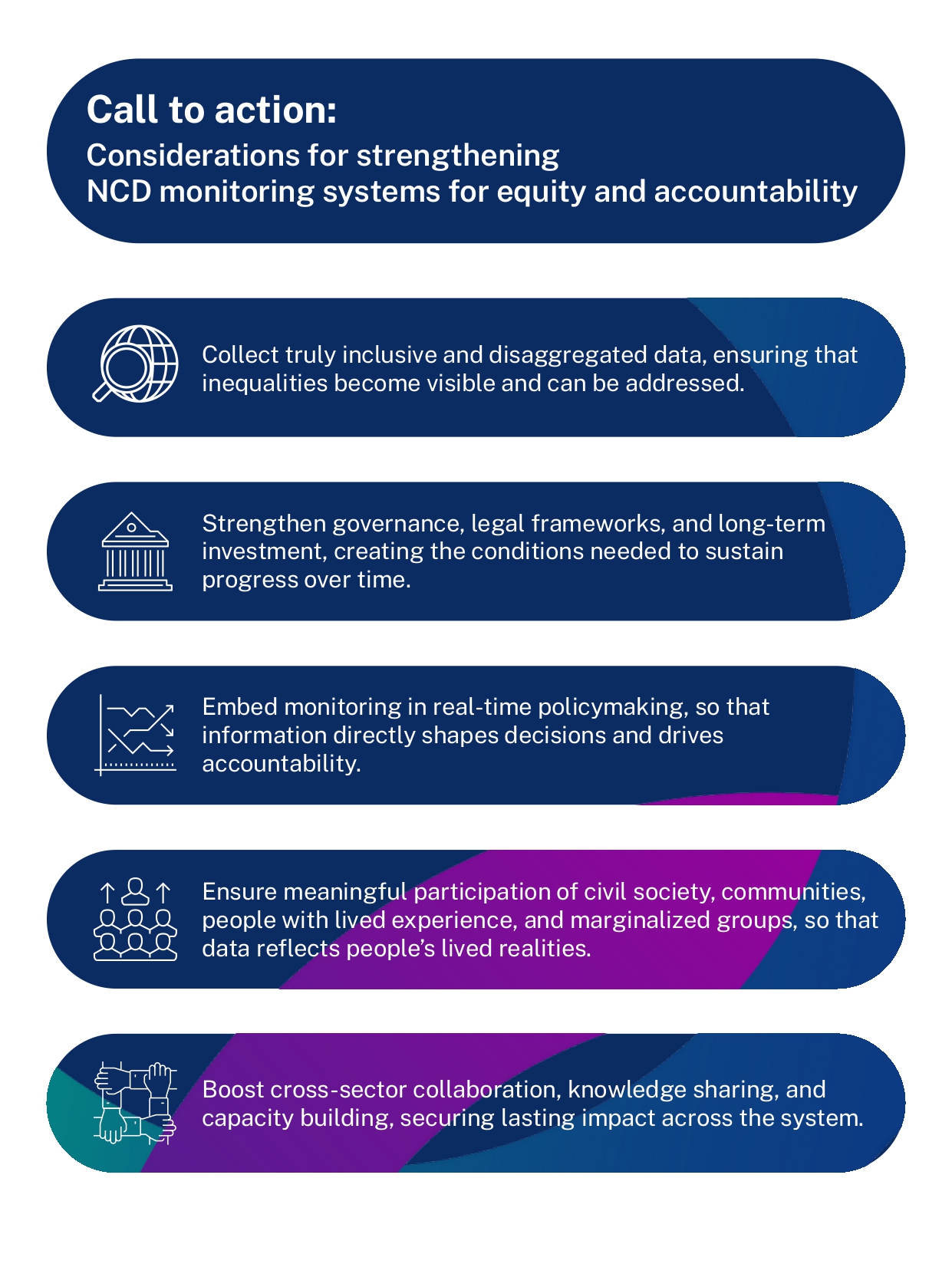
The publication highlights five critical areas where action is needed to make monitoring systems stronger, fairer, and more effective. It calls for collecting data that is truly inclusive and disaggregated, so that inequalities become visible and can be addressed. It stresses the importance of solid governance, clear legal frameworks, and long-term investment to ensure that progress is sustained.
Monitoring, the authors argue, should also be embedded in real-time policymaking, so that information directly shapes decisions and drives accountability. Civil society, communities, people with lived experience, and marginalized groups should have a meaningful voice in this process, making sure that data reflects people’s lived realities. And finally, the paper points to the need for stronger collaboration across sectors, greater sharing of knowledge, and more capacity building to secure lasting impact.
“Tackling NCDs is one of five priorities of WHO/Europe’s Second European Programme of Work, co-created with 53 Member States and shaped through broad public consultations, including with health professionals, people living with NCDs and civil society. Effective action on NCDs hinges on good data. Europe can lead by example and showcase collaborative and inclusive approaches together with key stakeholders, including EU Joint Actions”, said Dr Gundo Weiler, Director of the Division of Prevention and Health Promotion at WHO Regional Office for Europe.
The challenge: gaps between commitments and reality
An estimated 80% of NCDs are considered preventable through effective public health policies and early detection strategies. These figures underscore the urgent need for a paradigm shift from a model centred on diagnostics and treatment to one rooted in prevention, health promotion, and evidence-based screening.
Despite great efforts in international commitments, progress at the national level has been inconsistent. Monitoring systems remain fragmented, overly reliant on short-term projects, or challenged by limited governance and insufficient investment. This has created a critical gap between ambitious global targets and their translation into actionable national policies.
The policy paper identifies persistent data gaps, structural weaknesses, and opportunities for innovation. It emphasizes that monitoring is not just about collecting data, it is about ensuring that information is used in real time to drive policy reform, accountability, and equity.
Lessons from Europe
The authors underline that too often, NCD monitoring efforts have been ad hoc, reliant on external funding or driven by individual champions. This has led to uneven coverage, lack of comparability between countries, and persistent blind spots when it comes to the health of groups living in vulnerable situations, such as migrants, minorities, and people with disabilities.
Without data that is disaggregated and reflects disparities, inequalities remain invisible and policies risk reinforcing exclusion. The authors argue that equity must be at the center of all future monitoring efforts.
“It is a moral and ethical imperative to advocate for and generate more inclusive data. Data should be systematically disaggregated by age, sex, gender, geography, socioeconomic status, disability, ethnic and migration background to reveal territorial disparities and enable place-based interventions”, unfolds Dr Benedetta Armocida, from the Department of Cardiovascular, Endocrine-metabolic Diseases and Aging at Istituto Superiore di Sanità-ISS, Rome (Italy) and Coordinator of JACARDI.
“We should begin to view data not merely as numbers, but as reflections of human lives and rights: each data point tells a story, and data becomes truly powerful when it shifts narratives, amplifies the voices of those too often overlooked, and holds systems accountable. Data must be observed critically and translated into policies that strengthen health systems. Without inclusive monitoring, structural inequities remain concealed, and the most vulnerable remain invisible—one data point, one life, one missed opportunity at a time”, adds Dr Armocida.
At the same time, the authors highlight successful innovations and good practices emerging from European Joint Actions, such as JACARDI and JA PreventNCD, demonstrating that progress is possible when commitments are matched by clear governance, adequate investment, and cross-sector collaboration.
“Across Europe we already see solutions that work. Joint Actions like JA PreventNCD and JACARDI help countries align methods, share tools and learn faster from each other. That is how we improve comparability between countries and make monitoring more useful for prevention and health promotion, including by showing more clearly where inequalities persist,” says Professor Knut-Inge Klepp, from the Norwegian Institute of Public Health, Oslo and Scientific Coordinator of JA PreventNCD.
“But we have to treat monitoring as core infrastructure, not an extra task. It needs stable funding, clear governance and the ability to produce data that is timely and inclusive. If monitoring depends on short-term projects or individual champions, it will remain uneven. If it is institutionalized, it can guide priorities, strengthen accountability and help sustain progress over time,” adds Klepp.
Europe has both a responsibility and an opportunity to lead the way in building stronger, more inclusive health information systems that can serve as a global benchmark. Doing so will be critical not only to reducing premature mortality from NCDs by one-third by 2030, but also to ensuring health equity and resilience in the face of future challenges. “Because what gets measured gets prioritised. What gets disaggregated gets addressed. And what gets institutionalised can be sustained”, conclude the authors.
Disclaimers
JACARDI (Grant Agreement 101126953) and JA PreventNCD (Grant Agreement 101128023) projects have received funding from the EU4Health Programme 2021-2027. Views and opinions expressed are however those of the authors only and do not necessarily reflect those of the European Union or the European Health and Digital Executive Agency (HaDEA). Neither the European Union nor the granting authority can be held responsible for them.
WHO disclaimer: The authors alone are responsible for the views expressed in this article and they do not necessarily represent the views, decisions or policies of the institutions with which they are affiliated.
Benedetta Armocida, Hanna Tolonen, Ivo Rakovac, Beatrice Formenti, Jill Farrington, Allison Ekberg, Hector Bueno, Giovanni Capelli, Silvia Francisci, Morten S. Frydensberg, Ane Fullaondo, Linda Granlund, Yhasmine Hamu Azcarate, Torben F. Hansen, Emil Høstrup, Tomi Mäki-Opas, Luigi Palmieri, Markku Peltonen, Valentina Possenti, Marco Silano, Gundo Weiler, Kremlin Wickramasinghe, Edwin Wouters, Knut-Inge Klepp, Graziano Onder, Gauden Galea, Strengthening non-communicable diseases monitoring systems in Europe through a multistakeholder collaborative approach: a key priority for advancing data-driven policymaking, The Lancet Regional Health – Europe, Volume 61, 2026, 101553, ISSN 2666-7762, https://doi.org/10.1016/j.lanepe.2025.101553
A major step forward: Basque country rolls out integrated heart failure care model
A new pilot project has recently been launched in the Basque country as part of JACARDI, featuring an integrated, value-based care pathway for people with heart failure. This pilot is aligned with JACARDI’s broader mission to reduce the burden of cardiovascular disease and diabetes across Europe by strengthening coordinated care, enhancing health literacy, and scaling best practices.
Within JACARDI, Biosistemak represents the Basque country as an affiliated entity, co-leading communication and dissemination activities, supporting methodological frameworks for European pilots, contributing to health literacy initiatives, and leading the deployment of the heart failure pathway. This includes conducting a comprehensive needs assessment on the European level.
On 27 November, at the launch event organized at Cruces University Hospital in Barakaldo, Osakidetza – the public health care service of the Basque country – presented the new value-based integrated care pathway for heart failure, after two years of joint development with Biosistemak and Osakidetza’s Care Integration and Chronicity Service (SIAC). Throughout the entire development process, Biosistemak provided methodological support on pathway design, including the adaptation of care pathways and resources, the development of evaluation frameworks, the integration of technological requirements, and the preparation of awareness raising actions and training plans for professionals. The result is a comprehensive and coordinated care model that improves outcomes and quality of life for people living with heart failure while ensuring long-term sustainability.
During the event, Biosistemak researcher Yhasmine Hamu highlighted the importance of the extensive multidisciplinary collaboration behind the initiative. Over two years, professionals from family and community medicine, hospital care, nursing, pharmacy, and management collaborated to create a model that responds to real patient needs and incorporates sex- and gender-based perspectives. Presentations also highlighted innovative solutions, new corporate tools, and lessons learned on improving communication, standardising care, and defining indicators for continuous improvement.
The jointly developed pathway covers the entire care cycle for people with heart failure, from initial suspicion of the condition to hospitalisation, discharge, and ongoing follow-up in both primary and specialised settings. It is designed to align the perspectives of patients, professionals, and the general population. For patients, the model organises interventions and responsibilities in one integrated system to reduce morbidity and mortality and strengthen self-care. For professionals, it offers a clear overview of actions to be taken, decision-support tools, and a framework that promotes coordination and reduces variability. On a societal level, the model improves population health by enhancing scientific knowledge and reinforcing the sustainability of health systems.
The success of this pilot is a perfect example of how JACARDI supports Member States in adopting evidence-based and scalable care models for chronic disease management. Through its leadership in this initiative, Biosistemak contributes to strengthening integrated care and advancing cardiovascular health both within the Basque country and across Europe.
Socioeconomic and health disparities in adults diagnosed with type 1 diabetes mellitus before age 18
Scientific publications by JACARDI
In this post series we share the scientific publications directly linked to the JACARDI project. All publications featured in this series are authored or co-authored by JACARDI partners and reflect research and findings developed within the project framework.
We aim to showcase how evidence supports our joint mission to tackle cardiovascular diseases and diabetes across Europe.
Stay informed on how JACARDI turns evidence into action.
Keywords: public health, socioeconomic inequalities, health inequalites, type 1 diabetes mellitus, quality of life
Giulia Zamagni, Valentina Minardi, Maria Masocco, Federica Asta, Riccardo Candido, Gianluca Tornese, Giulia Bresciani, Valentina Manfredini, Elena Frattolin, Claudia Veronica Carletti, Daniela Germano, Eleonora Maurel, Luca Ronfani, Lorenzo Monasta
Abstract:
Background: Type 1 diabetes mellitus is a lifelong condition with consequences that extend well beyond glycaemic control, often impacting individuals’ socioeconomic status and overall quality of life. In Italy, the broader effects of early-onset type 1 diabetes on social and health-related outcomes have been insufficiently investigated. Therefore, this study aimed to investigate the socioeconomic impacts of type 1 diabetes among adults diagnosed with the condition before age 18.
Methods: Using data from the Italian Behavioral Risk Factor Surveillance System (PASSI) collected between 2011 and 2018 and in 2023, we analyzed key outcomes in adults aged 18–50 who were diagnosed with type 1 diabetes before age 18 and were on insulin therapy. Each case was matched by age and sex to two non-diabetic controls. Descriptive statistics and multivariable logistic regression
were used to compare key indicators.
Results: Our sample included 993 participants (331 cases and 662 controls). Cases had significantly higher odds of being unemployed [OR = 1.57 (1.20–2.07)], experiencing severe financial difficulties [OR = 1.81 (1.05–3.13)], and reporting poor self-rated health [OR = 6.64 (2.53–17.43)]. Cases also had an increased likelihood of reporting physical impairment for 1–13 days [OR = 1.91 (1.30–2.81)] and ≥14 days [OR = 2.95 (1.54–5.65)], mental health impairment for 1–13 days [OR = 2.16 (1.46–3.19)], and daily activity limitations for 1–13 days [OR = 1.73 (1.06–2.82)].
Conclusions: These findings highlight the multifaceted burden of type 1 diabetes and the need for integrated approaches to care that address not only clinical but also socioeconomic and psychosocial dimensions of the disease.
Source: https://www.frontiersin.org/journals/public-health/articles/10.3389/fpubh.2025.1655035/full
Workplace Health Interventions Targeting Cardiovascular Diseases and Diabetes Mellitus for Blue-Collar Workers
Scientific publications by JACARDI
In this post series we share the scientific publications directly linked to the JACARDI project. All publications featured in this series are authored or co-authored by JACARDI partners and reflect research and findings developed within the project framework.
We aim to showcase how evidence supports our joint mission to tackle cardiovascular diseases and diabetes across Europe.
Stay informed on how JACARDI turns evidence into action.
Authors: Chiara Di Girolamo, MD, MSc, PhD; Agnieszka Lipiak, MA; Matteo Franco, MSc; Krzysztof Kaczmarek, PhD; Guillermo Barreres-Martín, MSc; Piotr Romaniuk, PhD; Carles Muñoz-Alfonso, MSc; Andrea Arroyo-Álvarez, MSc; Federica Turatto, MD; Daznia Bompart Berroterán, PhD; Ewelina Chawłowska, PhD
Abstract:
Background: Cardiometabolic diseases, such as cardiovascular diseases (CVD) and diabetes mellitus (DM), represent a global health issue, causing significant premature mortality and disability. Blue-collar workers, who often face a higher exposure to risk factors (eg, smoking, poor diet, and lack of physical activity), are particularly vulnerable to these diseases. Workplace health promotion plays a crucial role in mitigating this risk, yet the scope and the characteristics of interventions targeting this specific workforce remain unclear.
Objective: The objective of this scoping review will be to assess the extent and characteristics of workplace health promotion interventions aimed at preventing cardiometabolic diseases and their risk factors in blue-collar workers.
Methods: The review will follow the JBI methodology for scoping reviews. A search of MEDLINE, Scopus, Embase, and the Cochrane Database as well as grey literature will be conducted. The search strategy is designed to capture relevant studies published since 2014 in English, Spanish, Italian, and Polish. Eligible study designs include experimental design (eg, randomized controlled trials), observational studies (eg, longitudinal studies), qualitative research, and mixed-method approaches as well as other formats present in grey literature (eg, reports). This review will include studies focusing on health promotion interventions involving adult blue-collar workers (aged ≥18 years) currently employed, with at least 60% of participants being blue-collar employees. The interventions of interest are workplace health promotion strategies targeting CVD, DM, or their risk factors, such as hypertension, obesity, and smoking. Each paper retrieved will be screened for inclusion by at least 2 reviewers. Disagreements between the reviewers will be resolved through discussion with the other reviewers. Studies focusing on noninterventional contexts, mental health, or ergonomic safety will be excluded. Data will be extracted and analyzed using qualitative and quantitative methods, with a focus on intervention types, participant characteristics, and outcomes.
Results: The study began in March 2024 and the full scoping review report is expected to be ready in September 2025.
Conclusions: The scoping review presented in this protocol can contribute to filling the knowledge gap by mapping the current state of workplace health promotion interventions aimed at preventing CVD and DM and modifying relevant risk factors in the blue-collar workers’ group.
JACARDI General Assembly – Madrid highlights
The JACARDI consortium gathered in Madrid for four inspiring days of exchange, collaboration, and renewed commitment to reduce the burden of cardiovascular disease and diabetes across Europe. More than 200 participants from 21 countries joined discussions on equity, gender gaps in healthcare, data systems, sustainability, and the upcoming EU Cardiovascular Health Plan.
Throughout the Assembly, partners shared early insights from JACARDI’s 143 pilot projects, offering a rich picture of progress and lessons emerging from real-world practice. Workshops and roundtables helped translate this experience into future action, reinforcing shared goals for more integrated, person-centred care. A dedicated session on the EU Cardiovascular Health Plan brought strong alignment between JACARDI’s evidence and Europe’s broader policy momentum. International contributions added valuable perspectives on monitoring systems and reducing non-communicable disease burdens.
What truly defined the event was the sense of connection: an atmosphere of openness, energy, and mutual support. As the project enters its next phase, the momentum from Madrid will continue to guide collective efforts to strengthen health systems so everyone in Europe has a fair chance at good health.
To relive the atmosphere and energy of these days, we invite you to watch our mood video capturing the unmistakable JACARDI spirit of the event.
Mitja Lainscak: My hope is that we can intervene earlier for more patients
“It’s important that the JACARDI initiative and its outcomes gain visibility within the scientific community”, stresses Mitja Lainscak, Professor of Internal Medicine at the University of Ljubljana and member of JACARDI’s Scientific Advisory Board. As a clinical practitioner and researcher, he anticipates that collaboration will be one of the most important positive outcomes of the project, along with effects going from the regional or national level to the international level.
What significance does JACARDI hold for you and your organization?
I think that the organisations involved really appreciate being part of such a large initiative, trying to bring together efforts in the field of cardiovascular medicine and diabetes and to stimulate some potential cross-talk between the partners. The consortium is hosting more than 140 pilot projects with some of them related within or across the field.
One of the main benefits of an initiative like this, is that people talk to each other and realise that they can collaborate, so that their efforts can be transferred from the regional or national level to the international level.
How do you see JACARDI’s role in tackling the increasing prevalence of cardiovascular disease and diabetes in Europe?
Our society is aging and that’s an unavoidable reality. Advances in medicine have played a significant role in this trend. In addition, improvements in detection tools and the capabilities of our healthcare system have enhanced our ability to identify patients more effectively.
I hope we will identify more people at risk, as well as those with single or multiple conditions. Early detection is crucial because it allows us to start treatment earlier in the course of the disease, rather than waiting until it has progressed and caused irreversible damage. My hope is that we can intervene earlier for more patients.
How do you think JACARDI will influence future collaboration on cardiovascular disease and diabetes prevention in Europe?
JACARDI is a Joint Action, supported by the European Union and recognised by the scientific community. In a previous newsletter, I read a message from Professor Thomas F. Lüscher, the President of European Society of Cardiology highlighting the importance of JACARDI in shaping the future of cardiovascular disease and diabetes management through collaborative, data-driven care for the benefit of patients. I believe a similar message will come from the diabetes community. So, as said previously, having like-minded experts in the same room encourages discussion and cross-fertilisation of ideas. I anticipate that participants will begin to collaborate outside of the JACARDI framework, which I see as a positive outcome.
The European Society of Cardiology and the diabetes associations are already aligned, and I believe JACARDI has a crucial role to play in promoting future collaboration.
It’s important that the JACARDI initiative and its outcomes, such as pilot results, gain visibility in the scientific community. Researchers need to present their findings at conferences and submit their work for publication. This is essential to demonstrate that the funding received has been used effectively. Ultimately, it’s important to ensure that the investments made produce tangible results.
Based on your experience as a cardiologist, what do you consider the most critical factors in improving data-driven healthcare outcomes?
This is an extremely important question. Speaking from a national perspective, as someone from Slovenia, I’d like to extend this to an international context.
I believe that the lack of IT support for collecting data is a crucial issue. Slovenia is a small country with 2 million inhabitants and 14 hospitals, but we lack a unified IT system across these institutions. Although all hospitals are publicly owned and we have a single insurance provider, we struggle to collect comprehensive epidemiological data. We have a national hospitalization database, but it doesn’t give you the granularity of patient data.
The first necessary step would be the development of IT solutions, possibly using artificial intelligence, to extract the necessary data from medical records, particularly in terms of epidemiology. In my opinion, we still lack accurate figures for many diseases, both in Slovenia and across Europe.
Without this data, we cannot fully understand the scope of the problem, making it difficult to effectively allocate resources for patient management. I believe that the JACARDI pilots will showcase best practices in addressing this epidemiological data gap.
In terms of how JACARDI’s research and initiatives could support lasting, practical changes in clinical practice across Europe, particularly in Slovenia, I anticipate that most findings will primarily reflect the pilot country’s specific context . However, some lessons can be adapted across borders. Each country involved will focus on its specific challenges, but I believe that through meetings like this, where participants are encouraged to share their work, others can identify relevant lessons.
The perspective of the Advisory Board members is crucial in this process, as we aim to integrate ideas from different work packages that may not always communicate effectively with each other. This collaboration is essential.
Dr. Mitja Lainscak is a Professor of Internal Medicine at the University of Ljubljana and conducts clinical practice and research at the Department of Internal Medicine, General Hospital Murska Sobota, Slovenia. He is the Director of the Slovenian Research Agency and his clinical and research interest is cardiovascular medicine with particular emphasis on heart failure, pharmacotherapy, and metabolism with body composition. He has published more than 170 papers and holds an Executive Committee member position at the Heart Failure Association of the ESC.
Learn more about Mitja Lainscak and his work and connect on LinkedIn.
Strengthening cardiovascular care resilience across Europe: the RESIL-Card initiative
The RESIL-Card project was launched in December 2023 due to the critical vulnerabilities in cardiovascular care delivery that were highlighted by the COVID-19 pandemic.
RESIL-Card is a 3-year EU4Health-funded initiative. It is led by We CARE, along with partners GISE (Italy), Amsterdam UMC’s Healthcare Services and Systems Research Group (The Netherlands), and CatSalut (Catalonia).
The aim of this initiative is to strengthen the resilience of European (EU) cardiovascular care systems to ensure the continuity of high-quality care during future potential crises. The project’s core focus is the development of a resilience assessment toolkit to help cardiovascular stakeholders evaluate and enhance the preparedness of their care pathways. Given the increasingly complex international context and the recent launch of crisis preparedness initiatives in Europe, RESIL-Card’s mission is deemed more relevant than ever. The project reflects a shared commitment among partners to improving cardiovascular care resilience through innovation, collaboration, and excellence.
The project is supported by major EU cardiovascular organisations and a multistakeholder Advisory Board. The work is divided into specific work packages, including an initial phase (WP1) focused on designing the toolkit, pilot testing (WP2) and dissemination (WP3).
The initial phase (WP1) involved designing the resilience assessment toolkit. Insights were gathered to characterize pandemic-related disruptions, adaptations, and innovations. The Amsterdam UMC group, leading the design work, explained that they used a “stepwise and inclusive approach” to developing an evidence-based tool, relying on lessons learned from the pandemic. This methodology included a scoping review, a survey of EU cardiologists, and focus groups with clinical, organisational, and policy experts. The first version of the RESIL-Card toolkit was released in January 2025, marking a key milestone in the project.
A Head of a Cardiology Department (Italy) who participated in a focus group reflected on the difficulty of revisiting past events but recognized their necessity: “It hasn’t been easy to relive some moments that now seem so far away, but they are what allowed us to emerge from a pandemic and will hopefully help us through any crises we may still encounter”.
Pilot testing of the RESIL-Card toolkit (WP2) is currently underway. This phase is assessing the toolkit’s functionality, usability, and real-world applicability. The workstream lead for pilot testing (CatSalut) noted that it is “notable how enthusiastic healthcare professionals are about strengthening the system, not just for individual patients, but for the benefit of the entire population”.
Dissemination efforts (WP3) throughout 2026 will promote the broad adoption and integration of the RESIL-Card toolkit into EU healthcare systems. The project anticipates amplifying its impact through collaboration with JACARDI and supporting bodies like EUPHA.
To learn more about RESIL-CARD, check the project’s news on the following platforms, Website, X, LinkedIn
Predictive medicine in action: the PROVIDE project for CVD prevention in diabetes
PROVIDE (Prediction and Prevention of Cardiovascular Diseases in Type 2 Diabetes) addresses the urgent global challenge of Cardiovascular Diseases (CVDs), which remain the leading cause of death worldwide. Specifically, people living with pre-diabetes or type 2 diabetes face a significantly higher risk of developing CVDs.
PROVIDE’s mission is to develop predictive tools and preventive strategies that assist both patients and clinicians in detecting risks early and acting before serious complications arise. By combining data science with clinical research, the project aims to change how CVD is managed in diabetes, ultimately working to reduce hospitalizations, improve quality of life, and lower healthcare costs.
The project began in November 2024 and is scheduled to run until December 2026.
PROVIDE brings together leading European experts in medicine, biomedical engineering, and digital health.
According to the project’s coordinator, Prof. Marco Giorgio Baroni (UNIVAQ), “the strength of PROVIDE lies in its interdisciplinarity, uniting clinicians, researchers, and engineers to translate complex data into practical solutions for patient care”.
The consortium has already achieved significant progress since its launch. In 2024, the project began with a series of kick-off meetings that set the foundation for the work ahead. Research protocols were defined, and efforts to harmonize clinical and digital data collection were initiated. Later that year, the PROVIDE digital platform went live, enabling the integration of multi-centre patient cohorts across Europe and supporting the release of the first cardiovascular risk-prediction algorithms.
In 2025, the project moves into its next phase, with trial expansion, cross-validation of predictive models, and the development of prevention strategies in collaboration with clinical partners. Finally, in 2026, the project will focus on validating the results at scale. This will include proposing large-scale deployment scenarios and formulating recommendations for integrating PROVIDE’s outcomes into European healthcare systems.
The project was discussed in front of a wide audience at the e-SPACE Cardio-Renal-Metabolic (CRM) live multidisciplinary conference on 5 April 2025.
Expected outcomes include a set of validated digital tools capable of identifying patients at high risk of CVD, along with personalised preventive care pathways.
The PROVIDE project collaborates with the JACARDI team in Work Package 8: Screening high-risk populations and individuals. This involves the collaborative development of standard protocols for CVD and DM risk screenings and Health Examination Surveys (HES), and sharing expertise and tools for screening.
Participants from clinical sites highlight the human dimension of the project: “For many of our patients, the fear of a heart attack or stroke is real. With PROVIDE, we can finally offer proactive monitoring rather than reactive treatment.” Experiences like this underline the importance of predictive tools and their practical impact.
PROVIDE is more than a research project, it’s a step toward smarter, preventive healthcare.
Healthcare professionals, policymakers, and citizens are invited to follow the project’s journey and engage with the results. For more information, visit the project’s website or explore tools and publications.
Preventing the preventable: How PERFECTO Is changing the future of heart health
PERFECTO (Preventing thE PReventable-Familial HypErCholeserolaemia PaediaTric Screening for CardiOvascular Health) is an EU-funded project addressing a critical but often overlooked area in cardiovascular health: familial hypercholesterolaemia (FH).
FH is one of the most common monogenic (single-gene) disorders, yet it remains underdiagnosed and undertreated, affecting an estimated 2.5 million people across Europe. If left untreated, FH leads to an increased risk of premature and preventable atherosclerosis, heart attacks, and even death. It is also important to note the existence of Homozygous FH (HoFH), which is a rare and very severe form.
PERFECTO’s mission is to empower people with FH and strengthen policy and practice by embedding meaningful patient engagement and citizen-driven innovation. The overarching goal is to transform how FH is recognized, diagnosed, and managed across EU Member States.
The project launched in December 2023 and is scheduled to run until May 2026.
PERFECTO is coordinated by the FH Europe Foundation (Netherlands). It is supported by partners from Germany, Romania, Cyprus, and Belgium, along with stakeholders from Bulgaria and Ukraine.
The project operates through five interdisciplinary Work Packages (WPs), which are further supported by advisory groups focused on science, reflection, and health economics.
The challenges faced by the project are substantial:
- Low awareness of FH (both Heterozygous and Homozygous forms) among health professionals and the public;
- Fragmented care pathways;
- Limited patient involvement in health policy;
- Lack of standardized screening and treatment protocols.
The consortium held its kick-off meeting in Warsaw, Poland in January 2024. Five core Work Packages were successfully established, focusing on project management, societal impact, communication, equity, and policy advocacy.
The project developed and is currently piloting a Person-Communication Model specifically for FH paediatric screening in Romania and Cyprus.
PERFECTO created a Societal Return on Investment (SROI) model designed to demonstrate public health impact.
The FH Europe Ambassador Programme was successfully launched, including the first in-person training held in Limassol, Cyprus in April 2025, aimed at empowering patient leaders across Europe.
Initial engagement with EU policymakers and outreach activities have taken place to promote inclusive, evidence-based policy dialogue. The project was referred to as an “exemplary case” of EU-funded projects contributing to CVD prevention by EU Commissioner for Health and Animal Welfare, Olivér Várhelyi.
The expected outcomes of the project include:
- Broad implementation of FH paediatric screening across the EU;
- Enhanced health equity, particularly for underserved and high-risk populations;
- Increased public and professional awareness of inherited high cholesterol and its cardiovascular implications;
- Evidence-informed tools and models (PCM, SROI) will support sustainable policies and funding for early detection;
- The project aims for a stronger alignment of national strategies with the EU’s Healthier Together initiative and the upcoming Plan for European Cardiovascular Health.
European Commissioner for Health and Animal Welfare, Olivér Várhelyi emphasized the project’s importance, stating: “Cardiovascular diseases remain the leading cause of death in the European Union. Investing in prevention is essential, as is research to develop new and innovative approaches. Ongoing projects under the EU’s Healthier Together initiative, such as PERFECTO, help us tackle inherited high cholesterol, a major contributor to cardiovascular risk.” He thanked all involved for their commitment to improving citizens’ health.
Magdalena Daccord, Consortium Coordinator and CEO of FH Europe Foundation, reinforced the collaborative philosophy: “Together with people living with FH, advocates and ambassadors, clinicians, scientists, policymakers and health systems experts, we embark on this journey to bring innovative solutions to the forefront of CVD prevention. Together we can prevent the preventable”.
To follow the project’s journey and support a future free from preventable heart disease, check the project’s news on the following platforms; Website, LinkedIn, Instagram, Facebook, X
From awareness to action: How Preventia is fighting NCDs across Europe
Preventia (NCDs Prevention and Health Promotion through Training, Networking and Awareness-Raising across the EU) addresses the urgent need to tackle non-communicable diseases (NCDs) by promoting healthier lifestyles and addressing health inequalities across the EU. The project aims to empower consumers through education and awareness raising.
The ambitious mission of the project is to improve health literacy, reduce the spread of NCDs, and foster cooperation between Member States to create long-term change. The consortium aims to help communities make better-informed food choices and work toward closing the health gap.
This EU-funded Action Grant launched in January 2024 and is being implemented over a 3-year period. The consortium held its kick-off meeting in Brussels on February 15, 2024. The project is led by Safe Food Advocacy Europe, and brings together committed partner organisations from Croatia, Lithuania, Greece, Italy, and Belgium.
Preventia employs practical, hands-on learning. It utilises key partnerships with schools, migration centres, NGOs and healthcare institutions to host activities. Strong foundations with local actors were established through:
• the rollout of trainings in schools located in disadvantaged areas;
• the launch of a twinning programme for medical centres to support peer learning;
• the development of toolkits for workshops with NGOs and healthcare professionals;
• the implementation of a culinary initiative involving migrants.
School trainings were kicked off in Greece, Croatia, and Italy in 2025, and culinary workshop with migrants were successfully held in Athens and Milan.
In November 2025, the project launched BiteWatch, an innovative mobile app designed to help consumers make healthier and better-informed choices when purchasing food products.
The app is now available in five languages on the Apple App Store and Google Play Store in Belgium, the Netherlands, Italy, Greece, Croatia, and Lithuania. You can download it using the following links:
- Apple: https://apps.apple.com/be/app/bitewatch/id6740397305
- Android: https://play.google.com/store/apps/details?id=com.safe.bitewatch
The consortium also carried out an assessment of NCD policies in partner countries, which is designed to inform an upcoming policy brief and public health guidelines.
Preventia is driving a new culture of prevention, which is grounded in knowledge, participation, and equity. The project’s work so far demonstrates that real lifestyle changes can follow when engagement and hands-on learning are combined with information.
Feedback received from the project has highlighted a pressing gap in nutritional education among students. This insight stresses the urgent need to embed prevention more deeply into the official school curriculum. Feedback revealed that many students reported daily sugar consumption far above EU recommendations. A child participating in the initiative reflected on the learning experience, stating: “I had never thought about how much sugar is in a juice or what a ‘balanced meal’ really means. I liked that we all ate together and talked about it”.
The culinary initiative successfully highlighted the role of food as not only a biological necessity but also as a means of coexistence, expression, and social inclusion.
Looking ahead, the project will run awareness campaigns to boost health literacy. Preventia will also organise workshops for NGOs and health professionals, specifically focusing on health promotion and diabetes prevention.
To stay connected and follow Preventia’s journey, you are invited to subscribe to the project newsletter or visit the project’s website.
CaregIVR: How virtual reality is transforming caregiver health
CaregIVR addresses the critical challenge posed to informal caregivers who support individuals with chronic illnesses, particularly cardiovascular conditions. This role can place a heavy emotional and physical burden on caregivers, often negatively impacting their own well-being.
The project explores how Immersive Virtual Reality (IVR) can be utilized as an innovative digital tool to support cardiovascular health promotion among these informal caregivers. CaregIVR’s mission is to develop immersive VR content that provides educational and relaxing experiences aimed at helping to reduce stress, promote healthy habits, and raise awareness about self-care.
This EU-funded Action Grant launched on 1 November 2023, and is scheduled to conclude on 31 October 2026.
CaregIVR employs a human-centred approach to digital health. By focusing specifically on the mental and physical health of caregivers, the project contributes not only to individual well-being but also to the development of more sustainable and inclusive healthcare systems.
Substantial challenges the project must navigate include adapting content to different caregiver profiles, ensuring accessibility and usability of the technology, and measuring the real impact of VR on emotional and physical health indicators.
Since its launch, CaregIVR has completed several foundational milestones:
- Comparative Analysis and State of Art Report: A report was produced in April 2024 detailing cardiovascular diseases, relevant country regulations, and systematic analyses of the condition of informal caregivers.
- Focus Group and Design Work: A Focus Group discussing the app and IVR design was held in June 2024.
Training: Training sessions for caregivers using IVR equipment and software are taking place between September 2025 and April 2026.
The core strategic impact of CaregIVR is achieved through experiential learning facilitated by IVR technology. The IVR is developed to simulate the sensory and emotional realities of living with limitations after a stroke. Through this technology, caregivers can gain experiential insight, moving beyond clinical descriptions to achieve a more embodied understanding of symptoms and behaviours. The content is expected to reduce stress, promote healthy habits, and raise awareness about self-care among caregivers.
Professor Helena José, Coordinator of the Action Grant CaregIVR and President of ESSATLA, notes that caregivers often express deep commitment to their loved ones but “struggle to truly grasp what the person is experiencing”. The project was developed to address this gap by using immersive virtual reality.
A Polish participant in an Informal Caregivers’ Focus Group shared the difficulty of providing support when unable to fully understand the patient’s reality: “The hardest thing for me was understanding what my husband felt… some of the symptoms are difficult for me as a healthy person to imagine”. This participant reflected, “Today I realized that I am constantly trying to pull him back into my reality. Or maybe it should be the other way around – should I try to enter his world?”. The IVR simulation aims to assist in stepping into the patient’s world, helping caregivers better understand their perspective.
Whether you are a healthcare professional, caregiver, researcher, or simply interested in new approaches to informal care, you are invited to join the growing community. The final goal is to share, connect, and help co-create technological solutions with real human impact.
JACARDI’s synergies with Action Grants: reducing the cardiovascular burden together
The five Action Grants – CaregIVR, PERFECTO, Preventia, PROVIDE, RESIL-Card – and JACARDI are all anchored in the urgent mission of tackling the burden of cardiovascular diseases (CVD), Europe’s leading cause of death, which is especially timely as the European Commission develops the European Cardiovascular Health Plan (CVH Plan). This partnership is built upon the understanding that up to 80% of premature CVD deaths are preventable, and aims to strengthen cohesive EU-level action.
The overarching goal uniting JACARDI and these projects is the comprehensive reduction of the immense public health burden caused by Non-Communicable Diseases (NCDs), particularly Cardiovascular Diseases (CVD) and diabetes. This is pursued through a shared commitment to developing and promoting the implementation of validated best practices throughout the entire patient journey.
Within the implementation domain, projects focused on early detection, such as PERFECTO and PROVIDE, are collaborating with JACARDI WP8 to develop standardized screening protocols. Addressing health system continuity, RESIL-Card partners with JACARDI WP9 to specifically build resilience in cardiovascular care pathways, ensuring high-quality care continuity during crises.
Key expected outcomes include strengthening patient-centered approaches, utilizing novel digital tools like predictive algorithms by PROVIDE and immersive technology by CaregIVR, and developing tools such as the resilience assessment toolkit by RESIL-Card.
Synergies around equity are strengthened by sharing JACARDI’s “4Cs” Framework, which helps projects like CaregIVR and Preventia ensure targeted outreach to vulnerable populations. Both Preventia and PROVIDE showcase the central role of innovative digital tools in prevention efforts.
By coordinating our approach across technical work packages among these projects, we maximize collective impact and ensure that project outcomes translate effectively into actionable policy, creating roadmaps that support the scaling up of experiences at the national and regional levels.Ultimately, this unified collaboration contributes to promoting prevention, early detection, education, and sustained behavioral change for a healthier future.